

Study habits directly drive GPA growth — consistency, active recall, spaced repetition, and a structured environment matter far more than raw intelligence. Students who study a little every day and track their progress consistently outperform those who cram. Simple habits, built early, compound into big results over time.
Every student has sat at a desk at some point, staring at a textbook, wondering why their grades just don’t seem to reflect the time they put in. It is a frustrating feeling — one that millions of students experience across the world. The truth is, it is not always about how many hours a student studies. It is about how they study.
The connection between study habits and GPA growth is real, deep, and backed by years of research and lived experience. This article walks through that connection in a way that is simple to understand, honest, and genuinely useful.
Why Study Habits Matter More Than Raw Intelligence
A lot of people believe that a high GPA is something only naturally gifted students can achieve. That belief is one of the biggest myths in education. Research has shown time and again that consistent study habits have a far stronger relationship with academic success than raw intellectual ability alone.
Consider this: a student with average academic ability who studies with a clear routine, reviews notes regularly, and asks questions when confused will almost always outperform a highly intelligent student who crams the night before exams. The difference is not talent. The difference is habit.
Dr. Angela Duckworth, a renowned psychologist and researcher, spent years studying what makes people successful. Her findings pointed clearly toward grit and self-discipline — not IQ. Students who build the right habits early in their academic journey tend to see steady GPA growth year after year. Those who rely on last-minute effort tend to plateau or fall behind.
The story of John, a sophomore in high school, illustrates this perfectly. John was considered an average student in middle school. His grades hovered around a 2.4 GPA. In ninth grade, a teacher sat down with him and introduced him to a few simple study habits: reviewing material within 24 hours of learning it, creating a weekly study schedule, and using active recall instead of re-reading. By the end of his sophomore year, his GPA had climbed to 3.5. No tutoring. No dramatic change in intelligence. Just better habits.
The Most Important Learning Stage and Why It Sets the Foundation
Students and parents often underestimate just how critical the middle school years are. This is the Most Important Learning Stage in a young person’s academic life. The habits formed between the ages of 11 and 14 tend to stick. Good or bad, these habits follow students into high school and beyond.
During middle school, the brain is going through significant development. The prefrontal cortex — the part responsible for planning, decision-making, and impulse control — is still forming. This means that when students build structured study habits during these years, they are literally shaping the way their brain works for the future.
Students who learn to manage their time, organize their notes, and study consistently during middle school enter high school with a powerful advantage. They already know how to sit down, focus, and get work done. That skill is invaluable.
Breaking Down the Best Study Habits That Drive GPA Growth
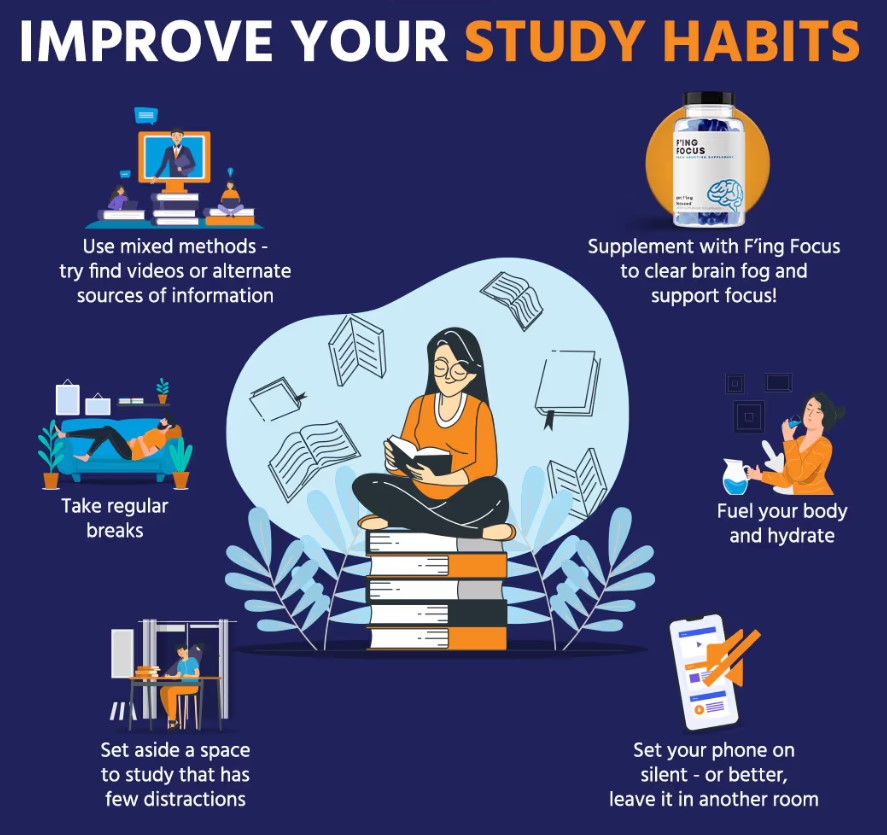
Not all study habits are created equal. Some feel productive but produce little result. Others seem simple but create dramatic improvements in academic performance. Here are the habits that research and experience consistently identify as the most effective:
1. Active Recall Over Passive Reading
Passive reading — going over notes or textbooks repeatedly — gives students a false sense of familiarity. It feels like learning, but it rarely leads to strong retention. Active recall, on the other hand, involves testing yourself on the material without looking at it.
Students who use flashcards, practice problems, or simply close their notes and write down everything they remember from a lesson perform significantly better on tests. Studies suggest that active recall improves memory retention by up to 50% compared to re-reading alone.
2. Spaced Repetition
Cramming the night before an exam is one of the most common — and least effective — study strategies. Spaced repetition means spreading study sessions over days or weeks, returning to material at increasing intervals. This technique takes advantage of how human memory works.
When students review information after 1 day, then again after 3 days, then 7 days, the brain reinforces those neural pathways more deeply each time. This is why students who study a little every day consistently earn higher grades than those who study in large, infrequent blocks.
3. Creating a Dedicated Study Environment
Where a student studies matters enormously. A cluttered desk, a noisy living room, or a bed with a phone nearby are all environments that invite distraction. Students who designate a specific, quiet, organized space for studying tend to enter a focused mental state more quickly and sustain it for longer.
The brain is remarkably good at forming associations. When students consistently study in the same place, that environment begins to trigger a focused, ready-to-learn mental state almost automatically.
4. Setting Specific Goals for Each Study Session
Students who sit down and say “I’m going to study biology for an hour” are far less productive than students who say “I’m going to complete the review questions for Chapter 5 and summarize the three main concepts from today’s lecture.” Specificity drives productivity.
Goal-setting before each session turns vague study time into targeted, measurable progress. Over a semester, this habit compounds into significantly better understanding of material and better exam performance.
5. Taking Real Breaks
This might sound counterintuitive, but taking breaks actually improves study efficiency. The Pomodoro Technique — 25 minutes of focused study followed by a 5-minute break — has been widely studied and widely praised by educators and students alike.
The human brain is not designed for hours of uninterrupted focus. Short, intentional breaks reset attention, reduce mental fatigue, and allow information to consolidate. Students who work in focused sprints consistently report higher productivity and better grades.
Using a GPA Calculator Middle School to Track Progress
One of the most overlooked tools in a middle schooler’s academic toolkit is a simple GPA tracker. When students use a GPA Calculator Middle School tool, they gain something extremely valuable: visibility. They can see exactly where they stand, which subjects are dragging their average down, and how much improvement in a single class would impact their overall GPA.
This kind of transparency is motivating. It turns abstract effort into concrete math. A student might not feel the difference between studying for two hours versus four hours in the moment. But when they see their GPA move from 2.8 to 3.1, that change feels real and earned.
Tracking GPA also helps students and parents have more productive conversations with teachers. Instead of vague concerns about “not doing well,” students can point to specific numbers and specific patterns. That precision makes problem-solving much easier.
The Role of Consistency Over Intensity

One of the most important truths about study habits is that consistency beats intensity every single time. A student who studies for 30 minutes every day will outperform a student who studies for 5 hours once a week. The math might look similar, but the outcomes are dramatically different.
Consistency builds momentum. When studying becomes a daily habit — as natural as brushing teeth or eating breakfast — it stops feeling like a chore. Students who reach this point often report that studying becomes easier over time, not harder. The habit itself carries them forward even on days when motivation is low.
This is why GPA growth tends to follow a gradual upward curve for students who build solid habits. The improvement is rarely dramatic overnight. It is steady, reliable, and real.
How Social Dynamics Shape Study Behavior
Students do not study in isolation. They are surrounded by friends, classmates, and peers who influence their behavior in subtle and not-so-subtle ways. Peer Pressure Affects Academic Performance more than many students realize — and not always in a negative direction.
Negative peer pressure can pull students away from studying. Friends who mock academic effort, celebrate skipping class, or normalize poor grades create a social environment where putting in academic effort feels embarrassing. Students in these environments often suppress their natural desire to do well in order to fit in.
But positive peer pressure can work the other way just as powerfully. Students who surround themselves with academically motivated friends tend to adopt similar habits. When everyone in a friend group is working toward strong grades, studying becomes a shared value rather than a lonely sacrifice. Study groups, friendly grade competitions, and shared accountability are all forms of positive social pressure that drive GPA growth.
Parents and educators who want to help struggling students should think carefully about social environment, not just study techniques. Sometimes the most powerful intervention is helping a student find their community.
The Emotional Side of Academic Improvement

Study habits are not purely logistical. They are deeply emotional. Students who struggle with anxiety, low self-confidence, or a history of academic failure often develop avoidance behaviors — they avoid studying because studying reminds them of failure and inadequacy.
Breaking this cycle requires more than a new study schedule. It requires small, consistent wins that rebuild a student’s relationship with learning. Setting achievable goals, celebrating incremental progress, and framing mistakes as part of the learning process all play a role in this emotional recovery.
Teachers and parents who acknowledge the emotional dimension of academic performance tend to be far more effective at helping struggling students. A student who believes they can improve is already halfway there.
Using a Middle School GPA Tracker for Long-Term Success
The value of monitoring grades consistently cannot be overstated. A Middle School GPA Tracker gives students and parents a birds-eye view of academic progress across subjects and semesters. This tool is especially powerful during the middle school years, when academic habits are being formed and when early course selections begin to shape a student’s future opportunities.
A well-maintained GPA tracker reveals patterns that are easy to miss in the day-to-day rush of school life. Perhaps a student’s grades dip every time standardized testing season approaches — a sign of test anxiety that can be addressed. Perhaps one subject consistently lags behind — a signal that targeted support is needed. These insights do not emerge from looking at a single report card. They emerge from tracking data over time.
Students who use tracking tools tend to take more ownership of their academic performance. They stop feeling like passive recipients of grades and start feeling like active agents in their own education. That shift in mindset is one of the most powerful drivers of GPA growth.
Practical Steps Parents Can Take to Support Better Study Habits
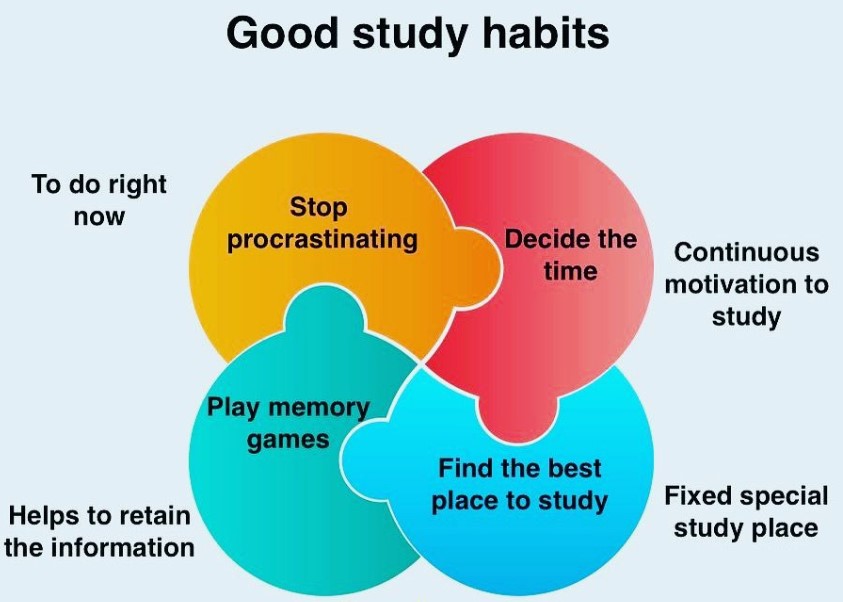
Parents play a meaningful role in shaping a child’s academic environment. Here are a few practical ways parents can support the development of strong study habits at home:
Create structure at home. A consistent homework time each day — even if it is just 45 minutes — helps children develop a natural rhythm around academic work.
Minimize distractions. Phones, televisions, and loud environments fragment attention. A quiet, organized study space gives children the conditions they need to focus.
Ask about learning, not just grades. When parents ask “What did you learn today?” instead of “What grade did you get?”, they send a signal that understanding matters — not just performance. This encourages a healthy relationship with the learning process.
Celebrate effort, not just results. A student who worked hard and improved from a C to a B deserves genuine recognition, even if the grade is not perfect. Effort-based praise builds the growth mindset that sustains long-term academic success.
Stay involved without taking over. Helping a child organize their study schedule is supportive. Doing their homework for them is not. The goal is to build independence, not dependency.
Small Habits, Big Results: The Compound Effect in Education
The concept of compounding is usually discussed in finance. But it applies just as powerfully to education. Small, consistent improvements in study habits compound over time into massive differences in academic outcomes.
Consider a student who improves their average test score by just 5% through better preparation habits. Across 10 subjects over 4 years, that small improvement translates into a GPA that is nearly a full point higher. A 3.0 GPA becomes a 3.9 GPA not because of one dramatic breakthrough, but because of hundreds of small, disciplined choices made consistently over time.
This is the real link between study habits and GPA growth. It is not a secret formula or a shortcut. It is the simple, powerful reality that what students do every day shapes who they become academically.
Summary
Study habits > raw intelligence when it comes to GPA growth.
Key points:
- Consistent daily study beats cramming every time
- Active recall and spaced repetition are the most effective techniques
- Middle school years are the most critical habit-forming stage
- A quiet, dedicated study space improves focus significantly
- Peer environment strongly influences academic behavior
- Tracking GPA gives students visibility and motivation
- Small daily improvements compound into major grade gains over time
Bottom line: It’s not about studying harder — it’s about studying smarter and consistently.
Final Thoughts
The connection between study habits and GPA growth is one of the most well-documented relationships in all of educational research. Students who invest in building structured, consistent, and intentional study habits almost universally see their grades improve. Not because they become smarter overnight, but because they learn to use what they already have more effectively.
Every student is capable of growth. The path is not mysterious. It is built one habit at a time — one session of active recall, one organized study space, one night of going to bed instead of cramming, one tracked GPA point that proves progress is real.
The students who understand this and act on it do not just get better grades. They build the kind of disciplined, self-aware approach to learning that will serve them for the rest of their lives.
FAQs
Do study habits really affect GPA?
Yes. Students with consistent study habits — like daily review, active recall, and spaced repetition — consistently earn higher GPAs than students who rely on cramming, regardless of natural ability.
What is the most effective study habit for improving grades?
Active recall is the single most effective habit. Testing yourself on material without looking at notes improves memory retention by up to 50% compared to passive re-reading.
At what age should students start building good study habits?
Middle school — between ages 11 and 14 — is the most critical window. Habits formed during these years tend to carry directly into high school and significantly shape long-term academic performance.
How many hours should a student study daily to improve GPA?
Quality matters more than quantity. Even 30 to 45 minutes of focused, distraction-free daily study produces better GPA results than several unfocused hours once or twice a week.
Can changing study habits raise GPA quickly?
Yes. Students who switch from passive reading to active recall and build a daily study routine often see noticeable GPA improvement within one semester, sometimes raising their average by 0.5 to 1.0 points.