

- Pause before reacting — wait before responding emotionally to a bad grade
- Identify the mistake type — careless, conceptual, application, or knowledge gap
- Analyze with curiosity — ask why it happened, not what’s wrong with you
- Keep a personal error log — track every mistake, root cause, and correction
- Seek specific feedback — ask teachers targeted questions, not vague ones
- Relearn actively — redo problems, explain concepts aloud, use spaced repetition
- Adopt a growth mindset — see mistakes as data, not as a verdict on your ability
- Reframe failure — Edison, Rowling, and Jordan all failed before they succeeded
- Build a weekly review routine — revisit and practice corrected mistakes regularly
- Focus on progress, not perfection — improvement matters more than a clean record
Every student has been there — staring at a paper covered in red ink, a failed test sitting on the desk, or a grade that does not match the effort that went into it. It stings. It feels personal. And for a moment, it feels like the end of the world.
This article is for every student, parent, and educator who wants to understand how to flip the script on failure and use it as the most powerful learning tool available.
Why Academic Mistakes Feel So Painful (And Why That Is Actually Okay)
Before diving into the how, it helps to understand the why. When a student makes an academic mistake, the brain does something interesting — it triggers a mild stress response. Researchers have found that the brain actually pays more attention after making an error than it does after getting something right. That increased attention is the brain saying, “Hey, something went wrong here. Let’s figure out what happened.”
The pain of a mistake is not a flaw in the system. It is the system working exactly as it should. The problem is not the feeling — it is what students do with that feeling. Many students respond to academic mistakes in 3 common but unhelpful ways:
- They ignore the mistake and move on without reflecting
- They spiral into shame and self-doubt
- They blame the teacher, the subject, or bad luck
None of these responses lead to growth. But with the right mindset and tools, every mistake becomes a mirror — one that shows exactly where the gaps are and exactly what needs to be done.
The Mindset Shift That Changes Everything
Dr. Carol Dweck, a psychologist at Stanford University, spent decades studying how people respond to challenges. Her research introduced the world to the concept of the growth mindset — the belief that intelligence and ability are not fixed, but can be developed through effort, strategy, and feedback.
Students with a growth mindset see a bad grade as data, not a verdict. They ask, “What did I miss?” instead of “What is wrong with me?” This single shift in thinking changes everything about how a student interacts with their mistakes.
In contrast, students with a fixed mindset see mistakes as proof of their limitations. They avoid challenges, give up quickly, and feel threatened by the success of others. This mindset keeps students small and stuck.
The good news? Mindsets can change. And the classroom — with all its opportunities for success and failure — is one of the best places to practice making that shift.
Step 1: Pause Before Reacting
The first and most important step in turning a mistake into a learning opportunity is to pause before reacting. When a student gets a low grade or makes a significant error, the instinct is often to react emotionally — to feel embarrassed, angry, or defeated.
A student named Mark, a high school junior, failed his first chemistry exam with a score of 52%. His first reaction was to shove the paper into his bag and never look at it again. Instead, his teacher encouraged him to sit with the result for 24 hours before doing anything else.
When Mark came back the next day, he was calmer. He could look at the test with clearer eyes. He noticed that 80% of his mistakes were concentrated in just 2 topics — stoichiometry and balancing equations. That information changed everything. He did not have to re-learn all of chemistry. He had to go back and master 2 specific areas.
The pause creates space between the emotion and the response. That space is where learning begins.
Step 2: Analyze the Mistake With Curiosity, Not Judgment
Once the initial emotional reaction has settled, it is time to analyze the mistake. This is where many students stop short — they know they got something wrong, but they never dig into why they got it wrong.
There are 4 main types of academic mistakes:
1. Careless Mistakes: These happen when a student knows the material but rushes, misreads a question, or makes a small arithmetic error. The fix here is not more studying — it is slowing down and developing better test-taking habits.
2. Conceptual Mistakes: These happen when a student has a fundamental misunderstanding of a topic. They thought they understood it, but their mental model was wrong. The fix here is going back to the foundation and rebuilding the concept from scratch.
3. Application Mistakes: These happen when a student understands the concept in isolation but struggles to apply it in a new or complex situation. The fix here is more practice with varied problems and real-world applications.
4. Knowledge Gaps: These happen when a student simply did not learn a piece of information — they missed class, did not study that section, or forgot it over time. The fix here is straightforward review and memorization.
Identifying which type of mistake was made is like identifying the root cause of a problem. Without knowing the root cause, any attempt to fix it is just guesswork.
Step 3: Create a Personal Error Log
One of the most powerful and underused tools in academic success is the personal error log — a dedicated notebook or digital document where a student records every mistake they make, why they made it, and what the correct understanding is.
Here is a simple format that works well:
| Mistake Made | Type of Mistake | Why It Happened | Correct Understanding | How to Avoid It Next Time |
|---|---|---|---|---|
| Got the wrong answer on quadratic formula | Conceptual | Mixed up the formula | Rewrote the formula 10 times | Check formula sheet before starting |
Over time, the error log becomes a goldmine. Students start to see patterns in their mistakes. Maybe they always lose points on essay conclusions. Maybe they consistently make sign errors in algebra. These patterns point directly to where focused practice is needed.
A student named Priya, a 9th grader who was struggling with math, started an error log in October. By December, she had filled 3 pages with repeated mistakes around fractions and negative numbers. She spent 2 weeks focusing exclusively on those topics. Her grade went from a C to an A- by the end of the semester. The error log did not just help her fix mistakes — it helped her study smarter.
Step 4: Seek Feedback Actively and Specifically
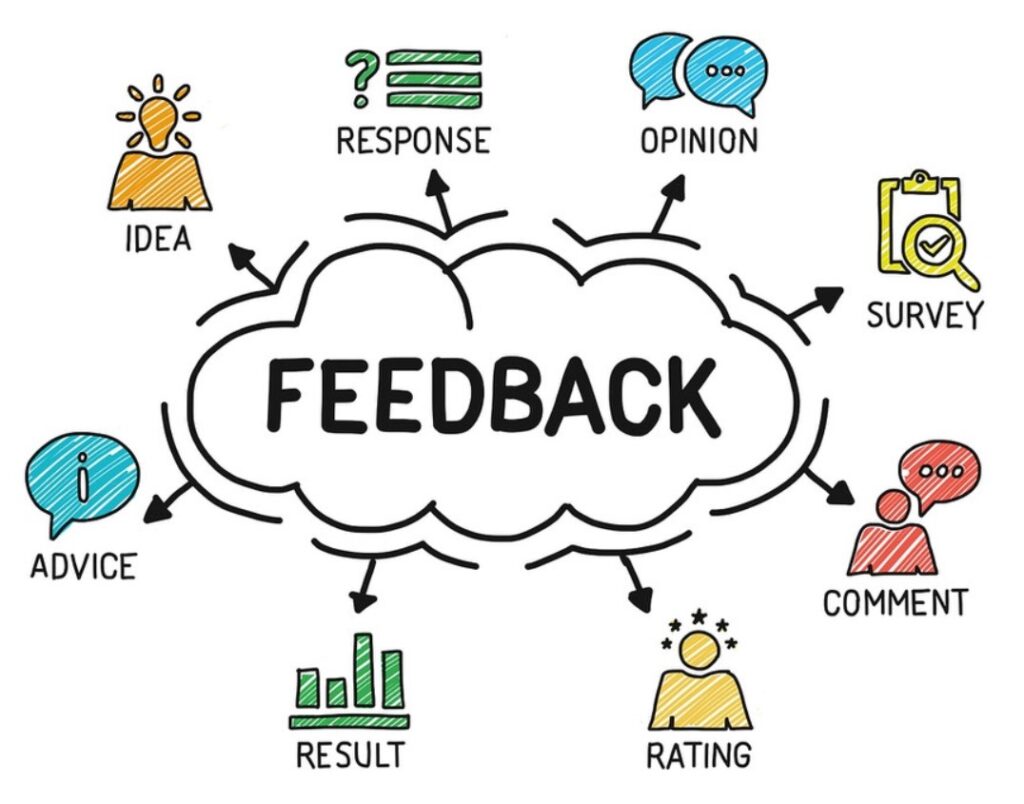
Most students accept feedback passively — they read the teacher’s comments, nod vaguely, and move on. But students who truly learn from their mistakes treat feedback as a conversation, not a judgment.
There is a difference between asking a teacher, “Why did I lose points?” and asking, “Can you show me exactly where my reasoning broke down and what a stronger response would look like?” The second question is specific, curious, and action-oriented. It signals to the teacher that the student is serious about improving — and teachers almost always respond to that energy with more helpful, detailed guidance.
Peer feedback is equally valuable. When a student explains their mistake to a classmate and works through it together, both students benefit. Teaching something — even imperfectly — deepens understanding far more than passive reading or re-reading notes.
Students who are tracking their academic progress can also benefit from tools that give them a bird’s-eye view of where they stand. For example, using a gpa middle school calculator helps students see how individual grades affect their overall GPA, making it easier to identify which subjects need the most attention and effort.
Step 5: Relearn, Rework, and Revisit
After identifying the mistake and understanding why it happened, the next step is to actively correct it — not just mentally acknowledge the right answer, but actually practice it.
This means:
- Redoing the problem from scratch without looking at the answer
- Finding similar problems and working through them
- Explaining the concept out loud to yourself or someone else
- Connecting the concept to something already understood
The brain learns through repetition and connection. A mistake that is corrected once and never revisited will likely be repeated. But a mistake that is corrected, practiced, and revisited multiple times becomes permanently fixed in long-term memory.
Spaced repetition — the practice of revisiting material at increasing intervals — is one of the most evidence-backed learning strategies in cognitive psychology. Students who revisit their corrected mistakes after 1 day, 3 days, 1 week, and 1 month retain that information at dramatically higher rates than students who study it once and move on.
Step 6: Reframe the Narrative Around Failure

One of the most damaging things in academic culture is the way failure is often treated as something shameful — something to hide, minimize, or explain away. But some of the most successful people in history failed spectacularly before they succeeded.
Thomas Edison famously said he had not failed — he had just found 10,000 ways that did not work. J.K. Rowling was rejected by 12 publishers before Harry Potter found a home. Michael Jordan was cut from his high school basketball team. These are not just motivational anecdotes. They are evidence that failure, handled correctly, is a prerequisite for mastery.
Students who hear and internalize these stories begin to see their own academic struggles differently. A failed exam is not the story — it is a chapter in a longer story about persistence and growth. The student who failed and kept going is far more interesting — and far more capable — than the one who never tried anything hard.
How Parents and Teachers Can Help
Students do not navigate academic mistakes in a vacuum. The adults around them play a huge role in shaping how they respond to failure.
Parents can help by:
- Asking “What did you learn from this?” instead of “Why did you get this grade?”
- Sharing their own stories of failure and recovery
- Celebrating effort and improvement, not just results
- Avoiding the urge to rescue their child from every academic struggle
Teachers can help by:
- Creating a classroom culture where mistakes are treated as part of the learning process
- Giving detailed, actionable feedback instead of just marking things wrong
- Allowing test corrections or grade recovery opportunities
- Modeling their own thinking process, including the mistakes they make along the way
When both parents and teachers respond to mistakes with curiosity instead of punishment, students internalize that same response. Over time, they stop dreading mistakes and start seeing them as useful information.
Real Talk: Some Mistakes Hurt More Than Others
It would be dishonest to pretend that every academic mistake is easy to bounce back from. A failed course, a missed scholarship, or a grade that affects college applications — these carry real consequences, and it is okay to acknowledge that.
But even high-stakes mistakes have a learning dimension. A student who fails a course learns something important about how they manage time, study under pressure, or handle stress. That knowledge, applied to the next challenge, can completely change the outcome.
The goal is not to minimize the weight of mistakes. It is to refuse to let the weight crush the curiosity. The question is always: “What can I take from this that makes me better?”
Building a Mistake-Friendly Study Routine
Turning academic mistakes into learning opportunities is not a one-time act — it is a habit. And like all habits, it is built through consistent, intentional practice. Here is a simple weekly routine that helps students stay on top of their mistakes:
Monday: Review all graded work from the previous week. Note any errors and categorize them.
Wednesday: Spend 20-30 minutes working through corrected mistakes using the error log. Find 2-3 similar practice problems for each error type.
Friday: Revisit mistakes from 2 weeks ago to test long-term retention. If still shaky, add to next week’s review list.
This routine takes less than 1 hour per week but compounds dramatically over time. Students who follow it consistently report not just better grades, but stronger confidence and less test anxiety — because they have already seen and conquered their weak spots before the exam arrives.
The Long-Term Payoff of Embracing Academic Mistakes
Students who develop the habit of learning from their mistakes do not just earn better grades in the short term. They build something far more valuable — resilience. And resilience is arguably the single most important trait a person can carry into adulthood.
The workplace rewards people who can face setbacks without shutting down. Relationships thrive when people can acknowledge errors and do the work of repairing them. Life, in general, goes far more smoothly for those who are not terrified of being wrong.
Academic mistakes, when handled with the right approach, are essentially low-stakes practice rounds for the much higher-stakes mistakes that come later in life. Every time a student sits with a failed test and asks “What can I learn from this?” instead of “What is wrong with me?”, they are training a mental muscle that will serve them for decades.
Consider the case of Lena, a college sophomore studying pre-medicine. In her first year, she struggled enormously with organic chemistry — a course notorious for humbling even the most prepared students. She failed her first 2 exams, and her confidence was shattered. But instead of withdrawing or switching majors, she went back to basics. She built an error log and she went to office hours every single week. She formed a study group with 3 classmates who were also struggling.
By the end of the semester, Lena had not just passed the course — she had earned a B+. More importantly, she had learned how to study hard material, how to ask for help without shame, and how to persist through sustained difficulty. Those lessons carried her through medical school and beyond.
Her story is not unique. It is repeated in classrooms, libraries, and dorm rooms all over the world, every semester, by students who choose to treat failure as a teacher rather than a verdict.
Summary
- Academic mistakes are not roadblocks — they are learning roads
- The brain actually pays more attention after an error than after a correct answer
- Most students ignore mistakes, spiral into shame, or blame others — none of these help
- Dr. Carol Dweck proved that mindsets can change — growth mindset beats fixed mindset
- Students with a growth mindset treat bad grades as data, not as a verdict
- Always pause for 24 hours before reacting emotionally to a bad result
- Identify the type of mistake — careless, conceptual, application, or knowledge gap
- Each mistake type has a different fix — knowing the type saves time and effort
- Create a personal error log to track every mistake and its root cause
- Error logs reveal patterns — repeated errors point to exactly where to focus
- Ask teachers specific questions — vague questions get vague answers
- Peer explanation deepens understanding for both students involved
- Never just read the correct answer — redo the problem from scratch
- Find similar problems and practice them until the concept feels solid
- Explain concepts out loud — if you cannot explain it, you do not know it yet
- Use spaced repetition — revisit corrections after 1 day, 3 days, 1 week, 1 month
- Thomas Edison failed 10,000 times before succeeding — failure is part of mastery
- J.K. Rowling was rejected by 12 publishers — persistence after failure wins
- Michael Jordan was cut from his high school team — setbacks do not define outcomes
- Parents should ask “What did you learn?” not “Why did you get this grade?”
- Teachers should treat mistakes as part of learning, not just something to mark wrong
- Even high-stakes mistakes — failed courses, missed scholarships — carry real lessons
- A weekly review routine turns mistake-learning into a lifelong habit
- Monday — review graded work and categorize errors
- Wednesday — rework mistakes and find similar practice problems
- Friday — revisit corrections from 2 weeks ago to test long-term retention
- The whole routine takes less than 1 hour per week but compounds over time
- Students who do this consistently report better grades and less test anxiety
- Resilience built through academic mistakes carries directly into adult life
- Progress over perfection — improvement is always the real measure of learning
Final Thoughts
The students who thrive academically are not the ones who never make mistakes. They are the ones who have learned how to make their mistakes work for them also they pause, analyze, log, seek feedback, practice, and reframe. They treat every wrong answer as a question worth answering and every bad grade as a map pointing toward growth.
Academic life is full of setbacks. Tests will be failed. Essays will come back covered in comments. Projects will not go as planned. But inside every one of those moments is a lesson waiting to be learned — a skill waiting to be built, a gap waiting to be filled, and a student waiting to become a little bit stronger.
The mistake is not the end of the story. It is often the most important part of it.
FAQs
How do you turn a mistake into a learning opportunity?
Pause before reacting, identify why the mistake happened, correct it actively by redoing the problem, and revisit it using spaced repetition so it sticks long-term.
Why is it important to learn from academic mistakes?
Learning from academic mistakes builds resilience, closes knowledge gaps, improves future performance, and develops critical thinking skills that go far beyond the classroom.
What are the most common types of academic mistakes students make?
The 4 most common types are careless mistakes, conceptual mistakes, application mistakes, and knowledge gaps — each one requires a different fix to correct effectively.
How does a growth mindset help students deal with failure?
A growth mindset, developed by Dr. Carol Dweck, teaches students to see failure as feedback rather than a verdict — pushing them to keep improving instead of giving up after a setback.
What should parents say when their child gets a bad grade?
Instead of asking “Why did you get this grade?”, parents should ask “What did you learn from this?” — this simple shift encourages reflection, reduces shame, and builds a healthier relationship with academic challenges.