
Peer pressure shapes academic performance in two ways. Negative peer pressure leads to skipping homework, dropping grades, and cheating — 64% of students admitted to cheating because their peers did. Positive peer pressure builds stronger study habits and raises GPA naturally.
Students give in because the need to belong is powerful at this age. Surround students with the right people and peer pressure becomes a powerful tool for academic success.
Every student has felt it at some point. That quiet nudge from a friend saying, “Just skip the homework tonight, nobody checks it anyway.” Or the opposite — a study group that silently pushes everyone to show up better. Peer pressure is one of the most powerful forces in a student’s life, and yet it rarely gets the serious attention it deserves when people talk about grades, motivation, and long-term academic success.
This article digs deep into how peer pressure truly affects academic performance — drawing from real-world observations, published educational research, and the lived experiences of students, parents, and teachers across different school environments.
Whether you are a parent watching your child slowly drift toward a new crowd, a teacher noticing concerning shifts in a student’s focus, or a student trying to understand your own choices, this guide is written directly for you.
The conversation around peer pressure has existed for decades, but what has changed is how well we now understand its mechanics — the psychology behind it, the specific ways it shows up in academic settings, and most importantly, what can actually be done about it.
What Is Peer Pressure, Really?
Most people hear “peer pressure” and immediately picture someone being pushed into doing something dangerous or wrong. But the reality is far more layered, far more subtle, and in many cases, far more powerful than that simple picture.
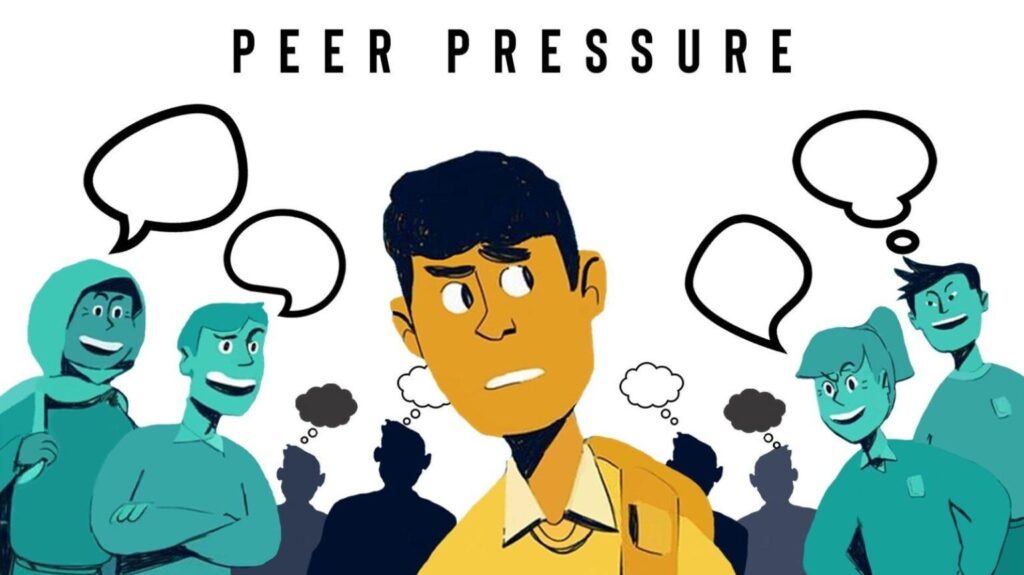
Peer pressure is the social influence that people of the same age group — or social circle — have on each other’s behavior, attitudes, decisions, and even self-perception. It does not always come in the form of direct pressure. In fact, the most powerful kind is often silent and completely unspoken.
A student who watches his entire friend group enroll in advanced classes may feel an invisible pull to do the same — not because anyone told him to, but because belonging matters deeply at that age.
That is peer pressure too. A girl who stops raising her hand in class because her close friends think it looks “nerdy” or “try-hard” is also responding to peer pressure — just in the opposite, more damaging direction.
Understanding both sides of this force — the kind that lifts students up and the kind that quietly pulls them down — is the first and most important step to understanding how deeply it shapes academic life at every level.
The Two Faces of Peer Pressure
1. Negative Peer Pressure
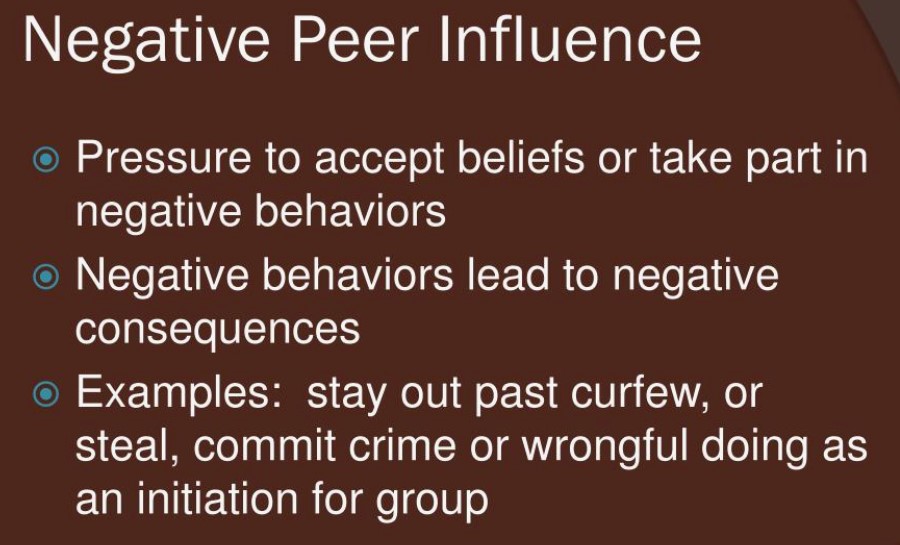
This is the version most people are familiar with. A student starts spending more time with friends who do not take school seriously. Little by little, she skips assignments, stops reviewing before tests, and begins to see academic effort as something to be embarrassed about rather than proud of.
Negative peer pressure in academic settings often looks like:
- Mocking students who study hard or consistently earn good grades
- Encouraging friends to cheat on tests, copy homework, or share answers
- Making skipping class feel normal, rebellious, or even cool
- Pressuring students to prioritize social events or screen time over studying
- Shaming academic ambition as being “too serious,” “a nerd,” or “trying too hard”
- Normalizing low effort so that doing the minimum becomes the group standard
Research published in the Journal of Youth and Adolescence found that students who frequently associated with academically disengaged peers were 3 times more likely to show declining grades over a single school year. That is a striking number — and it shows just how contagious disengagement can be when it becomes the social norm within a friend group.
2. Positive Peer Pressure
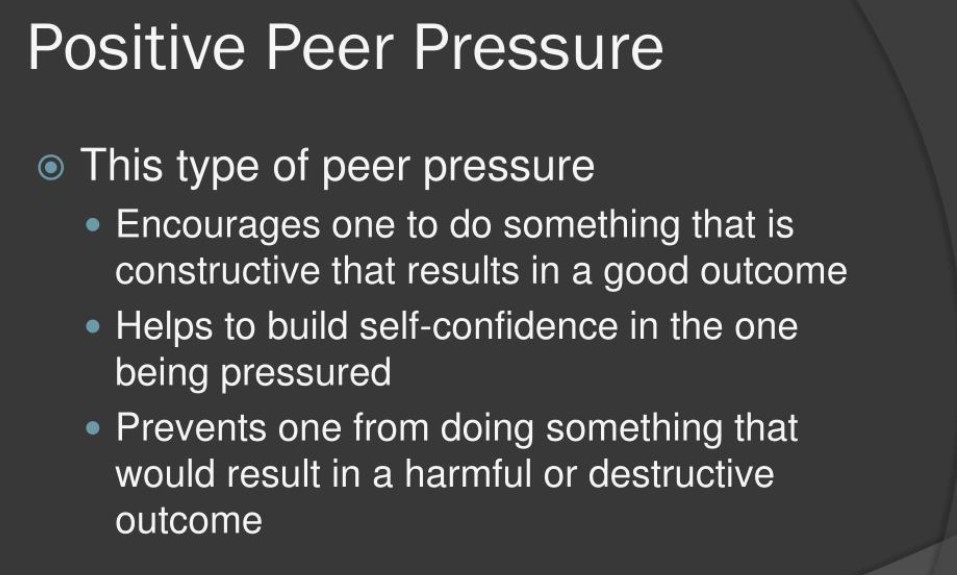
Here is what people so often forget: peer pressure can be a tremendous and transformative force for good.
When Sarah, a 10th-grade student from a mid-sized public school in Ohio, joined a new friend group where everyone was genuinely serious about college preparation, something fundamental shifted inside her. She started showing up to school earlier, spending lunch periods reviewing class notes, voluntarily attending extra help sessions, and even asking teachers questions she had previously been too self-conscious to ask. Her GPA climbed by nearly a full point within two semesters — without any change in her family situation, her school, or her teachers.
What changed? Not her intelligence. Not her work ethic at its core. Her social environment changed. The people around her redefined what was normal, what was admirable, and what was worth doing with her time.
Positive peer pressure in academic settings can look like:
- Friends who consistently encourage each other to study and prepare for exams
- Group study sessions that make learning feel genuinely social and enjoyable
- Peers who celebrate each other’s academic wins instead of mocking them
- Healthy, constructive competition that motivates students to push a little harder
- Accountability partners who check in on each other’s progress and goals
- Study groups where asking for help is completely normalized and encouraged
When students surround themselves with people who value education and take pride in their work, they begin to internalize those same values. That is the quiet, lasting power of a genuinely supportive peer group — and it is completely free to build.
How Peer Pressure Affects Different Academic Areas
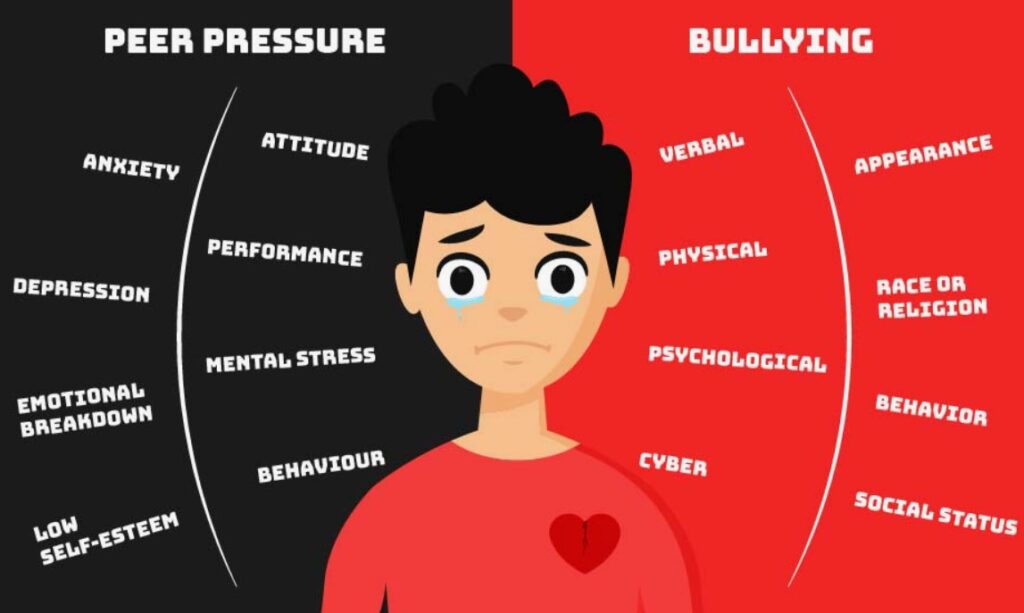
Grades and GPA
The most visible and measurable way peer pressure shows up is in grades. When students spend most of their time with peers who dismiss studying, skip assignments, and treat low performance as normal, their grades tend to slide — not dramatically overnight, but gradually and steadily.
A student who once earned consistent Bs and As might drift into Cs and Ds over the course of a semester simply because the social cost of studying feels higher to them than the academic cost of not doing it.
On the other side of that coin, competitive or academically motivated peer groups can and do push students to maintain higher standards than they might reach on their own. Parents and educators who want to support students sometimes overlook how powerful it is to actively help a child find and stay connected to academically motivated peers — it can matter just as much as tutoring or extra study time.
For middle school students in particular, this dynamic matters enormously. These are the critical years when study habits are being formed, academic identity is taking shape, and patterns are being set that will carry into high school and beyond. If you are trying to track your child’s academic trajectory during these foundational years, tools like a middle school gpa calculator no credits can help parents and students stay informed about performance without needing a full formal transcript — making it far easier to catch early warning signs before they become serious problems.
Class Participation and Engagement
Peer pressure shapes not just what students do at home, but how they present themselves and behave inside the classroom — often in ways that directly hurt their learning.
Marcus, a curious and intellectually engaged 7th-grade student with a natural love for science, stopped answering questions in class after his closest friends started calling him a “teacher’s pet” and laughing when he volunteered answers.
Over the following months, his teacher noticed a clear pattern: he became quieter, withdrew from discussions, stopped contributing ideas during group work, and his test scores — which had previously been genuinely strong — began to reflect his growing disengagement.
This is one of the most heartbreaking and overlooked effects of negative peer pressure. Students who are completely capable start dimming their own light to fit in socially.
They stop participating, stop asking the questions they actually have, and gradually fall behind — not because the material is too hard for them, but because intellectual visibility feels socially unsafe.
Homework Completion and Study Habits
A student’s study habits are deeply tied to the social norms of their immediate peer group. In communities where doing homework and preparing for class is genuinely normalized, students tend to complete assignments without major resistance — it is just what you do.
But when peers openly talk about not doing homework, brag about not studying, and face no visible social consequences for it, the message becomes clear: effort is optional and possibly even embarrassing.
Studies show that students between the ages of 12 and 16 are especially vulnerable to this kind of peer-driven normalization. This is the exact developmental window when independence from family grows fastest and belonging to a peer group becomes central to personal identity.
What the group does, values, and considers normal, the individual increasingly follows — sometimes without even consciously realizing it is happening.
Cheating and Academic Dishonesty
This is one of the most direct and measurable academic consequences of negative peer pressure — and it is far more widespread than most adults realize.
A 2022 survey conducted by the International Center for Academic Integrity found that nearly 64% of high school students admitted to cheating on a test or major assignment at least once during their high school career. When asked to explain their reasoning, the most commonly cited responses were: “everyone does it” and “my friends were doing it and I didn’t want to be the only one who didn’t.”
When academic dishonesty becomes normalized within a peer group, individual students face enormous invisible pressure to participate — either because they genuinely fear being academically left behind while others cheat, or because they do not want to seem like the strange outlier who actually prepares for tests.
Over time, this problem compounds significantly, because students who rely on cheating never build the real foundational skills they need, which sets them up to struggle even harder in advanced coursework.
The Psychology Behind It: Why Students Give In
Understanding why peer pressure works so powerfully on young students helps parents and educators support them far more effectively and compassionately.
The Need to Belong
Dr. Abraham Maslow’s famous hierarchy of needs places belonging as a fundamental human need — sitting just above basic physical safety. For adolescents, belonging to a peer group is not just a social preference or a nice-to-have. It feels like genuine survival. Being rejected, excluded, or labeled as “different” by peers can feel authentically threatening to a young person’s entire sense of self and stability.
This biological and psychological reality is why even academically strong, motivated students sometimes begin to underperform when they find themselves in peer groups that quietly look down on effort. The perceived cost of standing out feels far higher than the academic cost of falling behind — at least in the short term.
Identity Formation During Adolescence
Adolescence is the life stage where young people are actively asking and answering the question: Who am I? Peers play a massive, defining role in shaping that answer. If a student’s peer group defines itself as “the kind of people who don’t really care about school stuff,” then caring visibly about school means stepping outside the group’s shared identity — which can feel like abandoning who you are and where you belong.
This is a key reason why peer influence during middle school and high school is so dramatically more powerful than during elementary school. The developmental stakes of identity feel genuinely high, the need for group acceptance is at its most intense, and young people are far more susceptible to internalizing group norms as personal values.
Fear of Social Judgment
Teenagers and pre-teens are intensely, acutely aware of how others perceive them — sometimes to a degree that adults find difficult to fully remember or appreciate. The fear of being laughed at in front of peers, labeled a “nerd,” or dismissed as someone who “tries too hard” can stop a capable, curious student from studying openly, asking for help, pursuing academic opportunities, or even sitting in the front of the class.
These fears are not irrational. Social exclusion at this age carries real costs. But understanding the fear is the first step toward helping students navigate it with greater confidence and self-awareness.
What Parents Can Do
Parents are far from powerless in the face of peer pressure. Here are some evidence-based, practical, and genuinely effective strategies:
Build open communication early and keep it consistent. Students who feel comfortable talking honestly with their parents about social dynamics, friendships, and peer conflicts are significantly better equipped to think critically about the influence around them. Ask about their friends — not in an interrogating or suspicious way, but with genuine warmth and curiosity.
Know your child’s peer group personally. You do not need to control who your child spends time with, but staying meaningfully informed makes a real difference. Parents who know their child’s friends, their families, and their general attitudes are far better positioned to notice early warning signs before they become serious academic problems.
Help your child find and build their academic community. Whether it is a school study club, a competitive academic team, a science fair group, a debate club, or an enrichment program, connecting your child with peers who value learning can be one of the most impactful investments you make in their academic future.
Celebrate consistent effort, not just grades. Students who grow up in households that genuinely value and praise hard work — regardless of the final grade — tend to develop a growth mindset that holds up far better against negative social pressure over time.
Have direct, honest conversations about peer influence. Many parents avoid this conversation because it feels preachy or uncomfortable. But having a real discussion about how much friends naturally influence our choices — and how completely normal and human that is — gives students the language and self-awareness to navigate it more intentionally.
What Teachers and Schools Can Do
Schools play an equally important and often underutilized role in shaping the peer culture that surrounds students every day.
Create visible classroom norms that celebrate effort and curiosity. Teachers who openly and consistently praise students for trying hard, asking honest questions, and persevering through difficulty help shift the cultural message inside their classrooms. When effort is publicly valued and admired, the social math for students begins to change.
Use collaborative learning intentionally and strategically. Group work can go either way — it can reinforce existing negative peer dynamics or actively build new positive ones. Teachers who pair students thoughtfully and structure group tasks with clear expectations can deliberately harness positive peer pressure as a genuine instructional tool.
Name and address academic mockery directly. When students mock classmates for doing well or trying hard, it needs to be addressed openly — not ignored or minimized. Schools where students feel genuinely safe to be academically ambitious perform better overall, and that safety starts with teachers who take it seriously.
Develop and invest in peer mentorship programs. Older students who model academic ambition and openly talk about their experiences can have a profound positive influence on younger students. Peer mentors are often more credible to struggling students than adults, because they represent a version of themselves those students can actually imagine becoming.
Real Stories That Show Both Sides
Jordan was a naturally gifted 9th-grade student who had always loved reading and excelled in English class. When he transferred to a new school midway through the year, he fell into a friend group where reading for pleasure was openly mocked and academic enthusiasm was treated as socially disqualifying.
By 11th grade, he had completely stopped reading outside of school requirements — and his language arts scores had dropped by nearly two full letter grades. He later reflected that he did not even realize how completely his environment had reshaped him until he went to college and found an entirely different kind of community around him.
Amara had the opposite story. She was a quiet, unremarkable student by her own description — solidly average, not particularly motivated — who joined a competitive academic bowl team in 8th grade almost entirely by accident. Surrounded suddenly by curious, driven, enthusiastic peers who genuinely loved learning, she discovered a version of herself she had never encountered before.
She began studying voluntarily, asking more questions than ever, and setting academic goals for the first time. She graduated high school in the top 10% of her class and earned a merit scholarship to a state university.
Neither Jordan nor Amara experienced a dramatic change in family support, school quality, or teacher investment. Their peer environments changed. And that singular shift changed the entire trajectory of their academic lives.
The Long-Term Consequences Nobody Talks About
Peer pressure does not just affect one semester’s report card. Its effects compound quietly over months and years — and the long-term academic and life consequences can be genuinely significant.
Students who internalize the belief — absorbed from their peer group — that academic effort is uncool or pointless are more likely to:
- Underperform significantly on college applications and entrance exams
- Deliberately avoid challenging coursework that could open important doors
- Enter college without the foundational study habits and self-discipline they need
- Miss scholarship, honors, and leadership opportunities that require a consistent GPA
- Struggle with self-directed learning in environments where no one is checking on them
Conversely, students who come up through academically supportive, motivated peer environments tend to carry those internalized habits, standards, and mindsets well into adulthood. The social norms we absorb during adolescence quietly shape what we consider “normal” and “expected” of ourselves for decades to come.
Final Thoughts: Peer Pressure Is Not the Enemy
Here is the truth that does not get said often enough: peer pressure itself is not the problem. It is a neutral force — like gravity or momentum. It can pull students steadily downward or lift them consistently upward. The direction depends entirely on the peer environment surrounding them.
The most productive and empowering thing parents, educators, and students themselves can do is stop treating peer pressure as something to fear and resist, and start treating it as something to shape deliberately and intentionally. Build the right communities. Seek out the right people. Create environments — at home, in classrooms, and in schools — where academic ambition is genuinely normal, respected, and even celebrated.
When students see the people they most admire and want to belong with working hard, caring actively about their futures, and taking their education seriously, they want to do the same. That is not weakness or blind conformity. That is human nature operating exactly as it should — and it can be one of the most powerful, accessible, and underused tools available for helping every student reach their full potential.
The social environment of a school is not a background issue or a soft concern. It is one of the most powerful academic interventions available to anyone who cares about student success — and it costs nothing to start paying deliberate, serious attention to it today.
FAQs
How does peer pressure affect academic performance?
Peer pressure directly impacts grades, study habits, and classroom participation. Negative peer pressure causes students to skip homework, avoid studying, and normalize cheating. Positive peer pressure encourages students to study harder, stay motivated, and achieve better grades consistently.
Can peer pressure have a positive effect on students?
Yes. When students surround themselves with academically motivated friends, they naturally adopt better study habits, set higher goals, and perform significantly better in school. Positive peer pressure is one of the most underrated tools for improving academic performance.
Why do students give in to negative peer pressure?
Students give in because the need to belong is a fundamental human need during adolescence. Fear of judgment, social exclusion, and the desire to fit in make teenagers mirror their friend group’s behavior — even when it negatively affects their grades and future.
What are the long term effects of peer pressure on academic performance?
Long term effects include poor college applications, missed scholarship opportunities, weak study habits, and avoidance of challenging coursework. Students who internalize negative peer group norms often struggle with self-directed learning well into adulthood.
How can parents protect their child from negative peer pressure at school?
Parents can help by knowing their child’s friend group, building open communication, connecting their child with academically motivated peers, celebrating effort over grades, and having honest conversations about how peer influence naturally shapes behavior and academic choices.