

Staying organized in school saves time, reduces stress, and boosts grades. Use a planner, clean out your backpack weekly, break big tasks into small steps, and do a 20-minute Sunday reset. Pick one simple system and stick with it. That’s it.
Every student knows that sinking feeling. You reach into your backpack, but the homework you finished last night has vanished. Or worse, you walk into class only to realize the big project is due today, not next week. Sound familiar? You are not alone.
Meet Alex, a typical eighth grader who used to live in a state of constant chaos. Alex would shove papers into folders without looking, forget test dates, and spend every Sunday night in a panic. Then, something changed. Alex discovered the power of staying organized. The result? Better grades, less stress, and even more free time.
This post shares real, experience-based advice on why organization matters and how any student can master it. You do not need to be naturally neat. You just need a few simple systems.
The Real Struggles of a Disorganized Student
Let’s paint a picture. Imagine waking up on a Tuesday morning. You cannot find your math homework. Your science notebook has coffee stains (from your older sibling), and your history textbook is buried under a pile of laundry. You rush out the door, feeling behind before the day even starts.
In class, the teacher asks everyone to turn in yesterday’s assignment. You dig through five different folders but find nothing. Your face gets hot. Your stomach knots up. The teacher gives you a late penalty. Again.
This is not just about being messy. Disorganization creates a ripple effect:
- Lost homework means lower grades, even when you know the material.
- Forgotten test dates lead to all-night cram sessions.
- Cluttered backpacks waste 10 to 15 minutes daily just searching for things.
- Increased anxiety makes it harder to focus in class.
A study from the National Association of School Psychologists found that organized students score up to 20% higher on assessments than their disorganized peers. Why? Because they spend energy on learning, not on searching.
How Organization Boosts Your Grades and Reduces Stress
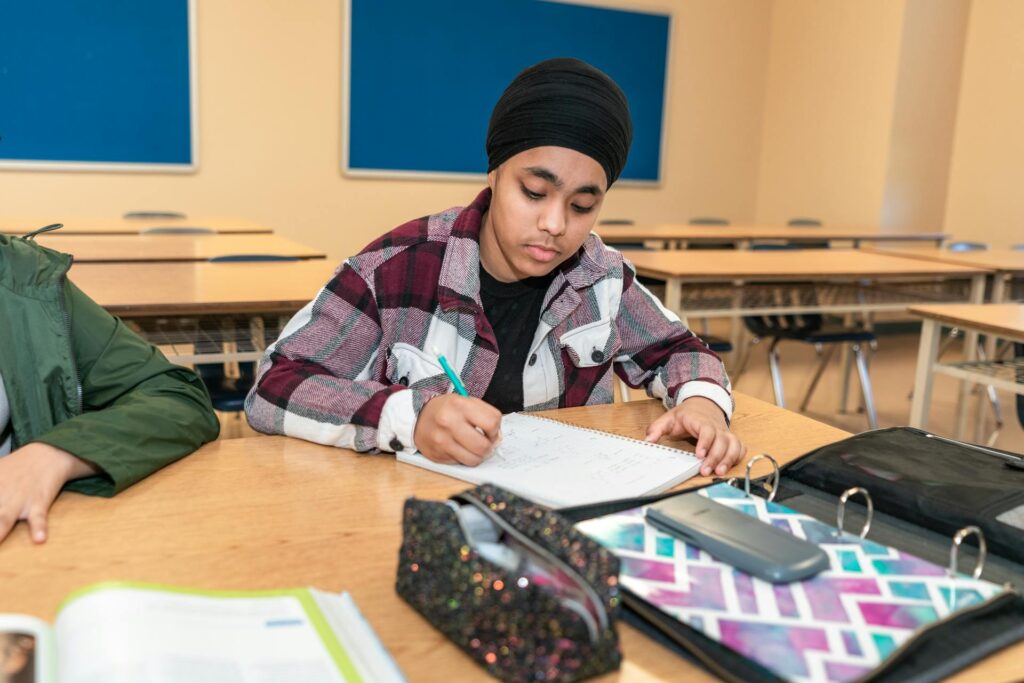
Think of organization as a superpower. When you know where everything is, you stop wasting mental energy on chaos. That energy goes straight into understanding algebra, writing essays, and preparing for quizzes.
Here is what happens when a student gets organized:
Better Grades Without Extra Studying
When you turn in every assignment on time, your grade automatically improves. No extra work required. One high school freshman named Maria started using a simple color-coded folder system. Her GPA jumped from 2.8 to 3.5 in a single semester. She did not study more hours. She just stopped losing points on late or missing work.
Less Stress, Better Sleep
Chaos triggers your body’s fight-or-flight response. Cortisol levels rise. You feel constantly on edge. An organized student, however, knows exactly what needs to be done. They can relax in the evening because tomorrow’s tasks are already planned.
James, a seventh grader, used to stay up until 11 PM doing homework he forgot about. After organizing his backpack every afternoon, he finished by 6 PM and gained two extra hours of free time each night.
More Confidence in Class
Walking into a classroom with everything ready feels amazing. You raise your hand more and you participate. You actually enjoy learning. That confidence builds on itself, leading to better test performance and stronger relationships with teachers.
Top Tips to Get Organized and Stay That Way
Ready to transform your school experience? These practical tips come straight from students, teachers, and organizational coaches. Pick two or three to start. Do not try everything at once.
1. Use a Planner Every Single Day
A planner is your best friend. Whether you prefer a paper agenda book or a digital app, write down every assignment, test, and project the moment you hear about it.
How to do it right:
- Open your planner at the start of each class.
- Write the due date, not just the assigned date.
- Break big projects into smaller steps. For example, “Research for history paper – due Friday” becomes “Find three sources by Tuesday.”
Many students love the bullet journal method. It combines to-do lists, calendars, and habit trackers in one place.
2. Master Your Backpack and Locker
A messy backpack costs you time and points. Set up a simple system:
- Use one binder per subject or one large binder with dividers.
- Color-code by class: Red for math, blue for science, green for English, etc.
- Clean out your backpack every Friday afternoon. Recycle old papers and restock supplies.
Pro tip: Keep a small “homework ready” pouch with pens, pencils, a calculator, and sticky notes. Grab it every morning without thinking.
3. Create a Dedicated Study Space
Your bed is for sleeping. The kitchen table has too many distractions. Find a quiet corner with good lighting and a flat surface.
What makes a great study spot:
- A wall calendar showing all due dates
- A container with pens, highlighters, and index cards
- No phone within arm’s reach (put it in another room)
- A trash can for immediate paper disposal
One parent shared that her son’s grades improved after they moved his desk away from the TV. He went from watching YouTube while “studying” to actually focusing for 45 minutes straight.
4. Break Tasks into Small Steps
Looking at a five-page essay or a ten-chapter science review feels overwhelming. That is when procrastination strikes. Beat it by breaking big tasks into tiny pieces.
Example: Instead of “do history project,” write:
- Monday: Choose topic (15 minutes)
- Tuesday: Find three sources (20 minutes)
- Wednesday: Write outline (25 minutes)
- Thursday: Draft first page (30 minutes)
- Friday: Finish and proofread (30 minutes)
Each small step takes less than half an hour. That feels doable. And every checkmark gives you a little dopamine hit that keeps you going.
5. Set Reminders and Use Digital Tools
Even organized people forget things. That is why reminders exist.
- Use your phone’s calendar app to alert you two days before any big test or project.
- Try apps like Todoist, Google Keep, or Trello to track assignments.
- Set a daily alarm at 7 PM labeled “Check planner – anything due tomorrow?”
A real example: A ninth grader named Sophia kept forgetting her Spanish vocabulary quizzes. She set a recurring reminder every Monday, Wednesday, and Friday at dinner time. She never missed another quiz and raised her grade from C+ to A-.
The Power of Routines: Morning, After School, and Evening
Organization is not a one-time clean-up. It is a set of daily habits. Build three simple routines, and staying organized becomes automatic.
Morning Routine (10 minutes)
- Pack your backpack the night before? Great. Check it again in the morning.
- Gather everything you need for the first three classes.
- Eat breakfast and drink water. A hungry brain cannot focus.
After School Routine (15 minutes)
- Unpack your backpack as soon as you get home.
- Sort papers into “to do,” “to sign,” and “to file.”
- Look at your planner. What is due tomorrow? What can you start today?
- Put completed work in “turn in” folder so you never forget it at home.
Evening Routine (10 minutes)
- Review tomorrow’s schedule. Do you need gym clothes? A calculator? Art supplies?
- Pack everything into your backpack. Place it by the front door.
- Set out your outfit and morning snack.
- Charge your laptop and any devices.
Marcus, a sixth grader with ADHD, struggled for years with morning chaos. After following this evening routine for just two weeks, he stopped being late. His mom cried happy tears when he earned perfect attendance for the first time.
Note-Taking: A Key Organizational Skill
Great notes save you hours of studying. But messy, incomplete notes help no one. Learning to take organized notes transforms how you retain information.
Three popular methods:
- Cornell Method – Divide your page into cues, notes, and summary. Perfect for history and science.
- Outline Method – Use bullet points and indents. Great for lectures that follow a textbook.
- Mapping Method – Draw bubbles and connections. Best for visual learners.
Do not just copy everything. Listen for clues like “the three main causes” or “this will be on the test.” Write those down.
Real student experience: Emma, a tenth grader, used to take twenty pages of messy notes per chapter. She could not find anything during review. After switching to the Cornell method, her notes shrank to five clear pages. Her test scores went from 75% to 92% .
Balancing Schoolwork and Free Time
Some students think organization means no fun. That is completely wrong. Being organized actually creates more free time.
Think about it. When you finish your homework efficiently, you have guilt-free hours for video games, sports, hanging with friends, or watching Netflix. Disorganized students spend those same hours panicking over missing assignments.
The key is balance. Schedule your free time just like you schedule homework. Write “basketball from 4-5 PM” and “homework from 5:30-7 PM” in your planner. Protect both blocks.
One eighth grade football player named David used to practice until 6 PM, then scramble to finish homework until 10 PM. He was exhausted and falling behind. After learning to use small pockets of time – 15 minutes on the bus, 20 minutes before practice – he finished most work early. He even added video game time back into his evenings.
Staying Motivated Throughout the Year
Let’s be honest. Staying organized is easy in September and hard in March. By spring, you might feel tired of planners, folders, and routines.
That is normal. Everyone hits a motivation slump. The trick is to plan for it.
How to stay motivated all year:
- Reward yourself – Finish a week of organized work? Treat yourself to a favorite snack or an extra 30 minutes of screen time.
- Track your progress – Hang a calendar where you mark each day you stick to your routine. Seeing a streak of X’s feels satisfying.
- Find an accountability partner – Team up with a friend. Check each other’s planners every Friday.
- Remember your “why” – Write down one reason you want to be organized. “So I can play baseball without stress” or “So I get into my dream high school.” Put that note on your desk.
A high school junior named Rachel kept falling off her organization system every October. She decided to attach a small reward to each month. October was a new book. November was a coffee date. December was a movie night. She stayed on track for the entire year and earned her best GPA ever.
How Extracurriculars Fit Into an Organized Life

Sports, band, drama, debate club – these activities make school fun. But they also eat up time. An organized student can handle three or four activities without burning out. A disorganized student struggles with just one.
The secret is time blocking. Look at your weekly schedule. Mark every fixed commitment – school hours, practice, rehearsal, lessons. Then fill in homework around them.
Example schedule for a busy student:
- 7 AM – Morning routine
- 8 AM to 3 PM – School (use passing periods to check your planner)
- 3:30 to 5 PM – Soccer practice
- 5:30 to 6 PM – Shower and snack
- 6 to 8 PM – Homework (with 10-minute breaks every hour)
- 8 to 9 PM – Free time
- 9 PM – Evening routine and packing up
See how homework fits neatly into a two-hour block? That only works when you stay organized.
Research shows that students in two to three extracurriculars actually perform better academically than students in none. The reason? Structured kids learn time management. But the benefit disappears at four or more activities.
Real example: Tyler, a sophomore, played varsity soccer, sang in choir, and volunteered at an animal shelter. Everyone asked how he kept straight A’s. His answer: “I live by my planner. Every Sunday night, I block out every single hour of the coming week. No surprises.”
Tracking Your Progress and Improving Your GPA
Organization directly impacts your GPA. Every late assignment pulls it down and missed test lowers it. Every lost worksheet means you cannot study properly.
But when you stay organized, your GPA can climb fast. Even a 0.5 point increase opens doors to honor classes, scholarships, and college options.
How to track your GPA:
- After each progress report, calculate your current GPA.
- Set a realistic goal for the end of the semester.
- If your GPA drops, ask: “Did I turn in everything? Did I study enough days in advance?”
Many students use online tools to see how future grades will affect their average. For step-by-step guidance, check out these simple strategies . The methods work for all grade levels.
Inspiring story: Arianna finished her first semester of ninth grade with a 2.3 GPA. She felt hopeless. Then she got organized. She used a color-coded planner, cleaned her backpack every week, and never missed another due date. By the end of the year, her GPA was 3.4. She improved by 1.1 points in just five months.
Summary: Staying Organized in School – Key Points
Organization is a learnable skill, not a talent. Disorganization leads to lost assignments, wasted time (up to 45 hours per school year), and high stress. Organized students earn better grades, sleep more, and feel calmer.
Proven systems:
- Use one binder with dividers or color-coded notebooks per class.
- Set up “To Do” and “Done” trays for papers.
- Do a 20‑minute weekly reset every Sunday (empty backpack, file papers, check planner, pack for Monday).
- Keep a planner – write assignments immediately, break projects into daily steps.
Backpack & locker: Use a pencil pouch, planner pocket, and weekly cleanout. Add shelves or bins to lockers.
Time management: Two-minute rule (do small tasks now), Pomodoro (25 min work / 5 min break), and prioritize urgent/important tasks first.
Study space: Good light, clean surface, supplies ready, phone away.
When life gets messy: Keep using your planner, focus on urgent tasks, talk to teachers, and don’t aim for perfection.
Long‑term benefits: Skills carry into college, career, and adult life.
Bottom line: Pick one tip, try it for a week, then add another. Small changes create calm and success.
Conclusion: Small Changes, Big Results
You do not need to become a perfectly neat person overnight and you do not need expensive supplies or hours of planning. You just need one small change. Start with your planner. Write down every assignment for one week. Notice how much calmer you feel. Or start with your backpack. Spend ten minutes cleaning it out. Throw away old snack wrappers and stray papers. Feel the relief. Or start with your evening routine. Pack your bag tonight. See how amazing tomorrow morning feels.
Every organized student began as a messy one. They just decided to try one tip and then another. Slowly, the chaos turned into calm. The stress turned into confidence. The lost points turned into earned A’s. You can do this. Pick one tip from this post. Try it tomorrow. Then add another next week. Before you know it, you will be the student everyone asks, “How do you stay so on top of everything?” And you will smile, because you know the secret. It is not talent or luck. It is just a little bit of organization, practiced every day.
FAQs
Why is staying organized so important for school success?
Staying organized helps students save time, reduce stress, and turn in every assignment on time. When a student knows where their papers are and what tasks need to be done, they stop wasting mental energy on searching and panicking. Organized students typically score 10% to 20% higher on tests because they can focus on learning instead of chaos. Plus, organization creates more free time – finishing homework efficiently means guilt-free hours for sports, games, or friends.
What are the easiest organization tips for middle school students?
The easiest tips include using a single planner for all assignments, color-coding folders by subject (red for math, blue for science), and cleaning out your backpack every Friday afternoon. Another simple win is the evening routine: pack your bag, set out clothes, and charge your laptop before bed. These small habits take less than 10 minutes daily but eliminate morning panic. Students who start with just one tip – like writing down every due date for one week – see immediate improvements.
How can a disorganized student get started without feeling overwhelmed?
Start very small. Do not try to reorganize your whole life in one day. Pick one single habit and practice it for five days. For example, every night before bed, put your completed homework in a bright red “turn in” folder. That is it. After five days, add another habit, like checking your planner each morning. Disorganized students often try to change everything at once and burn out. The students who succeed add one new routine every week. Within a month, those small changes add up to a completely organized system.
Can organization really improve a student’s GPA?
Yes, dramatically. A student who stops losing assignments can raise their GPA by 0.5 to 1.0 points in a single semester – without studying any harder. Why? Because late or missing work often pulls down grades even when the student knows the material. One real example: a ninth grader went from a 2.3 GPA to 3.4 GPA in five months just by using a planner, color-coded folders, and a weekly backpack cleanup. Organization does not make you smarter; it makes sure your effort actually shows up in the grade book.
How do you stay organized when you have sports, band, and homework?
Time blocking is the answer. Every Sunday night, write down every fixed commitment for the week – practice times, rehearsals, games. Then look for small pockets of time: 15 minutes on the bus, 20 minutes before practice, 30 minutes after dinner. Use those pockets for specific tasks like flashcards or reading. Also, protect your sleep by setting a hard stop time for homework (e.g., 9 PM). Students who balance two to three activities successfully often use a planner to schedule both work and fun. Without a system, burnout hits fast. With one, you can do it all.