- Critical Thinking — Question everything, don’t just memorize answers.
- Time Management — Work smarter, not harder, to beat deadlines stress-free.
- Communication — A great idea means nothing if you can’t express it clearly.
- Research Skills — Finding credible information matters more than Googling fast.
- Adaptability — Life doesn’t follow a syllabus, so learn to pivot.
- Collaboration — Almost nothing significant in life is built alone.
- Self-Directed Learning — The best learners don’t wait to be taught.
- Problem-Solving — Success is about working through challenges, not avoiding them.
- Digital Literacy — Navigate technology like a thinker, not just a user.
- Emotional Intelligence — How you handle yourself and others defines your real success.
Every student has heard it — “Keep your GPA up and you’ll be fine.” But here is the truth that most schools never teach: GPA tells only a fraction of your story. Employers, graduate schools, and real-world challenges care deeply about what a student can actually do — not just what number sits on their transcript.
A 2019 National Association of Colleges and Employers (NACE) survey found that less than 40% of employers actually screen candidates by GPA. What they look for instead are communication skills, critical thinking, and the ability to work well with others. That shift in priority says everything.
This article breaks down the 10 best academic skills that matter more than GPA — skills that shape a student’s future more than any letter grade ever could.
1. Critical Thinking
Critical thinking is the skill that separates a student who memorizes answers from one who actually understands problems. It means looking at information carefully, questioning assumptions, and forming well-reasoned conclusions.
A student with strong critical thinking skills does not just accept what a textbook says — they ask why, they look for evidence, and they evaluate multiple perspectives before forming an opinion.
In the real world, this skill shows up everywhere. A manager who can think critically makes better decisions. A nurse who questions a treatment plan catches mistakes. A journalist who evaluates sources produces trustworthy stories.
Schools often reward memorization over reasoning. Students who develop the habit of asking deeper questions — even when it is not required for a grade — build a mental muscle that serves them for life.
How to build it: Practice by reading opinion pieces and identifying the assumptions behind each argument. Debate both sides of a topic, even if you personally disagree with one side.
2. Time Management
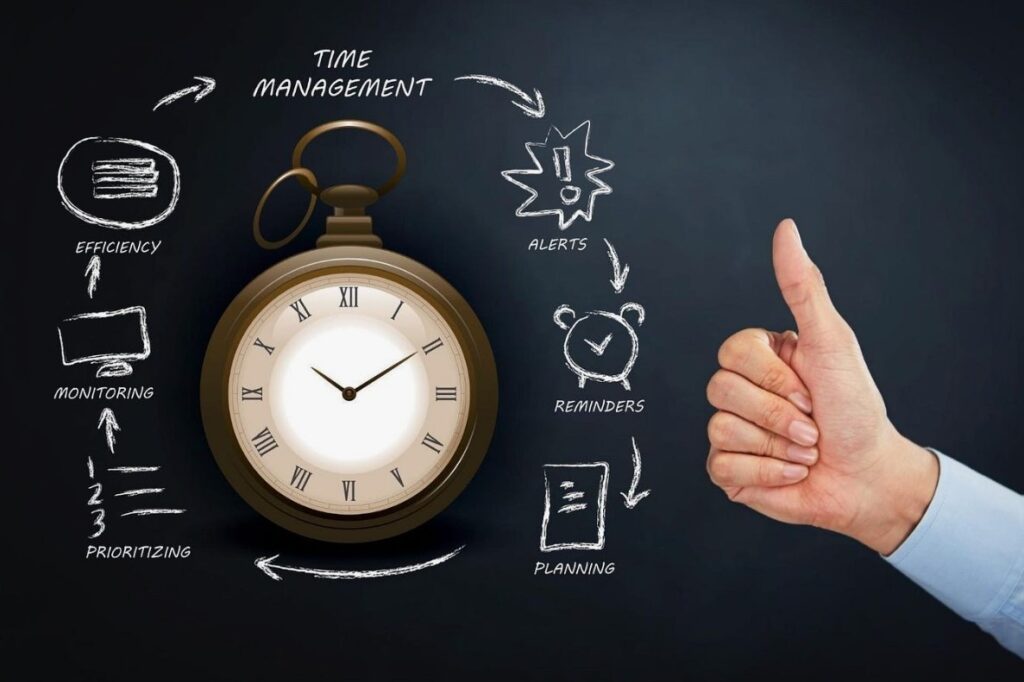
Time management is one of the most underrated academic skills, yet it is the one skill that affects every area of a student’s life. It is not about working harder — it is about working smarter.
Students who manage their time well experience less stress, produce better quality work, and have more energy left for the things they enjoy. Those who don’t often find themselves cramming the night before exams, missing deadlines, and burning out fast.
Research from the American Psychological Association shows that chronic procrastination affects nearly 20% of adults, and it often starts during the school years. The habit of putting things off does not disappear after graduation — it follows people into their careers.
Learning to break large tasks into smaller steps, set personal deadlines ahead of real ones, and use tools like planners or apps makes a dramatic difference. A student who submits quality work on time — consistently — earns the trust of teachers, professors, and eventually, employers.
How to build it: Use the Pomodoro Technique — 25 minutes of focused work followed by a 5-minute break. Track where your time actually goes for one full week. The results are always eye-opening.
3. Communication Skills
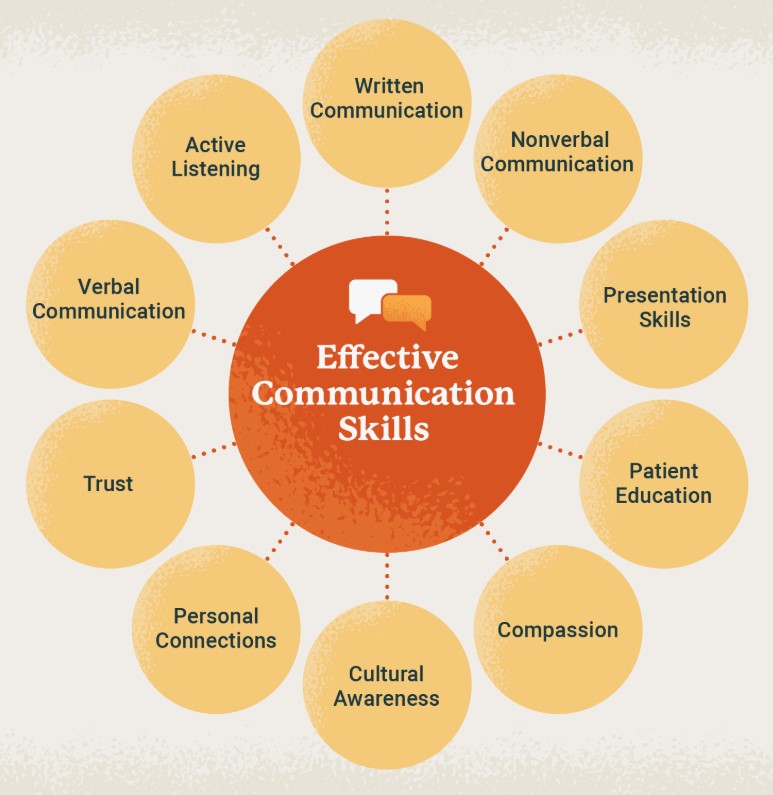
Strong communication skills — both written and verbal — are the backbone of every successful academic and professional relationship. A student can have the best idea in the room, but if they cannot express it clearly, that idea gets lost.
Written communication matters in every subject. A history essay, a science lab report, a business proposal — they all require the ability to organize thoughts and deliver them in a way that others can follow and respect.
Verbal communication matters just as much. Participating in class discussions, presenting projects, explaining ideas in group work — these are all daily opportunities to practice speaking with confidence and clarity.
A LinkedIn Workforce Report consistently ranks communication as the number one soft skill that employers say is most lacking in new graduates. That gap is not about intelligence — it is about practice.
How to build it: Write every day, even if it is just a journal. Join a debate club, a school drama group, or a public speaking class. Read widely — good writers are almost always good readers first.
4. Research Skills
The internet has made information incredibly easy to access, but that has also made research skills more important than ever. Any student can type a question into a search engine. Very few know how to evaluate what comes back.
Strong research skills include knowing how to find credible sources, cross-reference information, identify bias, and cite evidence properly. These skills are essential not just in school but throughout adult life — from making informed health decisions to understanding news and financial choices.
A student who learns to use academic databases, evaluate peer-reviewed studies, and distinguish facts from opinions has a genuine advantage. They write better essays, make more informed arguments, and approach problems with a mindset grounded in evidence.
How to build it: Practice using library databases like JSTOR or Google Scholar instead of relying only on general search engines. Always check the author, the date, and the source before trusting any piece of information.
5. Adaptability
Adaptability is the ability to adjust, pivot, and keep moving when circumstances change. And in today’s world — where industries shift, technologies evolve, and unexpected challenges appear constantly — it is one of the most valuable skills a person can carry.
Students who score perfectly on every predictable exam but fall apart when a teacher changes the format or a project takes an unexpected turn have a real vulnerability. Life does not follow a syllabus.
A World Economic Forum Future of Jobs Report listed adaptability and resilience among the top 10 most critical skills for the decade ahead. Companies are investing in employees who can learn new tools quickly, pivot strategies mid-project, and stay calm under pressure.
The classroom is actually a great training ground for adaptability — if students embrace it. Taking different types of courses, trying new study methods, and choosing unfamiliar topics for projects all build the flexibility of mind that makes a person genuinely resilient.
How to build it: Say yes to unfamiliar challenges. Take elective courses outside your comfort zone. When a plan fails, analyze what happened and try a different approach — without catastrophizing.
6. Collaboration and Teamwork
Almost nothing significant in life is built alone. Collaboration — the ability to work effectively with others toward a shared goal — is a skill that employers rank consistently among the most important qualities they look for in candidates.
Group projects in school often feel frustrating. Unequal effort, conflicting ideas, and poor communication are common. But that frustration is the training ground. Learning to navigate those challenges — how to delegate, how to listen, how to resolve disagreement respectfully — is exactly what prepares students for professional environments.
A student who can collaborate well brings empathy, flexibility, and accountability to a team. They know how to lift others rather than compete with them. They understand that a group’s success is also their success.
How to build it: Take group projects seriously — not just as a grade but as a skill-building opportunity. Practice active listening. Volunteer to take on roles that are uncomfortable, like leading the group or handling a difficult part of the task.
7. Self-Directed Learning
Self-directed learning is the ability to identify what you need to know, find ways to learn it, and hold yourself accountable — without waiting to be told. It is the skill that separates lifelong learners from those who stop growing the moment formal education ends.
In school, teachers set the agenda. In the real world, nobody does that for you. The people who thrive are those who can recognize gaps in their knowledge and take initiative to fill them — through books, courses, mentors, or experience.
Self-directed learners are also more engaged in school. When a student chooses what to explore within a topic, their curiosity drives the learning. That curiosity produces deeper understanding than any exam preparation ever could.
Many of the most successful people in the world — Warren Buffett, Oprah Winfrey, Elon Musk — are famously voracious self-directed learners who read constantly and pursue knowledge well outside their immediate professional needs.
How to build it: Pick one topic each month that genuinely interests you and explore it independently. Seek out books, documentaries, podcasts, and people who know things you do not.
8. Problem-Solving
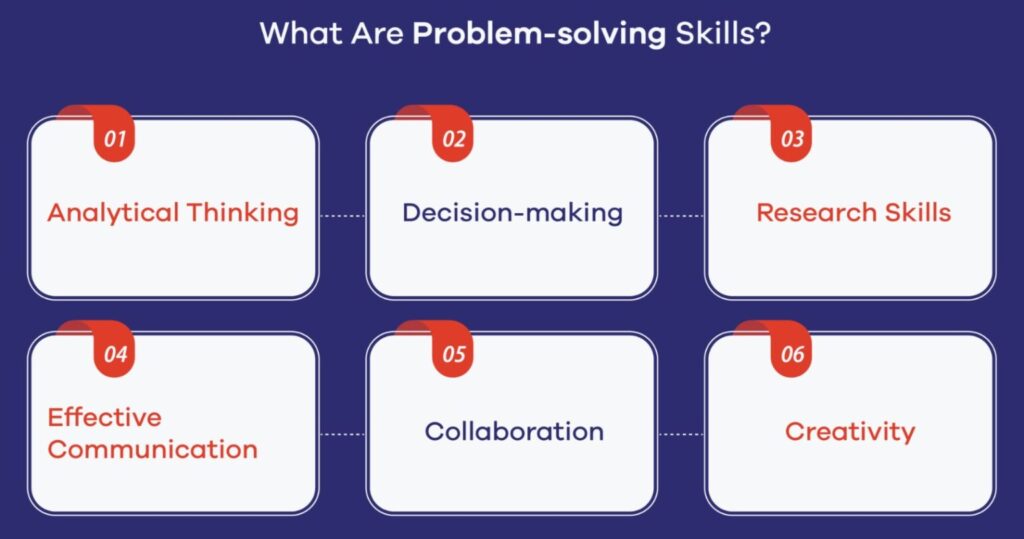
Every classroom, every workplace, and every personal life is full of problems. The skill that determines success is not the ability to avoid problems — it is the ability to work through them systematically and creatively.
Problem-solving as an academic skill goes beyond solving math equations. It includes the ability to define a problem clearly, generate possible solutions, evaluate trade-offs, and implement the best option — then learn from what happens.
Students who develop this skill approach difficulties with curiosity rather than anxiety. They do not freeze when something goes wrong. They assess the situation, draw on what they know, and take action.
This skill is directly tied to critical thinking and adaptability, but it deserves its own spotlight because it is so deeply practical. A student who can problem-solve well will handle failed experiments, difficult teammates, broken plans, and unexpected obstacles with far more grace and effectiveness than one who was simply taught to follow instructions.
How to build it: Practice working through problems step by step instead of looking for the answer immediately. Use frameworks like design thinking or root cause analysis to structure your approach to complex challenges.
9. Digital Literacy
Digital literacy is no longer optional — it is essential. In the 21st century, every academic and professional environment runs on digital tools. Students who understand technology not just as users but as critical thinkers have a powerful advantage.
Digital literacy covers a wide range: using productivity software efficiently, understanding data privacy, evaluating online sources, collaborating through digital platforms, and having a basic understanding of how technology works. It also includes responsible digital citizenship — understanding how to behave ethically and safely online.
For students who want to track their academic standing, tools like a gpa calculator 7th grade level and beyond help them take ownership of their performance and understand where they stand — which is itself a form of digital literacy applied to academic self-management.
A student who is digitally literate can manage their own learning more effectively, communicate professionally across platforms, and adapt quickly when new tools emerge. These are skills that will only grow in importance as technology continues to shape every industry.
How to build it: Go beyond basic usage. Learn keyboard shortcuts, explore project management tools, understand basic spreadsheet functions, and take a short online course in a digital skill that interests you — coding, design, or data basics.
10. Emotional Intelligence
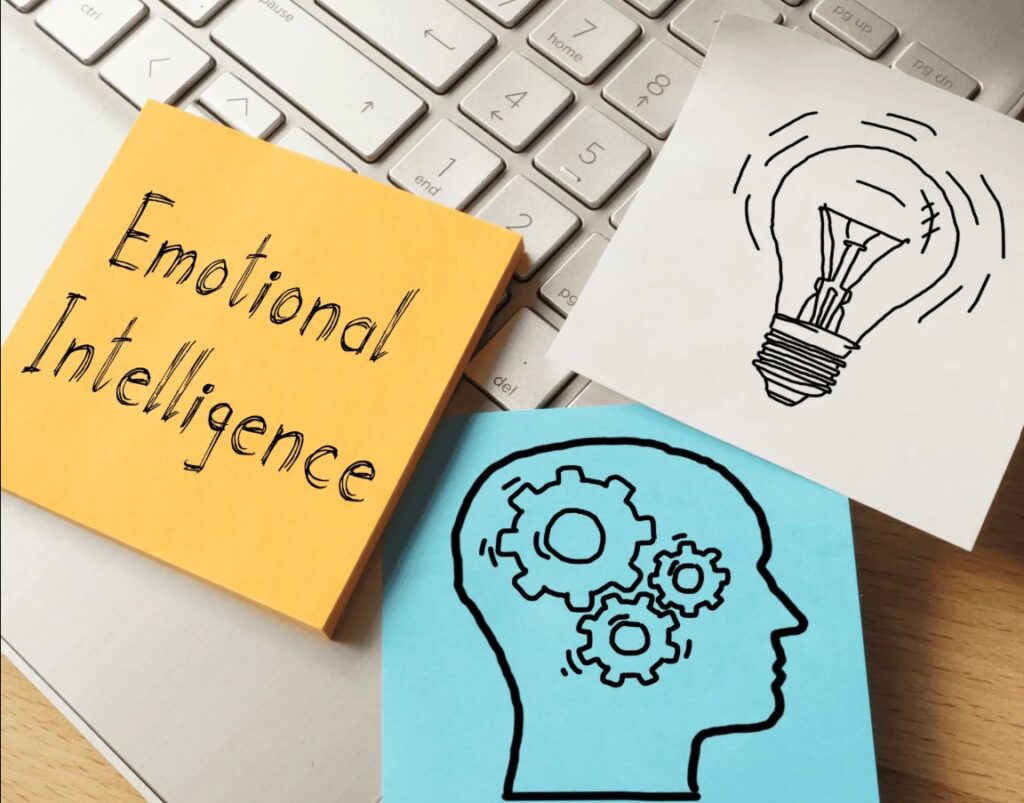
Emotional intelligence (EQ) is the ability to recognize, understand, and manage your own emotions — and to recognize and respond thoughtfully to the emotions of others. It is a skill that GPA has absolutely no way to measure, yet research consistently shows it is one of the strongest predictors of success in life and work.
Dr. Daniel Goleman, who brought EQ into mainstream conversation, found that emotional intelligence accounts for nearly 90% of what sets high performers apart from their peers with similar technical skills and knowledge. That is a staggering finding — and it holds up across industries and roles.
Students with high emotional intelligence handle stress better, build stronger relationships, navigate conflict more effectively, and show up as more empathetic and reliable teammates and leaders. They know when they are overwhelmed and what to do about it. They can read a room, give honest feedback kindly, and receive criticism without shutting down.
These qualities do not show up in a GPA. But they show up every single day in how a person performs, connects, and leads.
How to build it: Practice self-reflection daily — journaling is one of the most effective tools. Pay attention to your emotional reactions and ask yourself what triggered them. Practice empathy by actively trying to see situations from someone else’s perspective.
How These Skills Work Together
The beautiful thing about these 10 academic skills is that they reinforce each other. A student who practices critical thinking becomes a better problem-solver. A student who works on emotional intelligence becomes a more effective collaborator. A student who builds self-directed learning habits naturally strengthens their research skills.
GPA, at its best, reflects a student’s ability to perform within a structured system. But life is not a structured system. It is messy, unpredictable, and full of problems that do not come with answer keys.
The students who go on to do meaningful, impactful work are almost always the ones who developed these deeper skills — often alongside a decent GPA, sometimes in spite of a mediocre one.
Summary
- GPA is important, but it tells only a small part of a student’s full story.
- Critical thinking helps students question assumptions, evaluate evidence, and reason through problems rather than just memorizing answers.
- Time management allows students to meet deadlines, reduce stress, and produce consistently better quality work.
- Communication skills — both written and verbal — ensure that great ideas are actually heard, understood, and respected by others.
- Research skills teach students how to find credible sources, evaluate information carefully, and back up arguments with solid evidence.
- Adaptability prepares students to handle unexpected changes, pivot when plans fail, and stay productive under pressure.
- Collaboration builds the ability to work effectively in teams, resolve conflicts respectfully, and contribute to shared goals.
- Self-directed learning empowers students to take ownership of their education and keep growing long after formal schooling ends.
- Problem-solving gives students a structured and creative approach to tackling challenges without freezing or giving up.
- Digital literacy equips students to navigate technology confidently, evaluate online information critically, and use digital tools efficiently.
- Emotional intelligence develops self-awareness, empathy, and the ability to manage relationships — qualities that drive long-term personal and professional success.
Final Thoughts: Invest in Skills, Not Just Grades
This is not an argument against working hard for good grades. Grades matter — especially for college admissions and certain professional programs. But they are a starting line, not a finish line.
A student who leaves school with strong critical thinking, communication, time management, collaboration, adaptability, research, problem-solving, digital literacy, self-directed learning, and emotional intelligence is ready for almost anything the world throws at them.
Parents, teachers, and students themselves should stop measuring success only by the number on a report card. Start measuring it by the skills a student is building — because those skills are what will carry them forward for the next 40 years, long after anyone has stopped asking what their GPA was.
The grade fades. The skills stay.
FAQs
Do employers care more about GPA or skills?
Most employers care far more about skills than GPA. A 2019 NACE survey found that less than 40% of employers screen candidates by GPA. They prioritize communication, critical thinking, problem-solving, and teamwork because those skills directly impact job performance.
What academic skills are most important for future success?
The most important academic skills for future success include critical thinking, time management, communication, adaptability, emotional intelligence, and self-directed learning. These skills help people navigate real-world challenges that no exam or grade can fully prepare them for.
Can a student with a low GPA still be successful?
Absolutely. Many highly successful people had average or below-average GPAs but excelled because of strong problem-solving, communication, resilience, and leadership skills. GPA measures performance within a system — skills determine performance in real life.
How can students improve academic skills outside the classroom?
Students can improve academic skills by reading daily, joining clubs, volunteering, taking online courses, practicing public speaking, and working on real projects. Practical experience builds skills far faster than passive studying ever does.
Why is emotional intelligence important for students?
Emotional intelligence (EQ) helps students manage stress, build strong relationships, handle conflict, and perform better under pressure. Research by Dr. Daniel Goleman shows that EQ accounts for nearly 90% of what separates high performers from their peers with similar technical knowledge.