

- Calculate your current GPA and set a target.
- Talk to every professor during week one – show you care.
- Track your grades weekly so you can fix problems early.
- Focus on high-value assignments (final exams, major papers).
- Study your hardest subject first each day.
- Use campus resources – tutoring, writing center, advisors.
- Form a small study pod for accountability.
- Stop multitasking – put your phone away.
- Ask for extensions before deadlines hit.
- Sleep and eat well – your brain needs fuel.
- Pick Your Battles Wisely (Strategic Course Selection)
- Create a Grade Tracker and Update It Weekly
You feel that pressure building inside your chest. The final semester has arrived, and your GPA isn’t where you want it to be. Maybe you spent too many nights hanging out with friends instead of studying. Maybe a tough professor gave you grades you didn’t expect. Or perhaps life simply got in the way.
Here is the good news: one semester can change everything. Students have pulled their GPAs from disappointing to impressive in just fifteen weeks. You can join them.
This guide shares real experiences from students who turned things around when it mattered most. No fluff. No impossible advice. Just practical steps that work when time is short.
Why Your Last Semester Still Matters (Even If You Think It’s Too Late)
Many students believe their GPA is set in stone by senior year. They stop trying. They coast. And they miss a huge opportunity.
Consider Marcus, a business major who finished his third year with a 2.3 GPA. He felt embarrassed telling employers about his grades. Graduate school seemed like a fantasy. But Marcus decided to fight back in his final semester. He earned a 3.8 average across five courses. That single semester pulled his cumulative GPA to a 2.7. Not perfect, but enough to get him into a decent master’s program.
Your last semester carries the same weight as every previous semester. Every A you earn counts equally toward your final average. A strong finish shows admissions committees and hiring managers that you finally figured things out. They love seeing an upward trend.
Step 1: Calculate Exactly Where You Stand Right Now

You cannot fix what you do not measure. Grab your transcript or log into your student portal. Write down every course grade you have earned so far. Include the credit hours for each class.
Now do the math. Multiply each course grade (on a 4.0 scale) by its credit hours. Add all those numbers together. Divide by your total completed credit hours. That is your current GPA.
Let us walk through an example. Jessica had completed 90 credit hours with a 2.8 GPA. She needed to know what grades would get her to a 3.0 by graduation. She used a Middle School GPA Calculator to experiment with different scenarios. This helped her realize that earning three As and two Bs in her final 15-credit semester would push her over the finish line.
Knowing your target makes the work feel real. You stop guessing and start executing.
Step 2: Pick Your Battles Wisely (Strategic Course Selection)

Your university probably requires you to take a minimum number of credits to graduate. But you might have some flexibility in which classes fill those requirements.
Choose courses that play to your strengths. Avoid notoriously difficult professors if you can. Look for classes with grading systems that reward effort over perfect test scores.
Sarah learned this lesson the hard way. She needed three more electives to graduate. Her advisor suggested taking advanced economics because it fit her schedule perfectly. Sarah struggled with math. She ignored her gut feeling and enrolled anyway. Halfway through the semester, she had a D average and felt defeated.
Meanwhile, her friend Alex took introduction to film studies, public speaking, and a writing workshop. All three had participation grades, group projects, and multiple chances to earn points. Alex finished with three As and raised his GPA significantly.
Ask upperclassmen which classes offer the best chance for high grades. Check Rate My Professors but take extreme reviews with a grain of salt. Visit the professor during office hours before adding the class. Ask directly: “What do successful students do to earn an A in this course?”
Step 3: Have an Honest Conversation With Every Professor

Professors notice when students care. They also notice when students disappear for fourteen weeks and suddenly beg for mercy at the end. Do not be that person.
Go see your professors during the first week of the semester. Introduce yourself. Say something like: “I am working hard to improve my GPA this semester. I plan to attend every class, sit in the front, and complete all assignments early. Do you have any advice for excelling in your course?”
This simple act changes how professors see you. They start thinking of you as a serious student rather than a grade grubber.
Halfway through the semester, check in again. Ask if you are on track for the grade you want. If you are falling behind, ask for specific suggestions. Some professors offer extra credit. Others will let you revise past assignments. Many will round your grade up at the end if they know you tried your absolute best.
One student named David had a 68% in organic chemistry with two weeks left. He visited his professor every single office hour for those two weeks. He asked questions, showed his work, and demonstrated improvement. The professor gave him a C- instead of a D because he saw genuine effort. That C- allowed David to graduate on time.
Step 4: Create a Grade Tracker and Update It Weekly
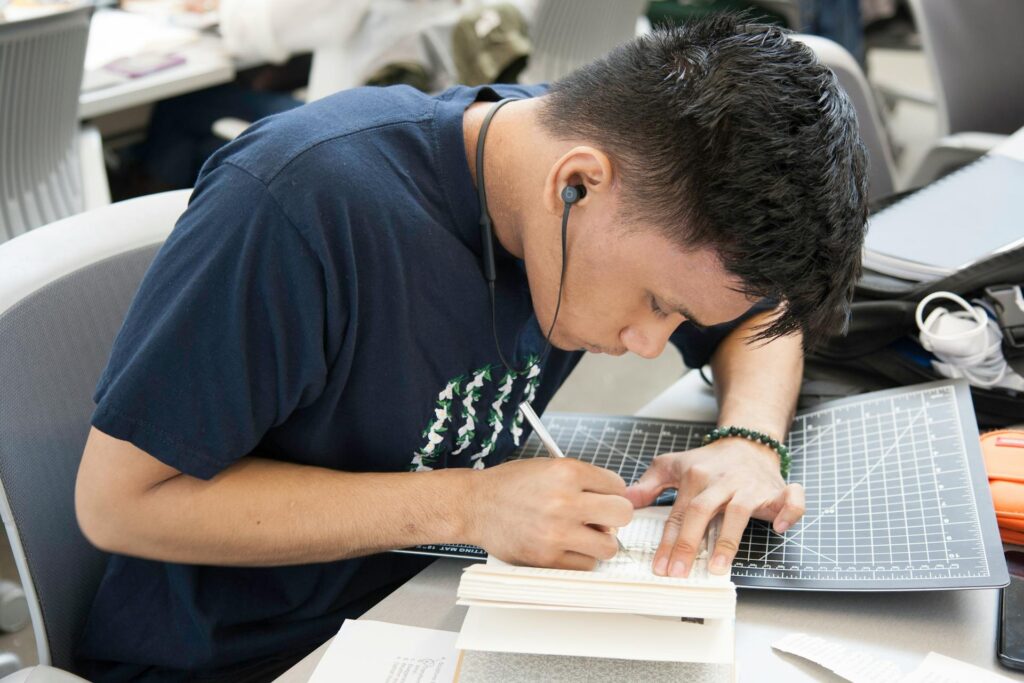
Winging it does not work. You need a system.
Open a spreadsheet or use a notebook. For each class, write down every graded assignment, test, quiz, and project. Record the points you earned and the total points possible. Calculate your current percentage in real time.
Update this tracker every Friday afternoon. Compare your progress against the target you set in Step 1. If you are falling behind in a class, you have time to fix it before finals week.
Emily used this method during her final semester of nursing school. She noticed in week six that her pharmacology grade sat at 74%, just above failing. Her target was a B. By catching the problem early, she scheduled extra tutoring sessions and improved her study habits. She finished with an 86% and kept her scholarship.
Without the tracker, she would have discovered her low grade during finals week. That would have been too late.
Step 5: Master the Art of Strategic Effort

Not all assignments deserve the same amount of your time. Some are worth 5% of your grade. Others are worth 30%. Spend your energy where it pays off most.
Read every syllabus carefully. Look for the breakdown:
- Final exam (40% of grade)
- Term paper (25% of grade)
- Midterm exam (20% of grade)
- Weekly quizzes (10% of grade)
- Attendance and participation (5% of grade)
If you only have three hours to study this week, spend them preparing for the midterm, not memorizing vocabulary for the weekly quiz. That sounds obvious, but most students do the opposite. They focus on small, frequent assignments because those feel urgent. Big assignments feel distant, so they procrastinate.
Break the cycle. Put major assignments on your calendar at the start of the semester. Work backward from each due date to create a schedule. Write your term paper outline six weeks before it is due. Start studying for the final exam three weeks early.
Rachel used this strategy while working thirty hours per week. She knew her marketing research class had a group project worth 35% of her grade. She volunteered to be the team leader, organized the group’s timeline, and made sure everyone contributed. Her group earned an A on the project, which carried her through a weak performance on the final exam.
Step 6: Attack Your Weakest Subject First Every Day

Your natural instinct is to study what you already understand. It feels good to breeze through familiar material. But that does not improve your GPA.
Do the hard thing first. Each day, start with the subject where you struggle the most. Spend your freshest mental energy there. Save easy review for later when your brain feels tired.
James followed this rule during his final semester of engineering school. Thermodynamics terrified him. He would normally put it off until midnight, then stare at his textbook with exhausted eyes and learn nothing. When he started studying thermodynamics first thing after class, his test scores jumped from the 60s to the 80s.
He said: “It sucked for the first week. My brain hurt every afternoon. But then something clicked. The material started making sense because I was actually awake while studying it.”
Try this for just five days. You will notice a difference.
Step 7: Build a Small Accountability Pod

Studying alone works for some people. But most students benefit from a little social pressure.
Find two or three classmates who also want to improve their grades. Meet at the library or a coffee shop three times per week. Sit together but work separately. Take breaks at the same time. Quiz each other before exams.
The magic happens when you feel too embarrassed to skip a study session. Your pod members text you asking where you are. You show up even on low-motivation days.
Maya joined a study pod during her last semester of psychology. Her GPA sat at 2.5. She doubted whether graduate school was possible. Her pod members held her accountable. They reviewed her flash cards. They explained concepts she did not understand. By the end of the semester, Maya earned a 3.6 average and got accepted into a master’s program.
Choose pod members who are slightly more disciplined than you. Avoid friends who will distract you or complain about the workload.
Step 8: Use Every Campus Resource Like Your GPA Depends On It

Your tuition pays for services that most students never touch. That is like buying a gym membership and never walking through the door.
Visit the writing center before every major paper. They will help you organize your arguments, fix grammar mistakes, and improve your citations. Papers that would have earned a B+ can become A- with one writing center appointment.
Go to tutoring sessions for difficult subjects. Even if you think you understand the material, tutors can show you shortcuts and test-taking strategies.
Meet with academic advisors to confirm you are on track for graduation. One missing requirement could force you to take an extra semester, which defeats the purpose of improving your GPA now.
Use the math lab for statistics or calculus help. Use the career center to polish your resume. Use counseling services if stress or anxiety interferes with studying.
Thomas never visited a single campus resource during his first three years. His GPA was 2.1. Desperate to raise it, he finally walked into the tutoring center for his accounting class. The tutor helped him see patterns he had missed for months.
His next exam score went from 55% to 82%. He started visiting the writing center for every paper. He met with his advisor weekly to track progress. His final semester GPA was 3.4.
Step 9: Stop Multitasking During Study Sessions

Your phone pings. You check the message. You reply. Then you scroll Instagram for “just a second.” Twenty minutes later, you have read one paragraph of your textbook.
Multitasking is a lie. Your brain cannot focus on two things at once. Every time you switch tasks, you lose momentum and waste mental energy.
Put your phone in another room. Use a website blocker to lock distracting sites during study hours. Close your email tab. Tell your friends you are unavailable from 6 PM to 9 PM.
Study in 50-minute focused blocks. Take a 10-minute break. Then start another block. During those 50 minutes, you do nothing except study. No snacking. No texting. No daydreaming.
Lisa tried this during her final semester of criminal justice. She had always studied with Netflix playing in the background. She thought it helped her relax. When she tried silent, focused studying for the first time, she finished her homework in half the usual time.
She used the extra hours to sleep more and exercise. Her grades went up because she was actually learning instead of just skimming.
Step 10: Negotiate Deadlines Before You Miss Them

Things go wrong. Your laptop crashes. You get the flu. A family emergency pulls you away from school.
When disaster strikes, do not hide. Talk to your professor immediately. Explain the situation briefly and professionally. Ask for an extension before the deadline passes.
Most professors will grant a short extension if you ask ahead of time. They become frustrated when you submit nothing or turn in sloppy work after the deadline.
Send an email like this:
“Dear Professor Rodriguez, I have been working on the research paper due Friday. Unfortunately, my laptop broke yesterday and I lost two days of progress. May I have an extension until Tuesday? I will submit a complete draft by then. Thank you for your understanding.”
Professors receive dozens of excuses every semester. The ones that work are honest, specific, and come with a clear plan. The ones that fail are vague, last-minute, and blame someone else.
Carlos learned to communicate early. He felt his depression returning during week eight of his final semester. Instead of disappearing, he visited his professor and the dean of students.
They helped him arrange incomplete grades and extended deadlines. He finished his coursework over the summer and graduated with a much better GPA than if he had failed multiple classes.
Step 11: Take Care of Your Body So Your Brain Works

You cannot think clearly when you are exhausted, hungry, and stressed. Yet that is exactly how most students operate during finals.
Sleep at least seven hours per night. Studying until 3 AM destroys your memory and focus. You are better off sleeping and reviewing for one hour in the morning.
Eat actual food. Not energy drinks and instant noodles. Protein, vegetables, and complex carbohydrates give your brain steady fuel.
Move your body. A twenty-minute walk between study sessions clears your mind and reduces anxiety. Exercise releases dopamine, which helps you stay motivated.
Drink water. Dehydration causes brain fog and headaches. Keep a water bottle on your desk and refill it constantly.
Naomi thought she could power through her final semester on coffee and four hours of sleep. She crashed hard in week ten. Her grades slipped. She felt miserable. After forcing herself to sleep properly and eat balanced meals, her focus improved dramatically. She said: “I cannot believe I spent three years torturing myself. Sleeping more made me study better, not worse.”
Step 12: Know When to Drop a Class

Sometimes the smartest move is retreating to fight another day.
Most universities have a withdrawal deadline around week ten or twelve. If you are failing a class and see no path to a passing grade, drop it. A W on your transcript looks much better than an F. The W does not affect your GPA. An F pulls it down significantly.
Be honest with yourself. Have you missed too many assignments? Is the material beyond your current skill level? Has the professor made it clear that you cannot pass?
If the answer is yes to any of these, withdraw and focus your energy on your remaining classes. You can retake the course next semester or during summer school. Your graduation might delay slightly, but your GPA will thank you.
Marcus made this decision in his final semester. He was failing advanced statistics with no hope of recovery. He withdrew, took a different statistics course at a community college over the summer, and transferred the credit. He graduated one semester late but with a 3.1 GPA instead of a 2.4.
The Final Push: Your Last Four Weeks Matter Most
The semester feels long, but the final month decides your grades. Many students coast after spring break or Thanksgiving. They assume their trajectory is locked in. They stop studying hard.
That is when you pass them.
During the last four weeks, double your efforts. Review your notes every day. Form study groups for final exams. Visit professors during their final office hours. Complete all extra credit opportunities, no matter how small.
One student named Kevin raised his sociology grade from a C to an A entirely in the last three weeks. He noticed that the final exam was worth 40% and covered only the last four chapters.
He ignored the earlier material and mastered those final chapters completely. He earned a 98% on the final, which pulled his average up dramatically.
Look for these opportunities in your own classes. Ask professors what percentage of the final exam covers new material versus cumulative content. Spend your time where the points live.
Summary: How to Improve Your GPA in the Last Semester
Your final semester can still significantly raise your overall GPA if you use the right strategies. Here are the key takeaways:
- Know your numbers – Calculate your current GPA and set a realistic target for what grades you need in your last semester. Use a GPA calculator to experiment with different scenarios.
- Choose courses wisely – Pick classes that play to your strengths, avoid notoriously hard professors, and look for grading systems that reward consistent effort.
- Talk to your professors early – Visit them during the first week, show genuine interest, and check in halfway through the semester. Professors often help students who demonstrate real effort.
- Track your grades weekly – Use a spreadsheet to monitor every assignment and test. Catching a low grade early gives you time to fix it before finals.
- Focus on high-impact work – Spend most of your energy on assignments and exams worth the largest percentage of your grade (e.g., a 40% final exam over a 5% quiz).
- Attack your weakest subject first – Study your hardest class when your mind is freshest, not late at night.
- Form a small accountability pod – Study with 2–3 motivated classmates. They’ll keep you showing up and working hard.
- Use every campus resource – Writing centers, tutoring, math labs, advisors, and counseling services are already paid for by your tuition. Use them.
- Stop multitasking – Put your phone away, use website blockers, and study in focused 50-minute blocks with no distractions.
- Ask for extensions before deadlines – If something goes wrong, talk to your professor immediately. Most will grant a short extension if you ask ahead of time.
- Take care of your body – Sleep 7+ hours, eat real food, exercise, and drink water. A healthy brain learns faster and remembers more.
- Know when to drop a class – If you’re failing and see no way to pass, withdraw before the deadline. A “W” doesn’t hurt your GPA; an “F” does.
- Crush the final four weeks – Many students coast at the end. Double your efforts, review daily, form study groups, and chase every extra credit opportunity.
Bottom line: One strong semester can pull up years of mediocre grades. Start today. Be honest with yourself. Use every tool available. You can absolutely finish better than you started.
You Can Do This
Improving your GPA in the last semester requires honesty, planning, and consistent effort. It is not easy. But students have done it before you, and students will do it after you.
Start today. Calculate your current GPA. Identify your target. Visit your professors. Build your study system. Use every resource available.
One semester changes everything. Make this one count.