
- Stop transcribing word-for-word. Summarize in your own words instead.
- Use the Cornell Method (cues column, notes column, bottom summary).
- Review your notes within 1 hour, 24 hours, 1 week, and 1 month.
- Practice active recall: quiz yourself, don’t just reread.
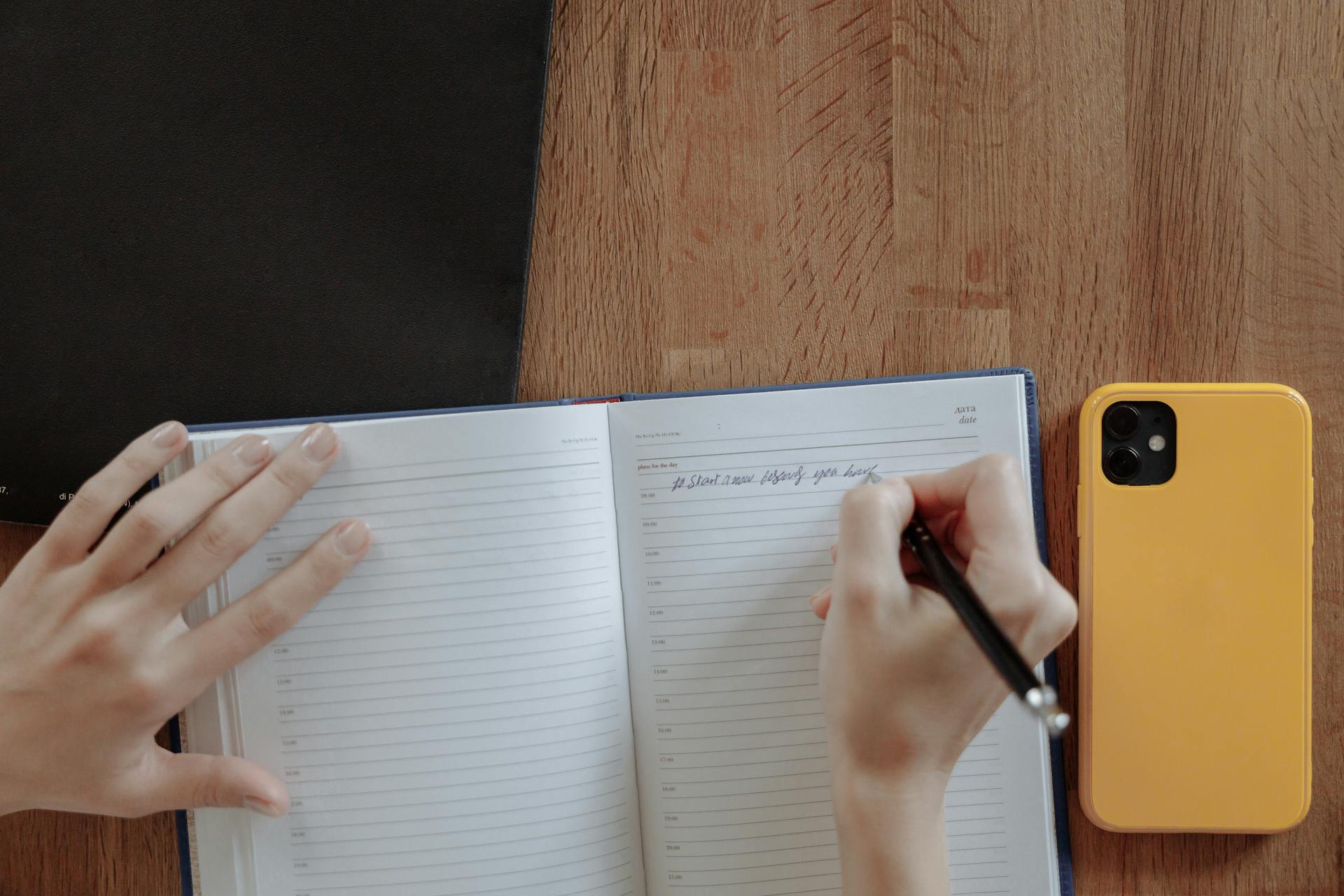
- Handwrite your notes for better retention (then digitize if needed).
- Match your method to the situation: Cornell for lectures, mind maps for brainstorming, boxing for meetings.
- Avoid over-highlighting, perfectionism, and skipping the summary step.
- Start with one small change (like a one-sentence summary) and build from there.
Have you ever left a class feeling confident, only to open your notebook later and find nothing but confusing scribbles? Many learners experience this frustrating disconnect.
They work hard, fill page after page, and still struggle to recall key information when test day arrives. The problem rarely involves a lack of effort. Instead, the real issue comes down to technique.
Note-taking is not about recording every single word a teacher says. It works best as a thinking tool. A person who takes great notes actively processes information, filters out noise, and creates a personalized map of ideas.
This article shares experience‑based strategies from real classrooms. Expect friendly advice, practical examples, and no academic jargon.
From choosing the right method to reviewing with purpose, these tips have helped countless students turn messy notebooks into powerful study aids. Let us begin with a story you might recognize.
A Familiar Scene from Real Life

Meet a middle school student named Jordan. Jordan sits near the front of every class. His pen never stops moving. By the end of a 45‑minute history lesson, he has filled three pages with tiny handwriting. He feels proud of his work.
Then comes the night before the exam. Jordan opens his notebook and feels his stomach drop. The notes look like a giant wall of text. He cannot tell which facts matter most. Important dates hide inside long paragraphs. His own handwriting becomes hard to read. He spent hours writing but almost no time thinking.
Jordan’s story happens everywhere. Bright, hardworking students fall into this trap every day. The good news is that a few simple changes can turn everything around.
Why Traditional Note-Taking Often Lets You Down

Most people learn to take notes by copying what others do. A teacher writes on the board, so students write too. This method seems logical, but research tells a different story. Passive copying does very little for long‑term memory.
When a student writes without processing meaning, the brain treats those words like background noise. Think about listening to music while doing homework. The songs play, but later you cannot remember a single lyric. The same thing happens with copied notes.
Another problem involves structure. Long, dense paragraphs hide relationships between ideas. A reader cannot quickly see which points support a main argument. This lack of visual clarity makes review sessions exhausting. The brain spends too much energy just finding information instead of actually learning it.
The Active Mindset Shift That Changes Everything

Great note‑takers think like filters, not like recording devices. They listen for signals that indicate importance. Phrases like “the three main causes” or “remember this for the test” act as flashing arrows. A skilled note‑taker pauses writing during these moments and simply listens.
Active processing also means asking questions internally. Why does this fact matter? How does this idea connect to yesterday’s lesson? What example would make this clear? These questions force the brain to engage with material rather than passively record it.
One college professor noticed a dramatic improvement after teaching his students this filter mindset. He asked them to write down only five key points per lecture. Nothing more. Test scores rose by nearly fifteen percent within one semester. Less writing led to more learning.
The Cornell Method: Simple Structure for Better Recall

Among all note‑taking systems, the Cornell Method has stood the test of time. Developed at an Ivy League university decades ago, this technique still outperforms many modern apps. It works because it builds review directly into the note‑taking process.
Here is how a learner sets up a Cornell page. They draw a vertical line about two‑thirds of the way across the paper. The left column takes about one third of the width. The right column takes two thirds. They also leave a two‑inch space at the bottom.
During class, all notes go into the right column. The writer uses bullet points, abbreviations, and short phrases. No full sentences allowed. This forces summarization on the fly. After class ends, within twenty‑four hours, the student fills the left column with cue words or questions. Finally, they write a one‑sentence summary at the bottom.
Why does this work so well? The left column and summary force active recall. A student cannot just reread; they must think about main ideas. This extra mental effort strengthens memory pathways. Many successful learners rely on Cornell for challenging subjects like science and history.
To build a strong foundation, explore important skills alongside this method.
Mind Mapping for People Who Think Visually
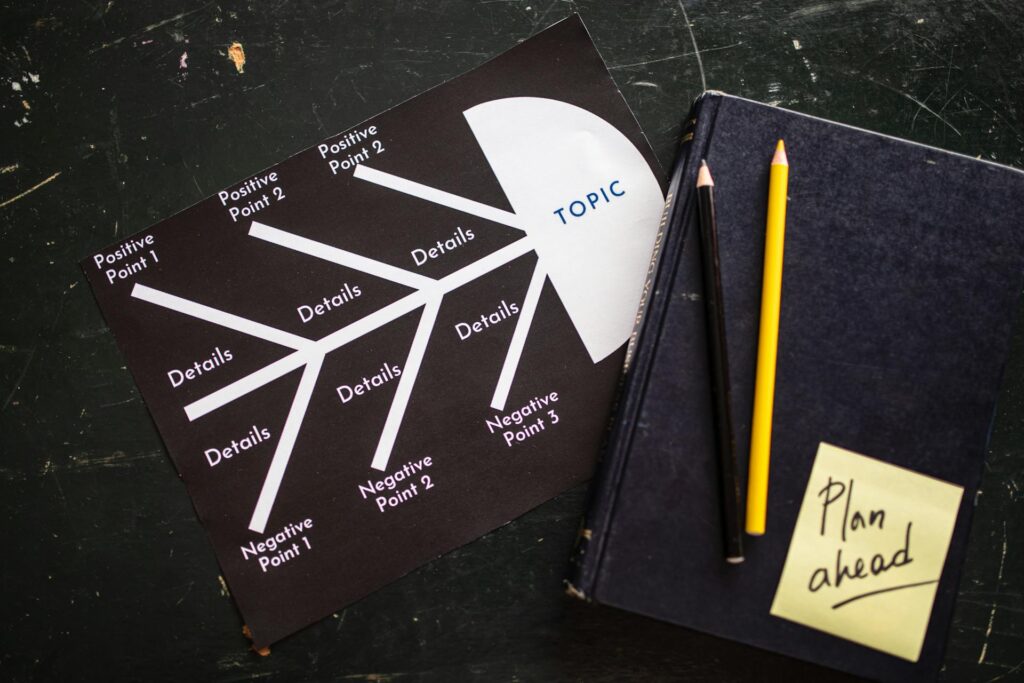
Traditional outlines bore some learners to tears. Straight lines and Roman numerals feel restrictive. For these students, mind mapping offers a liberating alternative. This technique mirrors how the brain naturally works through associations and images.
To create a mind map, start with a blank page turned sideways. Write the main topic in the center and draw a circle around it. From this center, draw branches outward for each major idea. On those branches, add smaller branches for supporting details, examples, or definitions.
Use colors, small drawings, and single keywords instead of long sentences. The goal creates a colorful, organic diagram. One student used mind maps for her literature class. She drew a central castle for a novel about medieval England. Branches included characters, themes, plot events, and historical context. Each branch had its own color and tiny sketches.
When exam time arrived, she closed her eyes and mentally walked through her mind map. The visual layout helped her recall details in order. She earned the highest grade in her class. Mind maps also work wonderfully for group study sessions where multiple people add branches together.
Students in virtual classes often benefit from study pathways like this one.
The Outline Method: Old School but Effective
Sometimes simplicity wins the race. The outline method uses indentation and numbering to show clear relationships between ideas. A main topic gets a Roman numeral. A subtopic gets a capital letter. Supporting details receive numbers.
This structure shines in subjects with obvious hierarchies. Science classes, law courses, and business lectures fit perfectly. One glance at a good outline tells a reader exactly which ideas matter most. Smaller facts sit underneath bigger concepts like branches under a trunk.
However, the outline method struggles when lectures jump around unpredictably. A teacher who tells stories, asks questions, and circles back to earlier points can destroy a neat outline. In those situations, a flexible method like Cornell or mind mapping works better.
A practical tip for outline users: leave plenty of white space. Many students cram text together, leaving no room for additions. Skipping lines between main sections allows a learner to insert forgotten points or questions later. These small habits saves hours of confusion.
Digital Notes versus Paper Notes: What Helps Retention More?
This debate sparks strong opinions in every classroom. Some people swear by laptops. Others refuse to give up their favorite pens. Research offers a clear answer, but with an important twist.
Several studies show that handwriting activates brain regions involved in learning more strongly than typing. The physical act of forming letters, combined with slower writing speed, forces summarization. Students who write by hand typically perform better on conceptual questions than those who type.
However, digital tools bring real advantages. Cloud storage means notes never get lost in a backpack. Search functions find keywords instantly. Students with handwriting difficulties find typing much easier. Apps like OneNote, Notion, and GoodNotes allow mixing typed text, handwritten notes, images, and even audio recordings.
The smartest approach uses both methods. Take handwritten notes during lectures for better memory encoding. Then type those notes into a digital system later for organization and searchability. That second step—transcribing—serves as an extra review session, boosting retention even further. Balancing academics with other activities is crucial.
Active Listening: The Hidden Half of Great Notes

No technique works if a person tunes out halfway through a lecture. Active listening means engaging fully with the speaker. A student practicing this skill never writes constantly. Instead, they listen for signals.
Teachers often give verbal clues without realizing it. Phrases like “the most important thing” or “this will be on the test” serve as flashing signs. Pauses before a word also signal importance. A teacher who slows down and repeats a phrase is essentially shouting, “Write this down! ”
Watch the body language too. An instructor who moves to the board, points at a diagram, or raises their voice on a specific word wants attention. Skilled note‑takers look up from their paper often. They make eye contact. They nod. These actions keep the brain alert.
One experienced learner developed a simple code system. She put a star next to anything the teacher emphasized verbally. A question mark went next to anything unclear. An arrow connected related ideas from different parts of the lecture. This small system made her review sessions incredibly productive. Strong reading skills also supports active listening.
Common Note‑Taking Mistakes and Their Easy Fixes

Even motivated students fall into predictable traps. Recognizing these errors means half the battle is already won. Here are the most frequent problems and their simple solutions.
Mistake one: writing too much. The brain can only process so much information at once. A person who writes everything stops thinking. Fix: Use abbreviations, symbols, and single keywords. Aim for one idea per line. Leave white space everywhere.
Mistake two: never reviewing notes. Pages become useless when they sit in a backpack until exam night. Fix: Schedule five‑minute review sessions after each class. Cover the page and recite key points from memory. Do this before the next class starts.
Mistake three: using only one method for every subject. Math lectures need different notes than literature discussions. Fix: Match the method to the content. Use outlines for structured topics, mind maps for creative subjects, and Cornell for mixed formats.
Mistake four: writing in full sentences. This habit slows everything down and fills pages with unnecessary words. Fix: Drop small words like “a,” “an,” and “the.” Use sentence fragments. Write “Civil War 1861” instead of “The Civil War began in 1861.”
Mistake five: ignoring confusion. Many students leave unclear points unmarked, assuming they will figure everything out later. They rarely do. Fix: Put a big question mark next to anything fuzzy. Make asking the teacher or looking up the answer a top priority within twenty‑four hours.
For overall grade improvement, similar tips work hand in hand with good note‑taking.
Review Strategies That Actually Build Long‑Term Memory
Taking beautiful notes means nothing if no one looks at them again. Spaced repetition is the scientifically proven way to move information from short‑term memory into long‑term storage. The idea is simple but powerful.
Review notes at increasing intervals. Look at them one day later, then three days later, then one week later, then one month later. Each review session strengthens the memory. The brain says, “This information keeps appearing. It must be important.”
But how should a person actually review? Rereading is the least effective method. Active recall works much better. Cover up the notes and try to recite key points from memory. Turn headings into questions. Answer those questions aloud without peeking.
Another powerful tool is the summary sheet. After each study session, create a one‑page “cheat sheet” with only the most critical facts, diagrams, and formulas. Over time, these summary sheets become a complete guide to an entire semester. One pre‑med student kept a binder of summary sheets and reviewed them each morning while eating breakfast. By finals, she barely opened her textbook.
Daily Habits That Support Excellent Note‑Taking

Beyond specific methods, everyday routines separate average note‑takers from exceptional ones. These habits take only minutes but produce lasting results.
Prepare before class. A student who skims the assigned reading or reviews previous notes enters the room already familiar with vocabulary and concepts. Write down two or three questions beforehand. This primes the brain to recognize important information.
Use a consistent format. Jumping between notebooks, loose papers, and random digital files creates chaos. A reliable system—one spiral notebook per subject or a single binder with dividers—saves hours of searching. Date every page and number pages consecutively.
Rewrite messy notes within twenty‑four hours. Memory fades fast. Sitting down the same day to clean up scribbles, fill gaps, and organize information dramatically improves retention. This rewriting session also counts as a review session.
Add small visuals. A tiny sketch, a flow chart, or even a simple doodle makes notes more memorable. The brain stores images separately from text, creating multiple retrieval pathways. One learner drew a small rocket ship next to any concept she found especially important. That visual cue helped her recall information instantly during tests.
Share notes with classmates. Comparing notes reveals missing pieces and different perspectives. Four students might each catch different details. Combining them produces a more complete picture. Just ensure everyone adds their own understanding rather than copying blindly.
How Strong Reading Skills Boost Note‑Taking

Good note‑taking depends heavily on good reading skills. A student who reads a textbook chapter efficiently already knows what to write down before class starts. The reverse holds true too. Poor reading habits lead to poor notes because the learner cannot distinguish main ideas from details.
One proven strategy is called SQ3R. The letters stand for Survey, Question, Read, Recite, and Review. Before reading a chapter, survey headings, bolded words, and summaries. Turn each heading into a question. Then read actively, looking for answers to those questions.
After each section, recite answers without looking at the book. Finally, review everything. This method trains the brain to extract structure and meaning. Those skills translate directly to better classroom notes.
A Sample Weekly Routine for Consistent Success
Theory becomes real when a person creates a sustainable routine. Here is a sample weekly schedule used by successful students.
Before each class (five minutes): Review previous notes. Skim assigned reading if time allows. Write down one question.
During class (active note‑taking): Use Cornell or mind mapping depending on the subject. Leave spaces. Mark questions and stars. Write only key ideas.
After class (ten minutes): Fill gaps while memory stays fresh. Add a summary at the bottom. Highlight three most important points.
End of day (fifteen minutes): Rewrite messy portions. Create a summary sheet for the week’s material so far.
Weekend (thirty minutes): Review all notes from past seven days using active recall. Teach a family member or friend one key concept. File summary sheets into a master binder.
This routine might seem like a lot at first. But each step builds on the last. After two weeks, it becomes automatic. The payoff appears in calmer test preparation, higher grades, and genuine understanding.
Summary
Most people take notes by transcribing everything—then forget 70% within 24 hours. The solution isn’t a better memory; it’s a better process.
Key takeaways:
- Avoid verbatim notes. They turn your brain into a passive recorder. Instead, process information in your own words.
- Use the Cornell Method (cues + notes + summary) to force active recall.
- Try mind mapping if you think visually—it shows connections between ideas.
- Use the Boxing Method for chaotic meetings—draw boxes around topic changes.
- Active recall beats passive review. Techniques like the Feynman Technique, flashcards, and whiteboard tests lock in learning.
- Handwrite notes for better conceptual understanding, then digitize them for searchability.
- Review strategically: within 1 hour, 24 hours, 1 week, and 1 month. Each review takes less time.
- Avoid common mistakes: over-highlighting, no visual hierarchy, perfectionism, and skipping the summary step.
- Match the method to the situation (lecture, meeting, textbook, video).
- Start small. Pick one new habit—like a one-sentence summary or a 5-minute review—and build from there.
Better notes aren’t about fancy tools. They’re about better processes: summarize, question, recall, and review consistently.
Final Thoughts: Small Changes Create Big Results
Improving note‑taking skills does not require expensive gadgets or natural organizational talent. Small, intentional changes produce big results over time. A student who switches from writing everything to using Cornell notices a difference within one week.
Adding active recall review multiplies that difference. Building consistent habits—preparing before class, rewriting messy notes, sharing with peers—turns note‑taking from a chore into a powerful learning engine.
Anyone can become a great note‑taker. The journey starts with choosing one new technique from this article and trying it tomorrow. For instance, buy a blank notebook for mind maps. Alternatively, dig out an old lecture and summarize it on one page. Another option involves asking a teacher to slow down, helping you catch the three main ideas.
Whatever the first step, take it. Your future self—the one facing exams, presentations, and lifelong learning—will thank you. Those messy notebooks will transform into your most valuable learning tool. One page at a time.
FAQs
What is the best note-taking method for better retention?
The Cornell Method is widely considered best because it builds in self-testing. You write notes in one column and questions in another, then cover the notes to quiz yourself. This forces active recall, which boosts long-term memory significantly.
Is handwriting or typing better for memory?
Handwriting is better. Studies show handwriting forces your brain to process and summarize information instead of just transcribing. That deeper processing leads to stronger retention. Typing is faster but often becomes mindless copying.
How often should I review my notes to stop forgetting?
Review within 24 hours, then again at 3 days, 1 week, and 2 weeks. This spaced repetition keeps the forgetting curve away. Without review, you lose 70% of new information in just one day.
Why do I forget my notes even after studying for hours?
You are likely using passive review like re-reading. Passive review feels easy but does not stick. Switch to active recall — close your notes and try to remember everything. Struggling to retrieve information builds real memory.
Can note-taking improve my GPA?
Yes, greatly. Structured notes and regular review help you understand and remember more, which raises test scores. Many students see a one to two letter grade improvement after improving their note-taking habits.