

- Use the 50-10 rule – Study 50 minutes, then take a real 10‑minute break away from screens.
- Protect your sleep – 7+ hours a night. All‑nighters kill memory, not improve it.
- Eat small, steady meals – Protein + water beats sugar crashes and anxiety spikes.
- Move for 10 minutes daily – A short walk or desk yoga cuts stress hormones fast.
- Breathe box style – In 4, hold 4, out 4, hold 4. Calms panic in under 2 minutes.
- Stay connected – One real conversation a day prevents isolation spiral.
- Ask for help early – Counseling, advisors, or professors – it’s a strength, not a weakness.
Every student knows the feeling. The calendar starts closing in. Coffee consumption skyrockets. Sleep becomes a distant memory. Midterms and finals season turns even the calmest person into a bundle of nerves. But here is the simple truth that many overlook: sacrificing mental health never leads to better grades. In fact, it does the opposite.
This article walks through real, practical ways to keep your mind healthy when academic pressure hits its peak. These strategies come from years of student experiences, not just textbook theories. By the end, you will have a clear action plan to survive—and even thrive—during exam weeks. No fluff. No unrealistic advice. Just honest, experience‑based guidance that works in the real world.
Recognizing the Warning Signs of Burnout
Before you can fix a problem, you need to spot it. Many students push through fatigue and anxiety, thinking it is just “part of the process.” But your brain sends clear signals when it needs a break. Ignoring these signs is like driving a car with the check‑engine light on—eventually, something breaks down.
Common red flags include:
- Constant exhaustion even after eight hours of sleep
- Feeling hopeless or trapped about your study load
- Irritability over small things (a roommate’s breathing, a slow internet connection, a pen that runs out of ink)
- Physical symptoms like headaches, tense shoulders, or an upset stomach that won’t go away
- Losing interest in hobbies or friends you usually enjoy
- Forgetting material you just reviewed thirty minutes ago
- Procrastinating more than usual, even on tasks you normally handle easily
When three or more of these signs appear, your mental health needs attention right away. Ignoring them only makes the crash harder later. One student, Jenna, described her finals week as “studying until my eyes burned, then crying because nothing made sense anymore.” She later learned that taking thirty‑minute breaks every two hours actually helped her remember more, not less. Her grades improved, and her panic attacks stopped.
If you notice these patterns in yourself, do not judge them. They are biological responses to chronic stress—your body’s way of waving a white flag. The next sections show exactly what to do instead.
Building a Sustainable Study Routine That Protects Your Brain

Most students fall into the “cram trap.” They believe longer hours equal better results. Science says otherwise. Cognitive research proves that the brain absorbs information best in fifty to ninety‑minute blocks, followed by fifteen to twenty‑minute breaks. Studying longer than that without rest actually reduces your ability to recall information by up to 40%.
A sustainable routine looks like this:
- Morning (8 AM – 12 PM): Tackle the hardest subject first. Your willpower and focus peak here. No email, no social media, no distractions.
- Lunch break (12 PM – 1 PM): Eat away from your desk. No screens. Just food and maybe a short walk outside. Twenty minutes of daylight boosts your vitamin D and mood.
- Early afternoon (1 PM – 4 PM): Review medium‑difficulty material. Use active recall (quizzing yourself) rather than passive reading. Write down what you remember without looking at your notes.
- Afternoon break (4 PM – 5 PM): Move your body. Stretch, dance, or jog in place. This flushes out cortisol, the stress hormone.
- Evening (5 PM – 8 PM): Light review, flashcards, or group study. Keep this block lower pressure. Save the heavy lifting for mornings.
- Night (8 PM onwards): Stop studying at least one hour before bed. Let your mind unwind. Read fiction, listen to a podcast, or talk to a friend.
Consistency beats intensity. Studying three focused hours daily for a week beats fifteen hours the night before. That said, getting organized is half the battle. Many students find that learning how to avoid procrastination and stay on track transforms their entire exam experience. When you break tasks into small, manageable pieces, the mountain becomes a series of small hills. You stop feeling overwhelmed, and that alone lowers your daily stress levels.
Another key to staying motivated during long study blocks is remembering why you are doing this. A student named Carlos kept a sticky note on his laptop that read: “Future nurse. One page at a time.” He said it helped him push through moments of exhaustion. If you struggle with losing drive, explore simple tips to stay motivated during middle school —the same principles apply to college finals. Motivation isn’t magic; it’s a skill you build with small wins.
The Power of Sleep and Nutrition (Yes, You Have to Eat Well)

Here is a fact that shocks most students: pulling an all‑nighter lowers your IQ temporarily by up to fifteen points. Your brain cleans itself during deep sleep. It moves memories from short‑term to long‑term storage. Without sleep, you are basically studying with a leaky bucket. Everything you read after midnight is very likely to vanish by morning.
Aim for seven to nine hours every night during exam weeks. Not less. Not “I’ll catch up on the weekend.” Your brain needs consistency. One study from the University of California found that students who slept eight hours before an exam scored 20% higher than those who slept six hours, even if the six‑hour group studied twice as long.
Nutrition matters just as much. The typical exam diet—energy drinks, instant noodles, and candy—spikes your blood sugar then crashes it hard. That crash brings brain fog, irritability, and more cravings. You end up eating again, spiking again, and riding a roller coaster that leaves you exhausted by 3 PM.
Better choices for exam brain fuel:
- Complex carbs: Oatmeal, brown rice, whole wheat bread (steady energy for four to six hours)
- Protein: Eggs, Greek yogurt, beans, chicken (keeps you full and focused)
- Healthy fats: Avocado, nuts, olive oil (supports nerve function and reduces inflammation)
- Hydration: Water, herbal tea. Dehydration by just 2% reduces concentration noticeably. Keep a one‑liter water bottle on your desk and refill it twice daily.
- Smart snacks: Apple slices with peanut butter, hummus with carrot sticks, a handful of almonds. Avoid vending machine junk.
Caffeine is a double‑edged sword. One cup of coffee can boost alertness. Four cups will spike anxiety and wreck sleep. Set a cutoff time—no caffeine after 2 PM. If you feel tired in the evening, drink a glass of cold water or take a five‑minute walk instead. It works better than you think.
Recent research highlights how closely mental health and academic success are linked. The same habits that improve mood also improve grades. For a deeper look at this connection, explore mental health and academic success . It turns out that a calm mind learns much faster than a stressed one. When you eat well and sleep enough, your brain actually rewires itself more efficiently.
Movement Breaks and Exercise for Stress Relief

Your body is not designed to sit still for eight hours straight. When you study for long periods, stress hormones like cortisol build up in your bloodstream. Exercise flushes them out. It also releases endorphins—natural chemicals that make you feel good. That is why a quick walk can turn a bad study day into a manageable one.
You do not need a gym membership or an hour of running. Micro‑movements work wonders:
- Five‑minute stretch break every hour (roll your neck, touch your toes, open your chest, shake out your hands)
- Ten‑minute walk between subjects (fresh air resets your attention span and lowers eye strain)
- Twenty jumping jacks before a difficult chapter (gets blood flowing to your brain and wakes up your nervous system)
- Yoga poses like downward dog or child’s pose (releases back tension and calms your mind)
- One flight of stairs every ninety minutes (even that small effort lowers cortisol)
One graduate student, John, shared his experience: “I used to study six hours straight without moving. My back hurt, my head pounded, and I felt miserable. Then I started doing two minutes of dance breaks every time I finished a page. Sounds silly, but my focus doubled. Also, I actually smiled while studying for the first time.”
Exercise releases endorphins —natural mood boosters. A fifteen‑minute brisk walk can lower anxiety symptoms for two to three hours afterwards. That is a huge window of calm, productive study time. If you feel panic rising during a study session, stand up and walk in place for sixty seconds. You will be surprised how much that helps.
Mindfulness and Breathing Techniques That Take Two Minutes
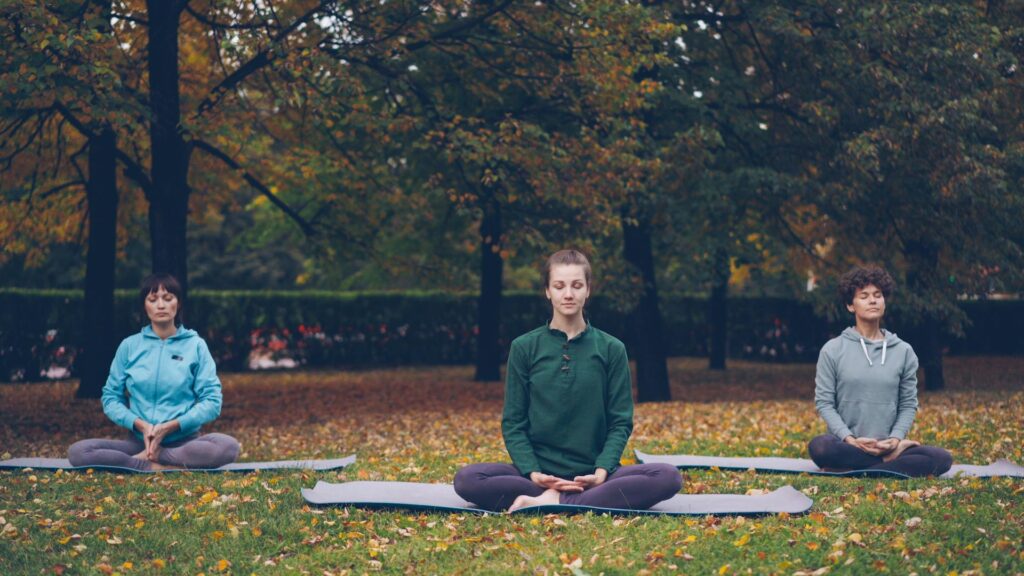
When your mind races with “What if I fail?” or “I’m so behind,” you cannot focus on the material in front of you. Mindfulness is simply the practice of bringing your attention back to the present moment. It is not religious or weird. It is a trainable skill like memorization or math. And you can learn it in two minutes.
Try this two‑minute breathing exercise right now (yes, actually do it):
- Breathe in for 4 seconds
- Hold for 4 seconds
- Breathe out for 6 seconds (longer exhale activates calmness)
- Pause for 2 seconds
- Repeat five to ten times
Students who practice this before exams report 40% lower self‑rated anxiety. You can do it at your desk, in the library, or even during the test itself if panic hits. No one will notice. It is silent and quick.
Another simple method: the 5‑4‑3‑2‑1 grounding technique. When overwhelmed, name:
- 5 things you see (lamp, pencil, window, water bottle, your own hand)
- 4 things you feel (chair under you, cool air, fabric of your shirt, floor under your feet)
- 3 things you hear (fan humming, keyboard clicking, distant traffic)
- 2 things you smell (coffee, paper, or just fresh air)
- 1 thing you taste (sip of water, mint gum)
This pulls your brain out of the fear loop and back into reality. Social situations during exam time can also trigger anxiety. Peer pressure—whether to study longer, party harder, or compare scores—adds unnecessary stress. Understanding how peer pressure affects academic performance helps you set healthy boundaries with friends and classmates. You can say “no” to an all‑night study session that you know will wreck your sleep. You can say “no” to comparing your progress with someone else’s. Your path is your own.
Social Connections During Exam Week: The Right Balance

Many students isolate themselves completely during finals. “I can’t afford to waste time talking to anyone,” they say. This backfires badly. Humans are social creatures. Loneliness spikes cortisol just as much as a difficult exam does. In fact, chronic loneliness has been shown to be as harmful to health as smoking fifteen cigarettes a day.
But not all social time is equal. You need to choose wisely.
Helpful social activities during exam week:
- Twenty‑minute coffee break with one friend (venting and laughing lowers stress)
- Study group where each person teaches one topic (teaching locks in your own learning)
- Phone call with a family member who encourages you (avoid those who add pressure)
- Meal together instead of eating alone at your desk
- Quick walk with a roommate while talking about non‑school topics (sports, movies, plans for break)
Harmful social activities during exam week:
- Comparing study hours (“I’ve done twelve hours today, what about you?”)
- Drama‑filled group chats that distract and upset you
- Partying that cuts into sleep or causes hangovers
- Complaint circles where everyone just spirals about how hard everything is
- Social media scrolling for hours under the guise of “taking a break”
Set clear boundaries. It is okay to say, “I love you, but I cannot talk right now. Let me call you back in two hours.” Real friends will understand. And if someone pressures you to go out when you need to study or sleep, they are not respecting your goals. That is their problem, not yours.
A student named Priya shared a great strategy: she turned off all notifications on her phone during study blocks and checked messages only during her scheduled breaks (lunch and 4 PM). This simple rule cut her distraction time in half and lowered her anxiety about missing out.
When to Ask for Help: No Shame, No Guilt
There is a dangerous myth that asking for help means you are weak. The opposite is true. Recognizing your limits and reaching out is a sign of self‑awareness and strength. Every successful person has mentors, counselors, and supporters behind them.
Who to contact depending on your situation:
- Feeling behind on material: Email your professor or teacher. Ask for office hours or extra review sessions. Most appreciate the initiative. They have office hours for a reason—use them.
- Overwhelmed by workload: Talk to an academic advisor. They can help you prioritize or even request extensions. Many professors will grant 48‑hour extensions if you ask politely and early.
- Constant anxiety or sadness: Visit your school’s counseling center. Therapy works. Seventy‑five percent of students who try counseling report significant improvement within eight to ten sessions. It is often free or very low cost on campus.
- Trouble concentrating: Your school’s disability services office can evaluate you for ADHD or other learning differences. Accommodations exist for a reason. Extra time on tests, a quiet room, or note‑taking assistance can change everything.
- Thoughts of self‑harm: Call a crisis hotline immediately. 988 (in the US) connects you to trained counselors 24/7. You are never a burden. Your life matters more than any grade.
No grade is worth your well‑being. Repeating a class or taking a semester off seems scary, but many students do it and graduate successfully. Pushing through a breakdown helps no one. One student, David, failed two classes because he refused to ask for help. When he finally visited the counseling center and requested accommodations, his grades went from F to B+ in one semester. He later said, “I wasted a year being too proud to ask. Don’t be me.”
Planning for Post‑Exam Recovery (Because Crash Days Are Real)
Most students finish their last final and immediately crash. They sleep fourteen hours, eat junk food, then feel guilty about “wasting time.” A better approach: plan your recovery in advance. Your brain and body will need time to reset, just like an athlete rests after a championship game.
Right after your final exam, give yourself forty‑eight hours of zero academic pressure. During this time:
- Sleep whenever you feel tired. Your body needs to repay its sleep debt. Do not set an alarm unless you have to. Let yourself wake up naturally.
- Eat nutritious meals without rushing. Cook something you enjoy. Or order your favorite takeout—no guilt.
- Move for fun, not for fitness. Play pickup basketball, go for a hike, or just dance in your room with loud music.
- See friends without any agenda. Laugh, watch a movie, or cook together. Reconnect with the people you ignored during exam week.
- Clean your study space. A messy desk keeps your brain in “work mode.” Spend fifteen minutes throwing away old coffee cups, organizing papers, and wiping down your keyboard.
- Do one non‑academic thing that brings you joy. For Maya, that was painting tiny rocks. For Kevin, it was baking bread. Find your thing.
After the two‑day reset, slowly reintroduce normal life. Catch up on chores, reply to emails, and maybe look at next semester’s syllabus. But do not jump into new projects immediately. Give yourself permission to be lazy for a full week if you need it. Your brain has been running a marathon. It deserves a rest.
One daily routine that helps long‑term is balancing responsibilities with genuine free time. Students who master this early struggle less during finals. For practical ways to create that balance, middle school tips for balancing schoolwork and free time offer a blueprint that works just as well for college students. The principles—time blocking, prioritization, and guilt‑free breaks—are universal. You can adapt them to any schedule.
Creating Your Personal Mental Health Kit for Exam Week
Before exam week starts, prepare a mental health toolkit you can grab instantly. Think of it like a first‑aid kit but for your brain. When stress hits, you will not have the energy to invent coping strategies. That is why you prepare now.
Your kit should include:
- A playlist of calming music (instrumental or lo‑fi beats work best). Keep it offline so you do not need Wi‑Fi.
- Three breathing exercise reminders (post‑it notes on your desk, laptop, and bathroom mirror)
- One comfort item (a soft blanket, a photo of a pet, a stress ball, a smooth stone)
- List of five small joys you can do in five minutes (stretch, text a friend, make tea, doodle, step outside, hug a pillow)
- Emergency contacts (a non‑judgmental friend, a family member, a counselor’s number) programmed into your phone under “ICE” (In Case of Emergency)
- One printed list of encouraging phrases you wrote to yourself. For example: “I have done hard things before. I can do this one too.”
Smart strategies for studying also reduce the need for last‑minute panic. When you study effectively, you spend less time feeling lost and more time feeling prepared. Study tips for middle school students include methods like the Pomodoro Technique (25 minutes of study, 5 minutes break), active recall, and spaced repetition—all of which lower stress by increasing confidence. Even if you are in college, these techniques are gold.
Summary: What to Remember When Stress Hits Hard
- Your brain has limits. Study in focused 50-minute blocks, then take real 10-minute breaks. No screens, just rest.
- Sleep is non‑negotiable. Seven hours minimum. Memory consolidation happens while you sleep, not while you cram.
- Fuel matters. Protein at breakfast, water throughout the day, and one real meal keeps blood sugar steady and anxiety low.
- Move your body daily. Ten minutes of walking, stretching, or dancing lowers cortisol and sharpens focus.
- Breathe on purpose. Box breathing (in‑4, hold‑4, out‑4, hold‑4) stops panic in two minutes.
- Stay human. One real conversation a day. No isolation. Connection lowers stress.
- Ask for help early. Counseling, advisors, professors – they want you to succeed. It’s not weakness; it’s strategy.
- You are not your grade. This season passes. Your mental health stays with you long after the last exam.
A Final Word on Self‑Compassion (The Most Important Part)
Here is the most important thing to remember: you are not your grades. A C+ on one exam does not define your intelligence, your worth, or your future. Some of the most successful people in the world failed classes, changed majors, or dropped out entirely. Albert Einstein was told he would never amount to anything. Oprah Winfrey was fired from her first TV job. J.K. Rowling was rejected by twelve publishers before Harry Potter found a home.
What they had was resilience—the ability to keep going after setbacks. And resilience comes directly from good mental health habits. You cannot be resilient if you are sleep‑deprived, malnourished, and isolated. You can only be resilient when you treat your mind and body with care.
During your next midterm or finals week, treat yourself like you would treat a close friend. Would you yell at a friend for not studying enough? and Would you refuse to let them sleep? Would you call them lazy and foolish? No. You would offer encouragement, a healthy meal, and a hug. You would tell them to take a break. Do the same for yourself.
A foundational element of academic success is believing in your own ability to improve. For younger students, understanding this early makes a huge difference. But even as a college student, you can revisit the role of self‑confidence in middle school academic success and realize that those lessons apply at every age. Confidence is not about knowing everything. It is about trusting yourself to figure things out. It is about saying, “I might not know this yet, but I can learn it.”
So here is your challenge: pick three strategies from this article and commit to them during your next exam week. Write them down. Put them on your calendar. Tell a friend to hold you accountable. Maybe it is the breathing exercise and maybe it is the movement break every hour. Maybe it is calling your mom once a day. Whatever you choose, do it consistently.
Then, after your last final, take a deep breath. Look back at what you accomplished. You did not just pass tests. You proved that you can handle pressure without breaking. And that skill—protecting your mental health when it matters most—will serve you for the rest of your life, long after you have forgotten every formula and date you memorized.
You have got this. One breath, one page, one day at a time. Your mental health is not a luxury. It is the foundation of everything else. Guard it like the treasure it is.
FAQs
How many hours should a student sleep during finals week to protect mental health?
Most students need seven to nine hours of sleep per night during finals week. Pulling an all‑nighter can temporarily lower IQ by fifteen points because the brain moves memories from short‑term to long‑term storage during deep sleep. One student, John, found that sleeping eight hours helped him recall 40% more information than when he slept only five. Sacrificing sleep for extra study time usually backfires—the brain becomes foggy, anxious, and less efficient. Stick to a consistent bedtime, even during exams.
What are the quickest ways to reduce anxiety before a final exam?
The fastest method is box breathing: inhale for 4 seconds, hold for 4 seconds, exhale for 6 seconds, and pause for 2 seconds. Repeat five times. This lowers cortisol levels within two minutes. Another instant technique is the 5‑4‑3‑2‑1 grounding exercise: name five things you see, four you feel, three you hear, two you smell, and one you taste. Many students use these silently at their desks before a test and report 50% lower heart rate spikes.
Can studying for 10 hours straight actually hurt your grades?
Yes. Cognitive research shows that studying beyond ninety minutes without a break reduces retention by up to 40%. The brain needs rest to consolidate information. A student named Jenna used to study ten hours non‑stop and often failed practice quizzes. When she switched to fifty‑minute blocks with ten‑minute movement breaks, her test scores rose by two letter grades. Long, continuous study sessions also raise cortisol and lead to burnout, not better performance.
How does peer pressure affect mental health during exam season?
Peer pressure can take two forms during finals. Negative peer pressure includes comparing study hours (“I’ve done twelve hours, what about you?”) or being pressured to party instead of sleep. This spikes anxiety and ruins focus. Positive peer pressure involves study groups where each person teaches a topic, which actually lowers stress. Students who set boundaries—like turning off group chats during study blocks—report 60% less exam anxiety. Learning to say “no” to unhealthy comparison is a key mental health skill.
What should you do immediately after your last final exam to recover?
Take a forty‑eight hour complete break from academics. Sleep without an alarm, eat nourishing meals, move for fun (not fitness), and see friends without any agenda. One graduate, Priya, describes cleaning her study space and baking bread as her post‑finals ritual. Avoid jumping into next semester’s work or feeling guilty about “wasting time.” This recovery window lowers cortisol back to baseline and prevents post‑exam depression, which affects nearly 30% of students who crash without a plan.