

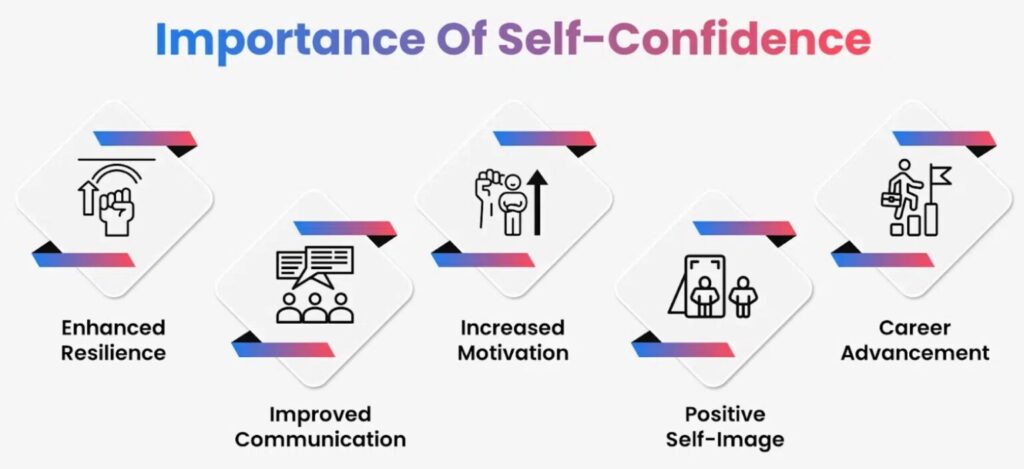
- Builds effort — confident students study harder and don’t give up
- Handles failure better — they bounce back instead of shutting down
- More class participation — they raise their hand and engage
- Less test anxiety — they stay calm and perform better
- Sets long-term success — confidence built now carries into high school and beyond
Middle school is one of the most turbulent chapters in a young person’s life. Between ages 11 and 14, students face a storm of changes — new schools, new social circles, new subjects, and a brand-new version of themselves they haven’t quite figured out yet. In the middle of all that chaos, one thing quietly determines how well a student does in class, how hard they try, and whether they bounce back from failure or give up entirely. That one thing is self-confidence.
This article digs deep into why self-confidence matters so much during the middle school years, how it directly shapes academic performance, and what parents, teachers, and students themselves can do to nurture it — backed by real experience, research, and practical insight.
What Is Self-Confidence, Really?

Before diving into its role in school success, it helps to understand what self-confidence actually means. Many people confuse it with arrogance or constant cheerfulness. But true self-confidence is something quieter and more powerful.
Self-confidence is a student’s belief in their own ability to learn, try, fail, and try again. It is the inner voice that says, “I can figure this out.” It does not mean a student thinks they will ace every test, it means they believe they are capable enough to put in the effort and improve over time.
In middle school, this belief system is still forming. Students are comparing themselves to peers constantly. They are wondering if they are smart enough, good enough, and whether they belong. These questions affect everything — from how a student behaves in a classroom to how willing they are to ask a teacher for help.
Why Middle School Is the Critical Window
Parents and educators often focus a great deal on early childhood learning, and for good reason. But research consistently shows that middle school — particularly grades 6 through 8 — is a second critical window for academic identity formation.
During these years, students move from the nurturing environment of elementary school into a more competitive and socially complex world. Teachers change every period. Grades start to matter more. Social hierarchies form. Students who enter middle school with low self-confidence often begin a downward spiral — avoiding challenges, skipping participation, and falling behind academically.
Consider this: a study published in the Journal of Educational Psychology found that students with higher self-efficacy (a close cousin of self-confidence) scored significantly better on standardized assessments than their equally intelligent but less confident peers. The difference wasn’t raw ability. It was belief.
This is also the age when students first start tracking their own academic progress seriously. A student trying to understand their GPA calculator 6th grade scores, for example, is beginning to build an academic identity — and how they interpret those numbers depends heavily on how much confidence they carry.
How Self-Confidence Directly Affects Academic Performance
1. It Determines How Hard Students Try
Students who believe they can succeed are more likely to invest real effort in their work. They study longer, ask more questions, and re-read chapters they did not understand. Students with low confidence, on the other hand, often disengage early. They tell themselves the subject is “too hard” or “not for them” before they even give it a real shot.
A middle school math teacher in Chicago shared her experience: “I had two students with nearly identical test scores entering 7th grade. One believed she was good at math. The other was convinced she wasn’t. By the end of the year, the confident student had moved two levels ahead. The other had barely kept up — not because of ability, but because of effort.”
This is the confidence-effort loop. Confidence drives effort. Effort produces results. Results reinforce confidence. And when this loop breaks — because a student loses confidence — the whole academic trajectory shifts.
2. It Shapes How Students Handle Failure
Every student fails sometimes. They fail a quiz, misread an assignment, forget to study. What separates students who bounce back from those who shut down is how they interpret that failure.
Confident students tend to see failure as temporary and fixable. They think: “I didn’t study well enough this time. I’ll do better next time.” Students with low confidence often internalize failure as proof of their inadequacy: “I failed because I’m foolish.”
This difference in mindset — what psychologist Carol Dweck famously called the difference between a growth mindset and a fixed mindset — is deeply tied to self-confidence. And its effects on middle school performance are enormous. Research from Stanford University found that students taught to adopt a growth mindset improved their grades significantly over just one semester, compared to control groups.
3. It Influences Classroom Participation
Raise your hand if you know the answer. This simple action is surprisingly tied to self-confidence. Students who feel secure in themselves are far more willing to participate in class discussions, answer questions, and engage with teachers. This participation, in turn, leads to better understanding, stronger teacher relationships, and a sense of belonging in the academic environment.
Students who doubt themselves often sit silently — even when they know the answer — for fear of being wrong or looking foolish. Over time, this silence creates a gap. They miss out on the learning that comes from active engagement, and teachers may misread their quietness as disinterest or lack of understanding.
4. It Affects Test Anxiety
Test anxiety is a real and measurable phenomenon in middle school students. Students who lack confidence often experience significantly higher anxiety during exams, which physically impairs their ability to recall information and think clearly. Studies estimate that 25 to 40 percent of students experience some form of test anxiety — and low self-confidence is one of its strongest predictors.
The reverse is also true. Students who feel confident walking into an exam are able to access what they’ve learned more effectively. They stay calm under pressure and manage their time. They trust their preparation.
Real-Life Experiences That Highlight the Connection
Talk to any middle school counselor or experienced parent, and they’ll tell you story after story that illustrates this link.
Sarah, a mother of three from Texas, watched her 12-year-old son go from straight B’s to near-failing grades in 6th grade — not because of learning difficulties, but because a careless comment from a teacher made him believe he “wasn’t a math person.” It took an entire year of intentional encouragement, tutoring framed as skill-building rather than remediation, and a new teacher who consistently pointed out his strengths before his confidence — and his grades — recovered.
Bill, a 13-year-old from Ohio, had the opposite experience. A naturally shy kid, he started attending a school that built confidence-building exercises into its advisory program. By 7th grade, he was presenting projects in front of the class, joining a debate team, and earning the highest GPA in his class. His mother said, “School didn’t change. Bill changed. And when he started believing in himself, everything else followed.”
These are not exceptional cases. They are the norm. Across schools, across states, across economic backgrounds — self-confidence consistently acts as a multiplier on academic potential.
Factors That Build — or Break — Self-Confidence in Middle School
Peer Relationships
Middle schoolers care deeply about what their friends think. Peer relationships can be a powerful source of encouragement — or damage. A student who is mocked for trying hard, celebrated for not caring, or surrounded by friends who don’t value academic effort will often absorb those attitudes. Creating peer cultures that value learning is one of the most underrated strategies in middle school education.
Teacher Feedback
The way a teacher delivers feedback has an outsized impact on a middle schooler’s self-concept. Praise that focuses on effort (“You worked really hard on this”) builds confidence far more effectively than praise that focuses on fixed traits (“You’re so smart”). Research by Carol Dweck and her colleagues found that children praised for effort showed greater persistence, took on harder challenges, and performed better over time than those praised for intelligence.
Conversely, harsh, dismissive, or careless criticism from a teacher can create lasting damage to a student’s academic confidence — sometimes in just one interaction.
Home Environment
The home environment plays a massive role. Students who grow up in homes where mistakes are treated as learning opportunities, where effort is celebrated, and where parents model resilience tend to carry that confidence into the classroom. Students from high-stress home environments — where mistakes are punished, expectations are either absent or impossible, or academic effort is dismissed — often struggle to build the confidence they need to thrive.
Past Academic Experiences
A string of failures without adequate support can erode confidence quickly. On the flip side, even small wins — understanding a concept that once confused them, improving a grade by just one letter, successfully completing a challenging project — build the self-efficacy that students need to take on bigger challenges.
Practical Strategies to Build Self-Confidence in Middle Schoolers
For Parents
1. Reframe failure at home. When a child brings home a bad grade, the first question should not be “Why did you fail?” but “What did you learn from this?” This simple shift communicates that failure is part of learning, not evidence of inadequacy.
2. Set achievable challenges. Encourage your child to try things slightly outside their comfort zone — but not so far outside that repeated failure becomes demoralizing. Small, consistent wins build confidence faster than rare big victories.
3. Celebrate effort, not just results. Make a habit of noticing and praising the work your child puts in, regardless of outcome. This builds intrinsic motivation and resilience.
4. Watch your own language. Children absorb the messages parents send about ability. Avoid fixed-ability statements like “I was never good at science either” — these give children permission to stop trying.
For Teachers
1. Use process-based feedback. Focus feedback on what students did and what they can do differently, rather than labeling their ability.
2. Create low-stakes opportunities to succeed. Regular low-pressure activities — warm-up problems, partner discussions, quick writes — give students chances to experience competence without the anxiety of high-stakes assessment.
3. Be intentional about classroom culture. Build a classroom where students feel safe to be wrong, where questions are celebrated, and where diversity of ability is normalized.
4. Get to know each student individually. Confident students often have at least one adult at school who genuinely believes in them. Be that person.
For Students
1. Talk to yourself like a friend. Most middle schoolers would never say to a friend the harsh things they say to themselves. Practice replacing self-critical thoughts with honest but encouraging ones.
2. Track your own progress. Keep a record of things you’ve learned, problems you’ve solved, and goals you’ve achieved. On hard days, this record reminds you of what you’re capable of.
3. Ask for help early. Students who ask for help before they fall behind stay confident because they stay on top of the material. Waiting until you’re completely lost makes recovery harder and more discouraging.
4. Find something you’re good at. Confidence is contagious across domains. A student who feels strong in art, sports, music, or community service carries that sense of capability into the academic arena.
The Long-Term Stakes
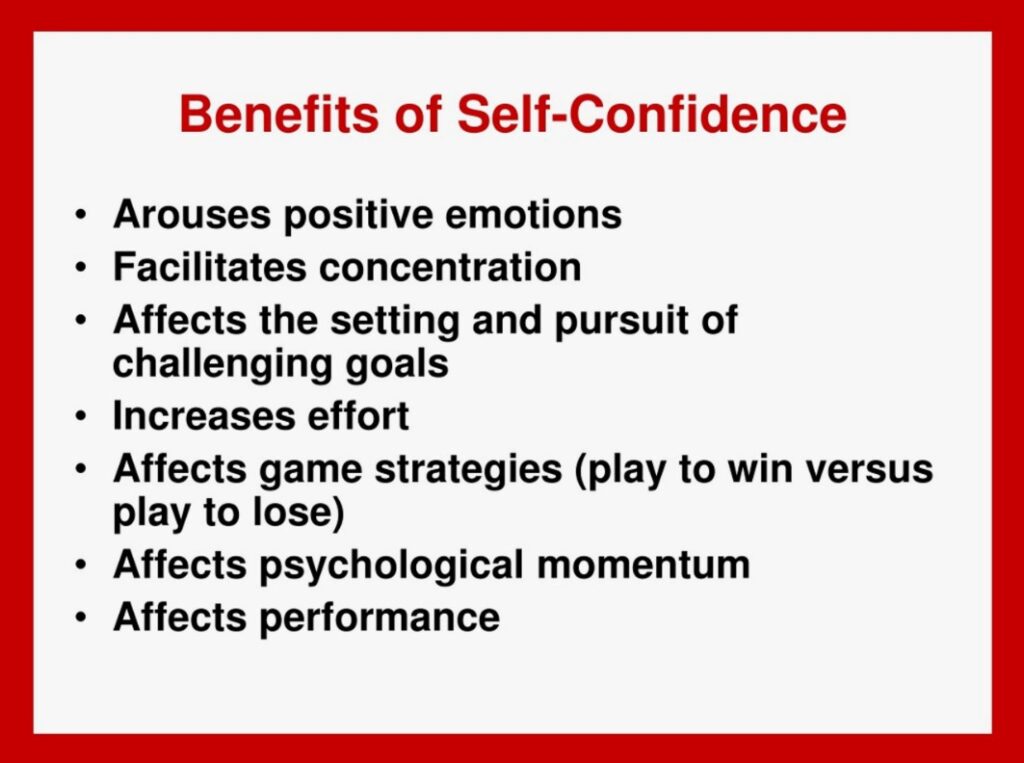
The self-confidence built — or lost — during middle school doesn’t stay in middle school. It travels with students into high school, college, careers, and adult relationships. Students who develop academic self-confidence during these years are more likely to pursue higher education, more likely to persist through challenges, and more likely to take on leadership roles.
Research from the American Psychological Association suggests that self-efficacy — the specific form of confidence tied to academic tasks — is one of the strongest predictors of long-term educational attainment, even after controlling for intelligence, socioeconomic status, and prior achievement.
In short: building confidence in a 12-year-old is not a soft, feel-good goal. It is one of the most high-impact investments a parent, teacher, or school system can make.
Schools That Are Getting It Right
Some schools have recognized the link between confidence and academic success and built it into their programming intentionally. Advisory programs, mentorship systems, project-based learning, and social-emotional learning (SEL) curricula all show consistent results in improving both student confidence and academic outcomes.
Schools that embed SEL — which includes self-awareness, self-management, and relationship skills — into their daily routines see measurable improvements in grades, attendance, and graduation rates. Organizations like the Collaborative for Academic, Social, and Emotional Learning (CASEL) have documented that schools implementing quality SEL programs show academic achievement gains of 11 percentile points on average compared to schools without these programs.
This is not coincidence. When students feel seen, supported, and capable, they learn better. It really is that simple.
Summary
- Self-confidence acts as a foundation for academic success in middle school
- Students with confidence try harder, study longer, and don’t quit when things get tough
- They handle failure as a learning opportunity rather than proof they’re not smart enough
- Confident students participate more in class, ask questions, and build stronger teacher relationships
- Test anxiety is significantly lower in students who believe in their own abilities
- Teacher feedback, parenting style, peer relationships, and past experiences all shape confidence levels
- Praising effort over intelligence builds lasting confidence and resilience
- A growth mindset — believing ability can improve — is closely tied to self-confidence
- Schools with social-emotional learning (SEL) programs see measurable improvements in grades and confidence
- The confidence built during middle school carries forward into high school, college, and adult life
- With the right support from parents, teachers, and their own self-talk, every student can build confidence
Final Words
The middle school years are hard. There’s no sugarcoating that. Students are figuring out who they are while simultaneously being asked to handle harder classes, bigger social pressures, and greater personal responsibility. In this environment, self-confidence is not a bonus trait reserved for the naturally outgoing or the academically gifted. It is a foundation — one that every student can build with the right support.
Parents who model resilience, teachers who give meaningful feedback, schools that invest in social-emotional learning, and students who learn to be kind to themselves — together, these forces can transform a struggling middle schooler into a thriving one.
Academic success in middle school is not just about intelligence or effort. It is about believing — deeply and consistently — that the effort is worth it. And that belief begins with confidence.
FAQs
How does self-confidence affect academic performance in middle school?
Self-confidence directly impacts how hard students try, how they handle failure, and how actively they participate in class — all of which lead to better grades and stronger academic results.
What causes low self-confidence in middle school students?
Low self-confidence in middle schoolers is often caused by harsh teacher feedback, negative peer comparisons, repeated academic failures without support, and high-stress home environments.
How can parents build self-confidence in their middle schooler?
Parents can build confidence by praising effort over results, reframing failure as a learning experience, setting achievable goals, and avoiding fixed-ability statements like “I was never good at math either.”
What is the connection between self-confidence and test anxiety in middle school?
Students with low self-confidence experience significantly higher test anxiety, which physically blocks memory recall and clear thinking. Confident students stay calmer, manage time better, and perform closer to their true ability.
Can self-confidence be taught in middle school?
Yes — through social-emotional learning (SEL) programs, growth mindset training, supportive classroom environments, and consistent encouragement from teachers and parents, self-confidence can absolutely be developed and strengthened in middle school students.