

- Set small daily goals — Break big tasks into tiny wins you can actually finish today.
- Know your “why” — Write down your reason for studying and look at it every morning.
- Build a routine — Same wake-up time, same homework time, every day.
- Choose good friends — Spend time with people who take school seriously.
- Celebrate small progress — A D to a C+ is still real progress worth celebrating.
- Take planned breaks — Study 25 minutes, break 5 minutes. Repeat.
- Track your grades weekly — Don’t wait for report card day to know where you stand.
- Manage stress early — Walk, journal, or talk to someone before it builds up.
- Connect learning to real life — Find how your favourite hobby links to what you’re studying.
- Ask for help — Asking is smart, not weak. Teachers and counselors are there for a reason.
Middle school is one of the most exciting — and honestly, one of the most challenging — phases of a young person’s life. The homework piles up. Social pressures increase. Classes get harder. And somewhere between 6th and 8th grade, a lot of students start to lose that spark they once had for learning. If that sounds familiar, know this: you are not alone.
This article shares 10 real, experience-based tips that have helped countless middle schoolers push through the tough days, stay focused, and actually enjoy the journey. These are not just feel-good pieces of advice. These are practical strategies that work in real classrooms, real households, and real lives.
1. Set Small Goals That Feel Achievable

One of the biggest reasons students lose motivation is because their goals feel too big and too far away. When a student thinks, “I need to ace every class this entire year,” that thought can feel so overwhelming that it becomes paralyzing before the school day even starts.
Instead, break big goals into small, daily wins. For example, instead of saying “I want better grades,“ try saying “I will finish my math homework before dinner today.” That is a goal that feels real, reachable, and completely within your control.
When students set small goals and actually hit them, something powerful happens inside the brain. They start to feel capable. And that feeling of capability is exactly what keeps motivation alive over the long run. Teachers and school counselors who work closely with middle schoolers consistently observe that students who set weekly mini-goals show noticeably higher engagement than students who only ever think about end-of-year outcomes.
Start a simple notebook — or use your phone’s notes app if that feels more natural. Write down 3 things you want to accomplish each day. Cross them off as you finish them. That small act of crossing something off a list releases dopamine, the brain’s natural reward chemical, and signals your mind to keep going. Over time, those small daily wins stack up into major results.
2. Find Your “Why”
Every student has a reason to show up to school. But most students have never stopped to think about what that reason actually is. Motivation without a clear purpose is like a car without fuel — it just doesn’t move very far.
Take a few quiet minutes and ask yourself this honest question: Why does school matter to me? Maybe it is because you want to become a doctor, an engineer, or a game designer someday or it is because you love history and want to understand the world better. Maybe it is simply because your parents worked incredibly hard to give you opportunities they never had themselves. Whatever that reason is, it is powerful — and it belongs to you.
Students who connect their daily schoolwork to a bigger personal goal are significantly more resilient when things get hard. When a difficult test comes up, when a teacher seems unfair, or when a subject feels impossibly boring, having a personal “why” helps students push through instead of shutting down. It gives hard work a meaning that goes beyond just grades.
Write your “why” on a sticky note and put it somewhere you will see it every single morning — on your mirror, inside your notebook cover, or taped to your desk. It sounds simple, but this small ritual has a way of completely reframing a student’s mindset on the days when staying motivated feels the hardest.
3. Build a Consistent Daily Routine
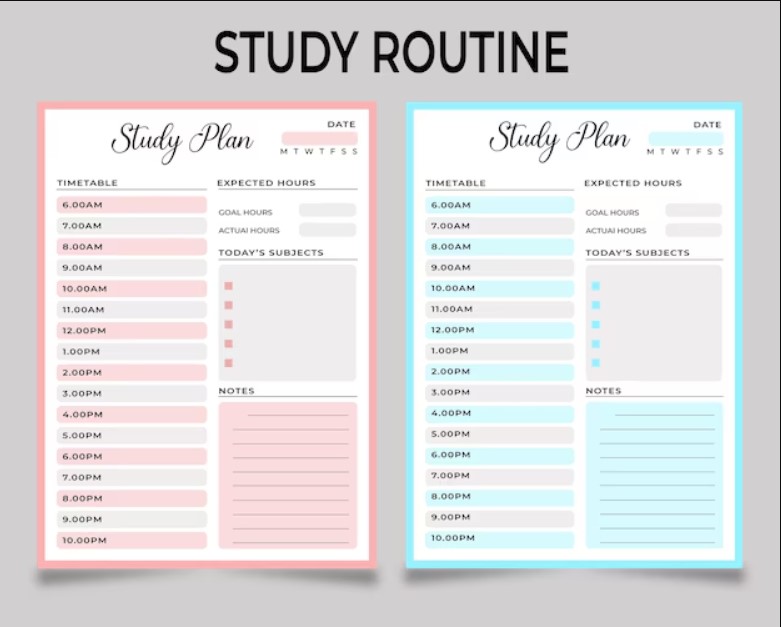
Middle school introduces a level of independence that many students are genuinely not prepared for. In elementary school, everything was carefully structured by adults. In middle school, students suddenly have more choices, more free periods, and more chances to fall off track.
Routines remove the exhausting need to make the same decisions over and over again. When a student knows that homework time starts at 4:00 PM every single day, they don’t waste precious mental energy debating when to start or whether they feel like it. They just start. That mental energy is saved for actual thinking and learning.
A healthy, realistic middle school routine might look something like this:
- Morning: Wake up at the same time every day, eat a real breakfast, and take a quick look at the day’s schedule so nothing surprises you
- After school: Have a snack, allow yourself 30 minutes of genuine downtime to decompress, and then move into homework with focus
- Evening: Eat dinner with your family when possible, do light reading or review notes, and begin winding down without screens at least one hour before bed
- Night: Aim to be asleep by 9:30 or 10:00 PM — sleep is not optional for a brain that needs to learn and retain information
Students who commit to consistent routines report feeling less anxious, more organized, and more in control of their daily lives. And when a student genuinely feels in control of their day, motivation follows naturally and reliably.
4. Surround Yourself With the Right People
Motivation is contagious. Unfortunately, so is negativity. The students a middle schooler chooses to spend time with have a massive, often invisible influence on how they feel about school, about effort, and about their own potential.
A student who regularly hangs around peers who mock studying, who copy homework, or who constantly complain about teachers will slowly and almost unconsciously start to adopt those same attitudes. It happens gradually, which is exactly what makes it dangerous. On the other hand, a student who spends time with others who take their work reasonably seriously — even in a casual, low-pressure way — will naturally feel more motivated to do the same.
This does not mean a student needs to drop all of their current friends or only spend time with students who get straight A’s. It means being intentional about who you give your time and energy to. It means choosing friends who support each other, take personal responsibility seriously, and have a generally positive attitude toward growing and improving.
Parents, teachers, and school counselors all consistently notice that students with even one or two positive, growth-minded friends navigate the challenges of middle school far more successfully than students who feel isolated or surrounded by constant negativity. Joining a school club, a sports team, or any extracurricular activity is one of the best ways to naturally find people who share your interests and your drive.
5. Celebrate Progress, Not Just Perfection
Middle school grades can feel like life and death in the moment — but they are not. Many students get so intensely focused on achieving perfect scores that they completely stop appreciating how far they have actually come since they started.
A student might go from a D to a C+ in science. That is real, measurable progress. That absolutely deserves recognition and celebration. Instead of fixating on the fact that it is not yet an A, it is worth pausing and saying honestly, “I worked harder this week than last week, and it showed in my grade.” That acknowledgment matters more than most students realize.
Celebrating progress consistently builds what psychologists call a growth mindset — the deeply important belief that abilities and intelligence are not fixed, and that they improve with sustained effort and practice. Students who operate with a growth mindset are dramatically more motivated and resilient than those who believe that being smart is something you either are or are not. Failure, to a growth mindset student, is just information. It is not a verdict on their worth.
Parents play a genuinely huge role in shaping this mindset. Instead of asking “What did you get on the test?” as the first question after school, try asking “What did you learn this week that surprised you?” or “What is something you understand now that you didn’t a month ago?” That small but powerful shift in language teaches a young person that the journey of learning matters more than any single grade on any single day.
6. Take Breaks on Purpose

Many students genuinely believe that the harder they push without stopping, the more they will achieve. They sit at their desks for two or three hours straight, powering through homework with sheer willpower. In reality, research in cognitive science shows the opposite is true. The brain learns and retains information far more effectively when it receives regular, intentional breaks.
The Pomodoro Technique is a widely used study method embraced by students, professionals, and researchers around the world. It works like this: study or work with full focus for 25 minutes, then take a deliberate 5-minute break, and then repeat the cycle. After completing 4 full cycles, reward yourself with a longer 15 to 20-minute break. This simple rhythm keeps the brain fresh, prevents mental fatigue, and dramatically improves the quality of work produced.
During breaks, it genuinely helps to move the body. Stand up, walk around the house, stretch, drink a full glass of water. Physical movement increases blood flow and oxygen to the brain, which resets focus and lifts energy levels in a way that simply sitting still cannot.
One important thing to avoid during study breaks: scrolling through social media. Research consistently shows that social media stimulates the brain in a way that actually makes it significantly harder to refocus afterward. A real break means resting and resetting the mind — not swapping one screen for another and ending up more distracted than before.
7. Track Your Grades and Progress Regularly
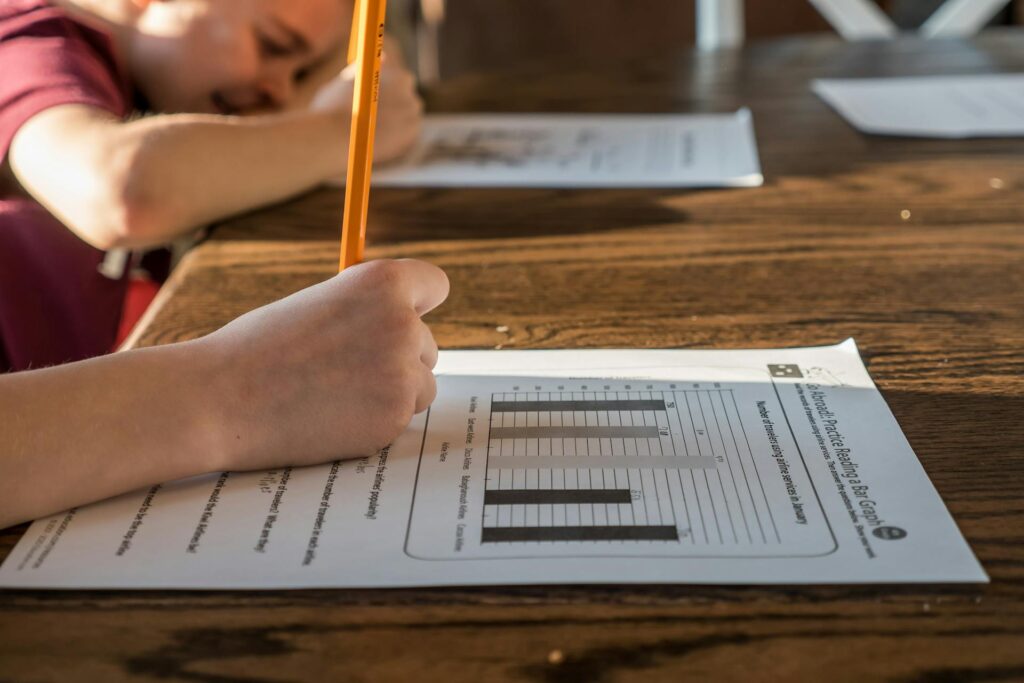
One of the most empowering things a middle schooler can do is stay fully informed about exactly where they stand academically — not to create anxiety, but to feel informed, in control, and capable of making smart adjustments early.
Many students drift through the entire semester without a clear picture of their GPA until report card day arrives. By that point, there is often very little time left to make meaningful changes. Students who check their grades weekly are far more likely to catch a problem early — a missed assignment, a slipping quiz average — and correct it before it snowballs into something much harder to fix.
For 6th graders especially, building this habit early sets up a strong academic foundation for all the years ahead. Using a gpa calculator for 6th grade can help students clearly understand how their individual quiz scores, test results, class participation, and homework grades combine to create their overall GPA. This removes the mystery, replaces vague worry with clear data, and gives students something concrete to improve upon.
When students see their GPA moving upward — even by a small fraction — it functions as one of the most natural and powerful motivators available. Visible progress is real progress, and real progress keeps people moving forward.
8. Manage Stress Before It Manages You
Middle school brings with it a level and variety of stress that many young students are simply not equipped to handle without guidance. Social dynamics shift constantly. Academic pressure increases each year. Puberty changes the way emotions feel and the way the brain processes everything. Family expectations add another layer. When all of these pressures pile on simultaneously, motivation does not just dip — it collapses completely.
Learning to manage stress is not a luxury reserved for adults. It is a fundamental life skill and an absolute necessity for staying motivated and mentally well throughout middle school and beyond.
Strategies that middle school students consistently find genuinely helpful include:
- Journaling: Writing freely about feelings and frustrations helps process them honestly instead of letting them build up into something overwhelming. Even 10 minutes of writing before bed can make a noticeable difference in mental clarity the next morning.
- Deep breathing: Taking even 5 slow, deliberate deep breaths before a test, a difficult conversation, or a stressful situation measurably lowers cortisol levels and improves the brain’s ability to think clearly and perform well.
- Physical activity: Exercise is one of the most scientifically validated stress-reduction tools available to any human being. Even a 20 to 30-minute walk around the neighborhood can substantially shift mood, reduce anxiety, and boost energy for hours afterward.
- Talking to a trusted person: Whether it is a parent, a school counselor, a coach, or a close friend, the act of putting stress into words and sharing it with someone who listens takes real power away from it. Students should never feel that asking for emotional support is weakness.
Schools that actively incorporate social-emotional learning into their daily curriculum consistently see better academic outcomes across the board. Not because students suddenly have more free time or easier coursework — but because students who know how to manage their stress have significantly more mental bandwidth available for actual learning.
9. Make Learning Personal and Interesting

Motivation drops fast and hard when school feels completely and permanently disconnected from everything a student actually cares about in real life. If a student cannot see how algebra connects to anything outside of a textbook, why would they find the energy to care deeply about it?
One of the most effective things a student can do is actively search for personal, real-world connections to whatever they are currently studying. A student who loves video games can explore physics through the mechanics of how games simulate movement, gravity, and collision and a student who loves cooking can practice fractions and ratios through recipes and scaling ingredients. A student who dreams of starting a business can approach math as the language of financial planning, budgeting, and profit margins.
The best teachers do this naturally and brilliantly. But students don’t always have inspiring teachers for every subject in every year. In those cases, students can absolutely take the initiative themselves. Search for YouTube videos that bring a topic to life. Read articles from scientists, historians, or professionals who are passionate about the subject. Find a podcast or a documentary connected to what is being studied in class. The internet makes this remarkably easy.
When learning feels personally relevant and genuinely interesting, it stops feeling like a chore and starts feeling like discovery. And genuine curiosity is the most sustainable form of motivation that exists. It does not burn out the way pure willpower does. It grows stronger the more it is fed.
10. Ask for Help Without Shame
Perhaps the single most important tip on this entire list is also the one that the most students resist, delay, and avoid: asking for help.
There is a deeply damaging cultural message that many middle schoolers absorb — the idea that needing help means you are weak, slow, or simply not smart enough to figure things out on your own. That message is not just wrong. It is actively harmful, and it has quietly derailed more genuinely talented and hardworking students than almost any other belief.
Every successful person — in every field, at every level — has had teachers, mentors, coaches, tutors, and guides who helped them get where they are. Getting help is not a sign of weakness. It is a sign of intelligence, maturity, and genuine self-awareness. Recognizing what you don’t yet know and actively seeking someone who can help you understand it is, in fact, one of the most mature and productive things any student can do.
In middle school, asking for help can take many different shapes. It can mean staying a few minutes after class to ask a teacher a question that has been confusing you for days and can mean attending a tutoring session before a big exam. Also it can mean sitting down with a parent and honestly saying, “I am struggling and I need some support.” It can mean visiting the school counselor when stress or social pressure starts noticeably affecting academic performance or mental wellbeing.
Students who ask for help when they genuinely need it consistently outperform those who suffer in silence, pretending everything is fine. More importantly, they feel less alone in the process. And feeling less alone — feeling truly supported by the people around you — is one of the most profoundly motivating experiences a middle schooler can have.
Summary
- Middle school is hard — more homework, harder classes, and social pressure all hit at once, making it easy to lose motivation.
- Motivation is a skill — it is not something you are born with; it is built through small, consistent daily actions.
- Set small daily goals — tiny wins feel achievable, build confidence, and keep momentum going every single day.
- Find your “why” — connecting schoolwork to a personal dream or purpose gives hard work real meaning and keeps students pushing forward.
- Build a daily routine — fixed times for waking up, studying, and sleeping remove decision fatigue and keep students in control.
- Choose the right friends — even one or two positive, growth-minded friends make a huge difference in attitude and motivation.
- Celebrate small progress — a D to a C+ is real growth; chasing perfection kills motivation while celebrating progress builds it.
- Take planned breaks — 25 minutes of study followed by 5 minutes of rest keeps the brain sharp and prevents burnout.
- Track grades weekly — tools like a gpa calculator for 6th grade help students stay informed and fix problems early.
- Manage stress early — journaling, exercise, deep breathing, and talking to someone prevent stress from collapsing motivation completely.
- Connect learning to real life — finding personal links between subjects and things students love turns studying into genuine curiosity.
- Ask for help always — reaching out to teachers, tutors, or counselors is a sign of intelligence, not weakness.
- The big takeaway — motivation is a daily practice, and students who apply even 3 or 4 of these tips consistently will see real, lasting change in their grades, confidence, and overall wellbeing.
Final Thoughts
Staying motivated in middle school is not about being naturally gifted or never experiencing doubt, fatigue, or frustration. It is about showing up even on the hard days and about building small, steady habits that create real momentum over time. It is about knowing your personal purpose, surrounding yourself with people who lift you up, celebrating every step forward honestly, and being brave enough to ask for support when you need it.
The 10 tips shared in this article are not abstract theories developed in a lab. They are practices used by real students, observed and recommended by real teachers and counselors, and supported by decades of research in psychology, neuroscience, and education. Any student who applies even 3 or 4 of these strategies consistently will notice a genuine, meaningful difference — not just in their grades, but in how they feel about school and about their own ability to grow.
Middle school does not last forever. It might feel like it sometimes, but it doesn’t. And the habits, the mindset, and the resilience built during these 3 years will shape a person’s entire relationship with learning, achievement, and personal growth for decades to come. Every great student, every successful adult, every person who achieved something meaningful started exactly where you are right now.
Start small. Stay consistent. And keep going — especially on the days when it feels hardest to do so.
FAQs
Why do students lose motivation in middle school?
Students lose motivation in middle school because the workload suddenly increases, social pressures grow stronger, and classes become significantly harder all at once. Many students also lack a clear personal goal or “why” behind their studies, which makes effort feel pointless. Without strong routines, supportive friends, and stress management habits, motivation naturally fades during these years.
How can a middle schooler stay focused on studying?
A middle schooler can stay focused by using the Pomodoro Technique — studying for 25 minutes and resting for 5 minutes. Setting up a distraction-free study space, putting the phone away, and studying at the same time every day also builds strong focus habits. Breaking assignments into smaller tasks makes starting much easier and keeps the brain from feeling overwhelmed.
What are the best habits for middle school success?
The best habits for middle school success include setting small daily goals, building a consistent routine, tracking grades every week, getting enough sleep (9 to 10 hours), asking for help when needed, and surrounding yourself with positive, motivated friends. Students who develop these habits early consistently perform better academically and handle stress more effectively throughout their school years.
How does stress affect motivation in middle school students?
Stress directly lowers motivation by draining the mental energy students need to focus, learn, and complete work. When stress builds up without being managed, even simple tasks start to feel impossible. Regular exercise, journaling, deep breathing, and talking to a trusted adult or school counselor are all proven ways to reduce stress and protect motivation levels throughout the school year.
How important is GPA in middle school?
GPA in middle school matters because it builds the academic habits and foundation that carry into high school and beyond. While middle school GPA rarely affects college admissions directly, it shapes study skills, self-discipline, and confidence. Using a gpa calculator for 6th grade helps students understand exactly where they stand and make smart improvements early before grades become more consequential in high school.