

- Extracurricular activities mostly help academic performance, not hurt it
- They improve focus, memory, and brain function (especially sports)
- Students develop time management skills out of necessity
- Kids feel more motivated and connected to school
- The ideal amount is 1 to 3 activities
- Too many activities causes burnout and drops grades
- Art programs train analytical thinking and communication skills that directly boost academic performance
- Debate and clubs directly sharpen classroom thinking
- Overall: the right balance = better grades and better life skills
Every parent has heard it at least once — the nervous conversation at the dinner table where their child asks, “Can I join the school soccer team?” or “I want to try the drama club.” And almost immediately, a quiet worry creeps in: Will this hurt their grades?
It is one of the most common concerns in modern parenting and education. Families wonder whether sports, music, debate clubs, and volunteering will pull children away from their textbooks or whether these activities actually support their growth in the classroom. The answer, backed by research and real-world experience, might surprise a lot of people.
Extracurricular activities, when approached with balance and intention, do not just complement academic performance — in many cases, they actively improve it.
What Are Extracurricular Activities, Exactly?
Before diving into the research, it helps to define the term clearly. Extracurricular activities are structured pursuits that students engage in outside of their regular academic curriculum. These include:
- Team sports like basketball, football, and swimming
- Performing arts like theater, choir, and orchestra
- Academic clubs like debate, science olympiad, and math leagues
- Community service and volunteer programs
- Student government and leadership organizations
- Cultural and language clubs
- STEM programs and robotics teams
These activities are not just “after-school hobbies.” They are organized, goal-driven, and often supervised by trained coaches or faculty advisors. That structure makes all the difference.
The Science Behind the Connection
Researchers have studied the link between extracurricular involvement and academic outcomes for decades. A landmark study published by the National Federation of State High School Associations found that students who participated in school activities consistently earned higher grade point averages than those who did not participate in any activities.
Another widely cited analysis from Mahoney, Cairns, and Farmer (2003) followed students across multiple school years and found that extracurricular participation was directly associated with lower dropout rates, greater educational aspirations, and stronger academic engagement overall.
Here is what the science tells us about why this happens.
1. Physical Activity Boosts Brain Function
Sports and physical activities increase blood flow to the brain, which enhances memory, attention span, and executive function. A 2014 report from the Institute of Medicine confirmed that children who are more physically active show greater attention, faster cognitive processing, and better academic achievement than their sedentary peers.
Maria, a 15-year-old student from Texas, joined her school’s track team after struggling with focus in her classes. Within one semester, her teachers noticed she was more alert during lessons and her test scores in math went from a C average to a B+. Her mom credited the daily running routine for improving her daughter’s energy and concentration.
2. Time Management Skills Become Second Nature
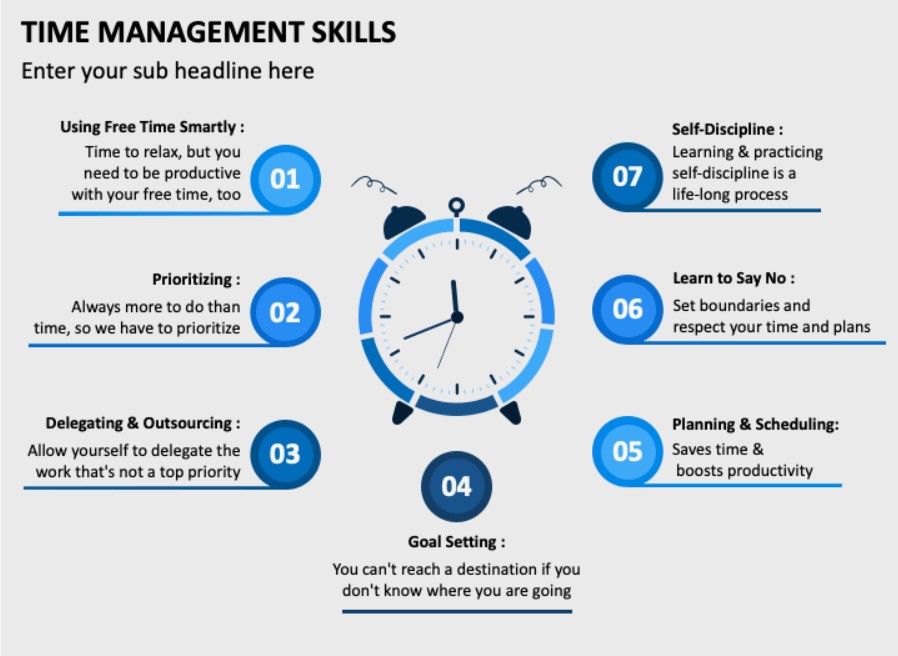
This is one of the most underrated benefits. When a student has soccer practice at 4 PM, homework due the next morning, and a history project deadline on Friday, they have no choice but to learn how to manage their time.
Research from the American Educational Research Journal shows that students involved in structured activities outside school develop stronger self-regulation skills — the ability to plan, prioritize, and follow through — compared to students with completely unstructured afternoons.
These skills are not just useful in school. They carry directly into professional life, college coursework, and every area of personal responsibility.
3. Motivation and School Connection Increase
One of the biggest predictors of academic success is whether a student actually wants to be at school. Extracurricular activities give students a reason to show up, a community to belong to, and a purpose beyond test scores.
A 2019 study published in the Journal of Youth and Adolescence found that students who participated in at least one structured activity reported significantly higher levels of school belonging, academic motivation, and classroom engagement than uninvolved peers.
James, a 17-year-old from Chicago, nearly dropped out of high school during his sophomore year. He felt disconnected from school until his guidance counselor encouraged him to join the school’s photography club. That single decision changed everything. He found his passion, made close friends, and finished high school with a 3.4 GPA. He now studies visual arts at a state university.
The Role of Balance: When Activities Help and When They Hurt
It would be dishonest to claim that extracurricular activities always improve academic performance. Balance is everything.
When students are overextended — participating in 4 or 5 demanding activities simultaneously — the opposite effect can occur. Exhaustion, stress, and a lack of study time can actually drag grades down.
A study by Stanford University found that students involved in an excessive number of activities reported higher levels of stress, sleep deprivation, and lower academic performance than their moderately active peers.
The sweet spot, according to most educational researchers, is 1 to 3 activities that the student genuinely enjoys and finds meaningful. Quality matters far more than quantity.
Parents and students should ask themselves these honest questions:
- Is the student sleeping at least 8 hours per night?
- Are homework assignments consistently completed?
- Does the student show genuine enjoyment in the activity, or do they feel forced?
- Is there still time for family, socializing, and simple rest?
If the answer to any of these is “no,” it may be time to reassess the schedule.
How Different Activities Impact Academic Skills

Not all activities affect academic performance in the same way. Different pursuits build different cognitive and social skills.
Sports and Physical Education
Team sports build discipline, resilience, and the ability to cope with failure — all critical academic skills. Students learn to bounce back after a loss, accept coaching and feedback, and work toward long-term goals.
Athletes also tend to develop strong goal-setting habits. The same mindset that pushes a student to improve their sprint time can push them to improve their essay score.
Art and Creative Programs
Visual arts, graphic design, and creative writing programs offer students a unique outlet that directly strengthens academic skills in ways many people overlook. When students sketch, paint, design, or write creatively, they train their brains to think analytically, observe details carefully, and communicate ideas clearly — all skills that transfer directly into classroom performance.
A 2018 study from the Brookings Institution found that students who participated in arts education programs showed significant improvements in writing quality, critical thinking, and emotional regulation compared to students with no arts involvement. These are not soft benefits — they are measurable academic gains.
Creative programs also build perseverance. A student who spends weeks perfecting a painting or revising a short story learns that quality takes time and effort — a mindset that directly improves how they approach difficult assignments and long-term projects in school.
Debate and Academic Clubs
These are perhaps the most directly academic extracurriculars. Debate builds critical thinking, research skills, and the ability to construct and challenge arguments — skills that translate immediately into essay writing, class participation, and analytical reasoning.
Students involved in STEM clubs and science olympiads often develop a love for problem-solving that spills over into their classroom work. Many top university applicants in engineering and science fields trace their passion back to a middle school robotics club or chemistry olympiad.
Community Service and Leadership Programs
Service-oriented students often display stronger empathy, maturity, and perspective-taking — qualities that make them more effective learners and collaborators. These students also build intrinsic motivation, the internal drive to do good work regardless of external rewards.
Student government participants learn organizational skills, communication, and civic responsibility — soft skills that directly support academic engagement.
The Impact on Different Age Groups

The relationship between extracurricular activities and academics looks slightly different depending on where a student falls in their education journey.
Elementary School (Ages 5–11)
At this stage, activities introduce children to structured environments outside the home. Sports, art, and music lessons at this age build attention span, social skills, and a foundational love of learning. Parents who encourage structured play and organized activities during these years often see children who transition more smoothly into academic environments.
Middle School (Ages 11–14)
Middle school is a particularly vulnerable time academically and socially. Students who participate in activities during these years are less likely to engage in risky behaviors and more likely to maintain academic engagement. Using a middle school grade calculator to track performance during this period can help parents and teachers identify whether an activity schedule is supporting or hurting academic progress — making timely adjustments before high school begins.
High School (Ages 14–18)
The stakes feel higher here, and the pressure is real. But research consistently shows that involved high school students outperform uninvolved peers in GPA, standardized test readiness, and college application strength. Colleges actively look for well-rounded students with demonstrated commitment to activities outside the classroom.
What Parents Can Do to Support the Balance
Parents play a huge role in how well extracurricular involvement translates to academic benefit. Here are strategies that experienced educators and counselors recommend:
Follow the child’s genuine interest. Activities that a child chooses for themselves — not activities a parent forces — generate far better outcomes. Passion drives commitment, and commitment drives growth.
Communicate with teachers. A child’s teacher is often the first to notice if activities are interfering with academic focus. Regular communication keeps everyone aligned.
Create a weekly homework routine. Even on practice days, students should have a consistent time set aside for schoolwork — no exceptions. A simple weekly schedule makes this habit stick.
Watch for signs of burnout. Irritability, loss of interest in previously enjoyed activities, persistent fatigue, and declining grades are all signals that something needs to change.
Celebrate effort, not just outcomes. When children learn that hard work matters more than winning or perfection, they transfer that mindset to their academic life too.
Real Stories: What Experience Tells Us
Research is important. But sometimes, real stories say it best.
Priya, a 16-year-old from New Jersey, was struggling with anxiety and poor concentration in school. Her parents enrolled her in a yoga and mindfulness club offered through her school. Within 3 months, her teachers reported a remarkable improvement in her ability to focus during exams. Her GPA climbed from 2.7 to 3.5 by the end of that academic year.
Joe, a 13-year-old in Atlanta, had always disliked reading. His school librarian encouraged him to join a student book club that met once a week after school. The social element made reading feel less like a chore and more like an event to look forward to. By the end of the year, Joe was reading two books per month voluntarily — and his language arts grade jumped by two full letter grades.
Sofia, a 17-year-old first-generation college applicant from California, credited her involvement in the school’s debate team with preparing her to write a compelling personal statement that earned her admission to a top university. She said debate gave her the confidence to articulate her ideas and the discipline to research deeply — two skills she said no classroom alone had given her.
Addressing the Skeptics: Common Myths Debunked
Myth 1: Extracurricular activities are a distraction from studying. Reality: Students who participate in activities often study more effectively, not less. The time management skills they develop make their study sessions more focused and productive.
Myth 2: Only academically gifted students can handle activities alongside school. Reality: Research shows that struggling students often benefit more from structured activities than high-achieving students. Activities provide motivation, belonging, and the social support that can transform academic performance.
Myth 3: Sports are just about fun and physical health. Reality: Sports participation is linked to higher graduation rates, better self-discipline, and stronger work ethic — outcomes that go far beyond physical fitness.
Myth 4: Online or at-home activities provide the same benefits. Reality: The key ingredient is structured, social, goal-directed participation. While individual hobbies have value, the collaborative and accountable nature of organized activities produces the most significant academic gains.
The Bigger Picture: Preparing Students for Life
Academic performance is important. But it is only one piece of the puzzle. Employers, universities, and society at large are looking for individuals who can collaborate, communicate, lead, adapt, and persevere — qualities that are rarely taught in a classroom alone.
Extracurricular activities are where students discover who they are. They are the testing ground for identity, values, and ambition. The student who spends four years on the school newspaper does not just learn to write — they learn to meet deadlines, handle criticism, work in a team, and take pride in their work.
The student who spends three years in community service does not just log volunteer hours — they develop empathy, perspective, and a sense of purpose that will shape every decision they make for the rest of their life.
When we look at the full picture — the cognitive benefits, the social development, the emotional resilience, the motivation, and the time management skills — the evidence is overwhelming. Extracurricular activities, when balanced thoughtfully, are one of the most powerful tools available for improving academic performance and preparing young people for a meaningful, successful life.
Summary
- Extracurricular activities generally improve academic performance, not hurt it
- Sports increase blood flow to the brain, boosting focus, memory, and attention span
- Art and creative programs improve writing quality, critical thinking, and emotional regulation in the classroom
- Debate and academic clubs sharpen critical thinking, research, and writing abilities
- Community service builds empathy, maturity, and intrinsic motivation to learn
- Students naturally develop time management skills when juggling activities and homework
- Involvement gives students a reason to feel connected and motivated at school
- Research shows involved students have higher GPAs and lower dropout rates
- The ideal balance is 1 to 3 activities the student genuinely enjoys
- Too many activities leads to exhaustion, stress, and declining grades
- Parents should watch for signs of burnout like fatigue and loss of interest
- Students who participate consistently outperform uninvolved peers in grades and college readiness
- The biggest takeaway: the right balance builds better students and better humans
Final Thoughts
The question is not really “Should my child do extracurricular activities?” The question is “How do we choose the right activities and maintain the right balance?”
Start with the student’s genuine interests. Keep the schedule manageable. Communicate with educators. Watch for signs of overextension. And trust that when a child finds something they love doing outside the classroom, the energy, discipline, and joy they bring back into the classroom is worth more than any extra hour of studying.
The research agrees. The real-world stories agree. And if you talk to any adult who looks back fondly on their school years, they will almost always point to an activity — a team, a club, a performance — as the moment things started to click.
Give students the space to find that moment. It might just change everything.
FAQs
Do extracurricular activities improve grades?
Yes, students who participate in 1 to 3 activities consistently earn higher GPAs, stay more motivated, and are less likely to drop out compared to uninvolved peers.
Can too many extracurricular activities hurt academic performance?
Absolutely. Joining 4 or more demanding activities simultaneously causes burnout, sleep deprivation, and stress — all of which directly lower grades and reduce focus in class.
Which extracurricular activity is best for academic performance?
Art programs, debate, and academic clubs show the strongest direct academic benefits — art builds analytical thinking and communication skills, while debate sharpens critical thinking and writing skills used daily in class.
How do extracurricular activities help students in school?
They build time management, focus, motivation, and resilience — skills that make students more effective learners inside the classroom, not just better performers outside it.
Should parents encourage extracurricular activities for struggling students?
Yes. Research shows that struggling students often benefit the most from structured activities because they gain motivation, a sense of belonging, and the self-discipline needed to improve academically.