
10 Middle School Tips for Balancing Schoolwork and Free Time
Balancing schoolwork and free time in middle school can feel like learning to ride a bicycle for the first time—exciting, tricky, and a little stressful.
Many students discover that middle school brings more homework, new teachers, and higher expectations.
At the same time, they want to enjoy hobbies, hang out with friends, and relax after busy days.
Finding the right balance is not impossible. In fact, with simple habits and smart planning, middle schoolers can stay on top of their tasks and still enjoy plenty of free time.
Here are field-tested tips based on what many students have tried, learned, and shared.
1. Understanding Why Balance Matters
A balanced routine helps keep stress low and motivation high. Students who manage their time well often feel more confident and less overwhelmed.
They get schoolwork done without rushing, and they enjoy their free time without guilt.
Middle school is also when grades start to matter more. Many families and teachers encourage students to track their progress using tools like a GPA Calculator Middle School.
These tools help students see how their grades add up and inspire them to stay organized.
2. Create a Simple and Realistic Schedule
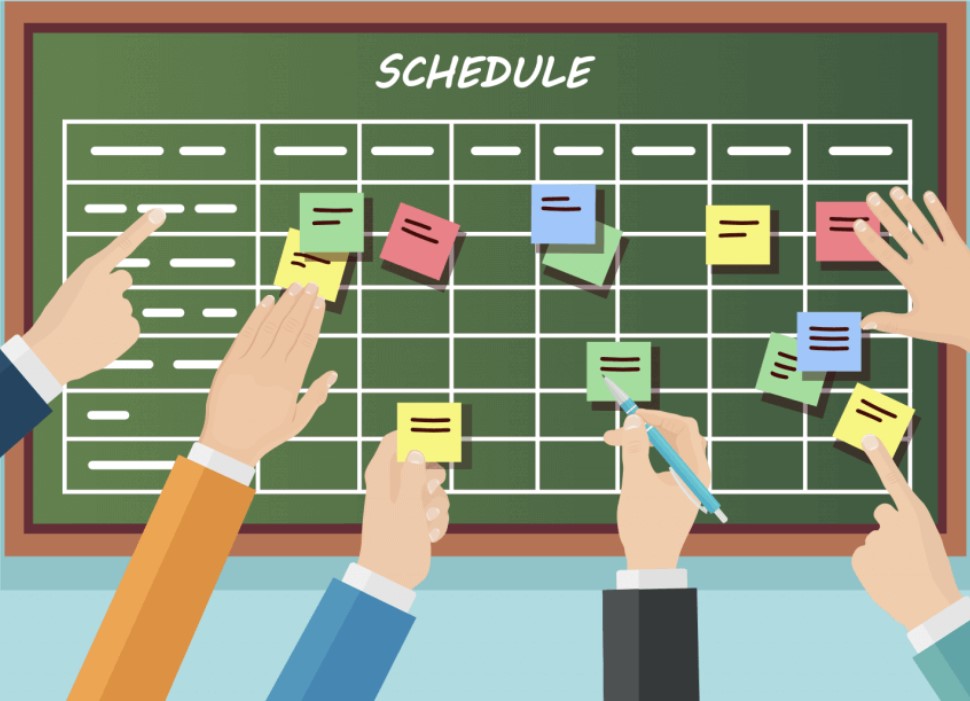
A schedule does not have to be complicated. In fact, simple works best.
A good starting point is to divide the afternoon into two main parts: schoolwork time and free time.
Here’s what many middle schoolers find helpful:
- Do homework first, but take a break before starting.
A 10–15 minute break after school helps the brain reset - Set a specific homework window.
For example: 4:00 pm to 5:30 pm. When students know when homework ends, they are more focused while working. - Leave some space for unexpected tasks.
Some days have more homework than others. A flexible buffer keeps things stress-free.
With a simple routine, students avoid last-minute rushing and save evenings for hobbies or family time.
3. Use a Planner or Digital Calendar
One common challenge in middle school is remembering everything—projects, quizzes, homework, and after-school activities. A planner is a lifesaver here.
Students often use:
- A basic notebook
- A school-provided agenda
- A digital calendar on a phone or tablet
- A task app that allows reminders
Writing tasks down makes the week feel clearer and more manageable.
It also helps students avoid forgetting long-term assignments like essays or science projects, which often cause last-minute stress.
Also Read:
Healthy Routines for Middle School Academic Success
4. Break Big Tasks into Smaller Steps
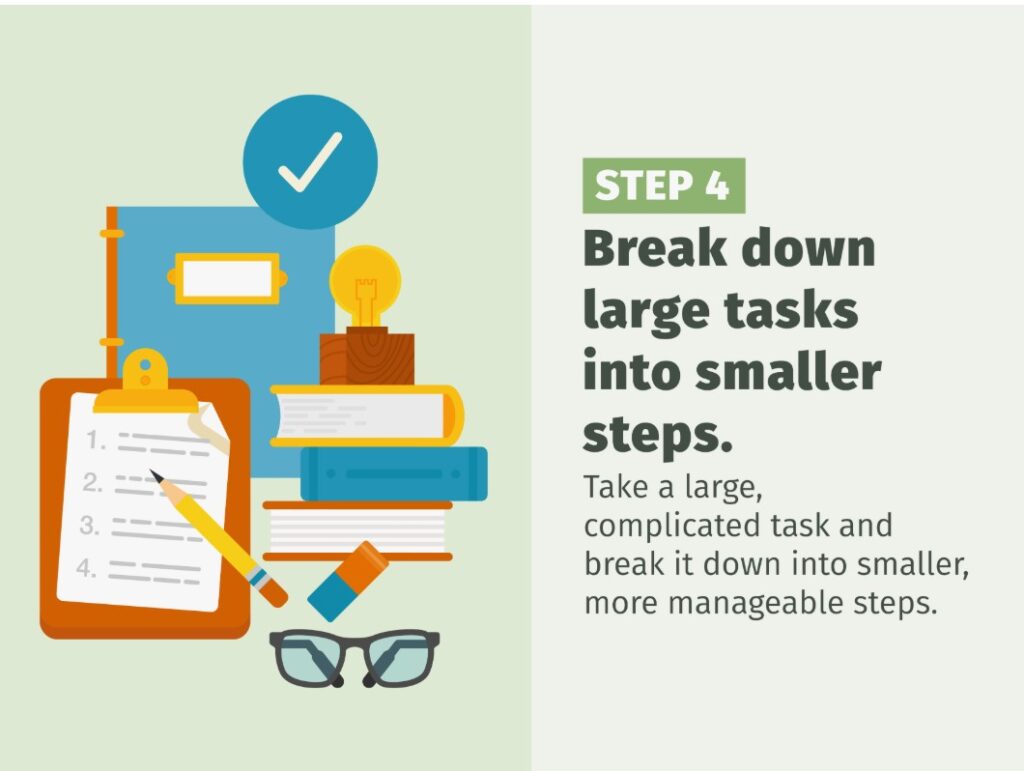
Large assignments sometimes feel overwhelming. But breaking them down into small parts makes them less scary and more doable.
For example:
Instead of “Finish science project,” break it into:
- Choose topic
- Research
- Take notes
- Write summary
- Create poster
Each small win makes students feel more confident and motivated. They also avoid the classic problem of starting a project too late.
5. Set Clear Priorities
Middle school students juggle many responsibilities: homework, sports, clubs, chores, hobbies, and friendships. To stay balanced, it helps to decide what matters most each day.
A simple method many students use is the Top Three Rule:
Write down the three most important tasks of the day. Finish those first.
This keeps the day organized and prevents minor tasks from becoming distractions.
6. Limit Digital Distractions
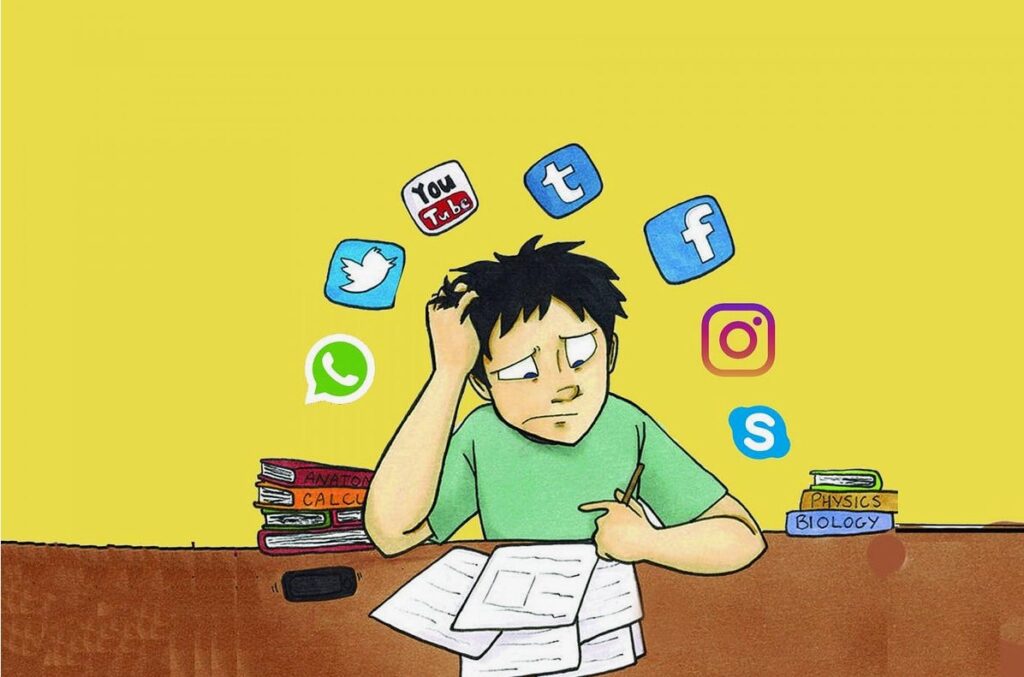
Technology is wonderful—but it can also steal time without anyone noticing.
Many middle schoolers admit they spend more time than expected on social media, games, or videos, especially when trying to do homework.
Here are friendly ways students manage this:
- Keep the phone in another room during homework time
- Use apps that block distractions
- Turn off notifications temporarily
- Set a “reward time” to enjoy screens after homework
By controlling digital distractions, students finish faster and enjoy more meaningful free time.
7. Ask for Help When Needed
No one should feel embarrassed to ask for help. Teachers and parents understand that middle school brings new challenges. Students can ask for help when they:
- Don’t understand a lesson
- Feel overwhelmed with assignments
- Need clarification on instructions
- Want support staying organized
Asking questions early prevents problems later. It also gives students more confidence in managing their workload.
Also Read:
Mental Health and Academic Success
8. Keep Free Time Truly Free
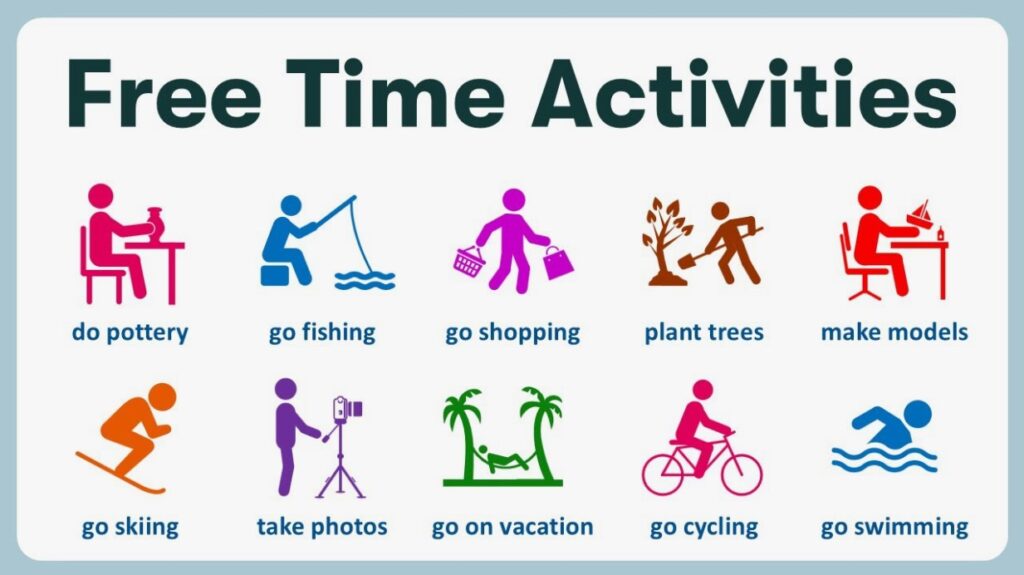
Free time should feel like a reward—not rushed or stolen from homework. Students should choose relaxing and enjoyable activities such as:
- Playing sports
- Drawing or crafting
- Reading books they love
- Playing games
- Hanging out with friends
- Listening to music
- Enjoying hobbies
When schoolwork is finished first, free time becomes more fun and stress-free.
9. Take Care of Health and Sleep
Good balance isn’t just about scheduling—it’s also about health. Students perform better academically and emotionally when they sleep well, eat balanced meals, and exercise regularly.
Helpful habits include:
- Getting 8–10 hours of sleep
- Eating breakfast
- Drinking enough water
- Taking short breaks during study sessions
- Spending some time outdoors
Healthy habits make schoolwork easier and improve concentration.
10. Celebrate Small Wins

Even small accomplishments deserve recognition. Finishing homework on time, improving a grade, or sticking to a schedule is something to be proud of.
Celebrating success keeps students motivated. This can be as simple as:
- Watching a favorite show
- Enjoying a snack
- Spending time with friends
- Playing a game
- Taking a relaxing break
Positive reinforcement helps build long-term confidence.
Also Read:
How Extracurricular Activities Affect Academic Performance
Conclusion: Balance Is a Skill That Grows Over Time
Balancing schoolwork and free time in middle school is not a one-day achievement—it’s a skill that grows with practice.
By using a schedule, tracking progress with tools like a Middle School GPA Calculator, staying organized, and taking care of health, students can enjoy both success in school and happiness outside of it.
Middle school is a time for learning, discovering new interests, and having fun.
With the right habits, students can enjoy every part of it while staying balanced, confident, and prepared for the future.
FAQs
1. Why is balancing schoolwork and free time important in middle school?
Balancing schoolwork and free time helps middle school students reduce stress, stay motivated, and enjoy personal time, as well as perform better academically.
2. How can middle school students create a balanced daily schedule?
Students can create a balanced schedule by setting set study times, prioritizing homework, and planning short breaks or recreational activities after studying.
3. How much free time should middle school students have each day?
Middle school students should have some free time each day to relax, play, or enjoy hobbies, as this improves focus and overall health.
4. Can good time management improve grades?
Yes, good time management allows students to complete assignments on time, prepare for tests, and achieve better academic results.
5. How can parents support time balance in middle school?
Parents can help balance time by encouraging routines, limiting screen time during study hours, and promoting healthy study habits.